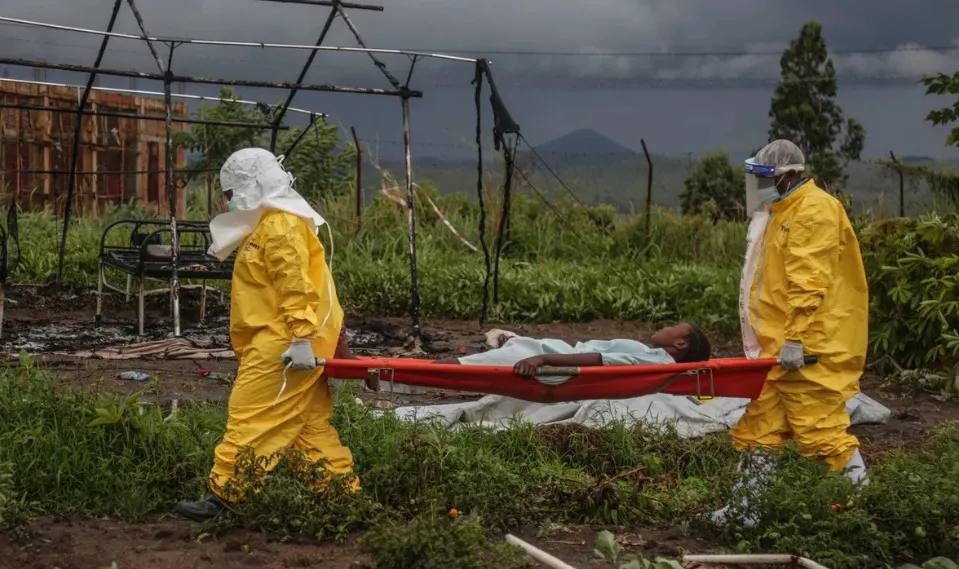
An Ebola treatment centre in the Congo was set on fire following a dispute over the body of a deceased patient

The AP reports this, citing local residents.
The conflict erupted because medical staff refused to allow the body of a local resident to be taken away. The bodies of those who have died from Ebola can be highly infectious and lead to the further spread of the virus during preparation and burial.
According to a witness, the centre in Rwampara was set alight by angry local youths who were trying to retrieve the body of a friend. An AP journalist witnessed people breaking in, setting fire to items inside, and, presumably, the body of another deceased person. Aid workers fled the treatment centre in cars.
The police intervened to try to resolve the situation, but were unsuccessful. Law enforcement officials later explained that the young people had misunderstood the burial protocols and, despite instructions, had tried to take the body home.
Following the incident, the centre continued to provide care. As of 21 May, the Congolese authorities had reported 160 deaths among people suspected of having Ebola, and 671 probable cases of infection. The UN also reported two cases, including one fatality, in neighbouring Uganda. However, the WHO stated that the outbreak is almost certainly much larger and expressed concern about the speed at which the virus is spreading.
Armed conflict in the region is further complicating efforts to tackle the crisis. Local leaders said that on 19 May, at least 17 people were killed in an attack by militants linked to the Islamic State group. Health workers and humanitarian groups have reported that they urgently need additional supplies and staff to respond. Furthermore, there is currently no vaccine or treatment for the strain responsible for the outbreak.
Ebola virus disease is an acute infectious disease characterised by severe haemorrhagic syndrome, which is often fatal. The virus is transmitted to humans from wild animals (monkeys, bats, antelopes, etc.) and spreads among humans through person-to-person contact with bodily fluids or contaminated objects.
The largest Ebola outbreaks have been recorded in Ghana, Guinea, the Democratic Republic of the Congo, Liberia, Mali, Nigeria, Senegal and Sierra Leone.
Follow us on Telegram