Changes to military registration: what employers must now do

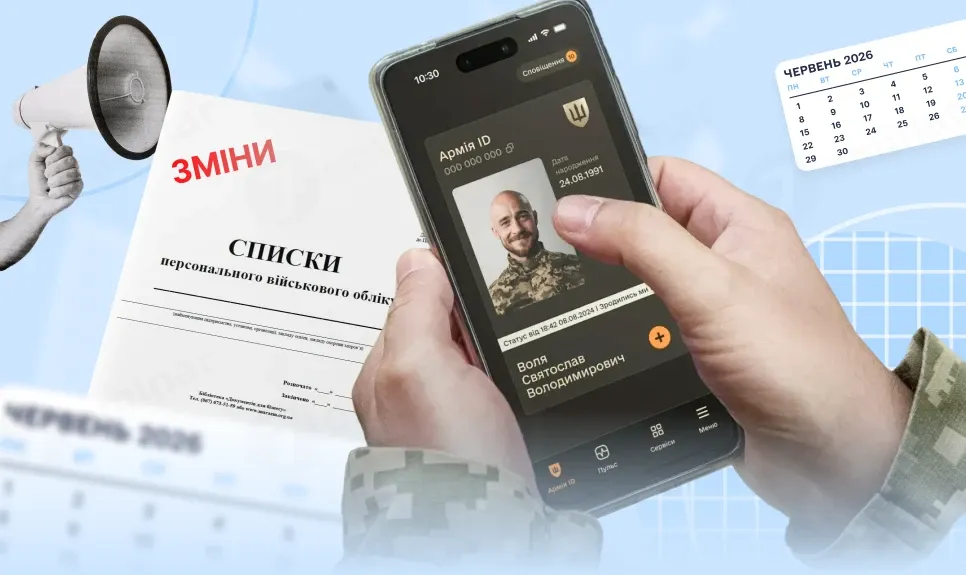
On 27 June 2026, amendments to the Procedure for the Organisation and Maintenance of Military Registration came into force in Ukraine. Cabinet of Ministers Resolution No. 812 provides for electronic data reconciliation, new rules for verifying military registration documents and a gradual transition by employers to digital interaction with the Central Military Registration and Enlistment Office.
This is set out in Cabinet of Ministers Resolution No. 812 and Kadroland’s guidance.
What has changed
The Cabinet of Ministers’ Resolution does not repeal the current procedure for maintaining military registration, but gradually transitions most procedures to an electronic format.
Some of the new measures came into effect on 27 June. Others will come into force once the necessary electronic services have been launched.
How military registration documents will now be checked
As before, an employer must check an employee’s military registration document upon recruitment.
At the same time, the Regulations now explicitly require that the information in the document be checked against the Unified State Register of Conscripts, Persons Liable for Military Service and Reservists.
To this end, an electronic military registration document generated via the ‘Diya’ portal or the state portal for electronic services in the field of national security and defence must be used, no earlier than 72 hours before the employee is formally hired.
Once the personal records portal is launched, the verification can be carried out automatically. Until then, employers will effectively continue to use the current mechanism, in particular the ‘Reserve+’ application.
Fewer paper notifications to the TCC
Employers must continue to notify the TCC of the recruitment, dismissal, completion of training or expulsion of persons liable for military service within seven days of the relevant order being issued.
However, once the new functionality is launched, this can be done via the ‘Diya’ portal or the personal account.
In this case, there will no longer be any need to submit duplicate paper notifications.
Changes that no longer need to be reported
The following changes have been removed from the list of information that employers are required to submit to the TCC:
a Ukrainian citizen’s passport for travel abroad;
marital status;
education.
From 27 June, it is no longer necessary to report changes to this information.
How will military registration checks change?
The resolution distinguishes between internal and external verification.
At least once a year, employers must cross-check their lists of personnel subject to military registration against their employees’ military registration documents.
Separately, an annual reconciliation will be carried out with the TCC, the SBU or the intelligence services.
Once the electronic services are launched, these procedures will also be available via ‘Diyu’.
For enterprises whose employees are registered in other administrative-territorial units, a new deadline for carrying out the reconciliation has been set — no later than 1 December.
A new electronic mechanism will be introduced
The resolution also introduces a new Annex 28¹ to Order No. 1487.
It sets out the procedure for the electronic reconciliation of data between the employer and the Unified State Register of Conscripts, Persons Liable for Military Service and Reservists.
Through the ‘Diya’ portal, employers will be able to obtain up-to-date data on their employees’ military registration status, verify this information and report any discrepancies found.
However, this mechanism will only become operational once the relevant technical functionality has been launched.
For most employees, the military registration procedure remains largely unchanged.
The main changes concern employers, who will gradually transition to electronic interaction with the Territorial Military Commissariat and state registers.
Until the new digital services are launched, businesses will continue to operate under the current procedures, but taking into account the changes introduced by Resolution No. 812.
Follow us on Telegram