Why did the dollar rise at the start of 2026, and how did the National Bank respond?


Who has the stronger rear
Retired Australian Army general and military analyst Mick Ryan recently wrote that the Russian-Ukrainian war “has reached a classic stalemate, where neither side can achieve a decisive victory”. In his view, the situation can only be changed either through a significant improvement in operational doctrine and troop organisation, or a technological breakthrough, or through the collapse of one side’s political will, caused by setbacks on the battlefield, widespread public discontent, pressure from allies and other factors.
In other words, Mick Ryan is speaking of the increasingly important role of the home front in the war against the Russian aggressor. Presumably, the first to fall will be the side whose support for the front crumbles, rather than the front itself. The most important material pillar for the army is the national economy, for, as is well known, success in war requires “money, money and more money”.
In this context, we are referring to the National Bank of Ukraine as the institution responsible for managing the monetary side of the Ukrainian economy. In particular, its exchange rate policy, which has attracted considerable attention since the start of this year.
Russian shelling, Trump and other factors
Whilst the hryvnia-to-US dollar exchange rate fluctuated mainly within the 41–42 hryvnia range throughout 2025, a sharp fall occurred at the start of 2026. In January, the exchange rate reached 43.4 hryvnia, and in March, 44.2 hryvnia. As of the end of April, it remained above 44 hryvnia to the US dollar. At the same time, this is still far from the exchange rate of 45.6 hryvnia set in the 2026 budget.
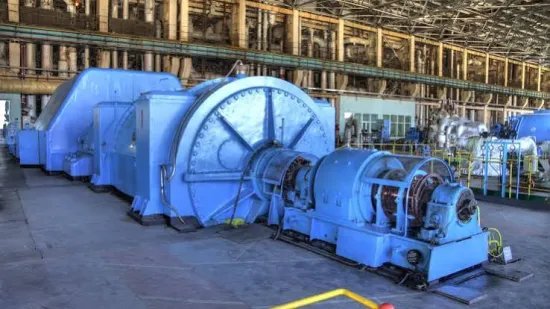
The trend towards a weaker hryvnia is driven by a number of internal and external factors. Among the internal factors, energy imports are cited as key. Extensive damage to power generation facilities led to a sharp rise in demand for imported energy equipment. This resulted in a significant foreign currency shortage, as the state and businesses needed it to settle accounts with importers.
Problems with electricity supply led to rising costs for autonomous generation and forced businesses to raise prices for goods. Expectations of higher prices provided an incentive to exchange spare hryvnia for foreign currency to build up stocks of raw materials, which also put pressure on the hryvnia exchange rate.
Negative pressure on the hryvnia was also caused by delays in financial aid from the European Union. The situation is set to change following the change of government in Hungary; however, as noted in the article, the first tranches will not be received for several more weeks.
The author cites the war in the Middle East as the most significant external factor. Firstly, rising fuel prices began to work against the hryvnia. As Ukraine is almost entirely dependent on fuel imports, demand for foreign currency and inflation contributed to the devaluation. Secondly, the strengthening of the US dollar played a role. Global demand for it has risen due to higher energy prices, as well as the flow of assets into the US against a backdrop of global instability.
Interventions and the NBU’s tight policy
As the National Bank of Ukraine’s exchange rate policy operates under a managed floating regime, the regulator constantly takes measures to prevent excessive exchange rate fluctuations. The main tool is currency intervention, i.e. the buying or selling of currency on the interbank market to balance supply and demand.
According to data from the National Bank of Ukraine, in March 2026, the volume of net currency sales was the highest since December 2024, amounting to $4.8 billion. This affected the volume of gross international reserves, which fell from $57.7 billion in January to $52.0 billion as of 1 April this year.
Among the National Bank’s indirect measures, the main one is maintaining a high discount rate at 15 per cent. Here, the regulator has two objectives. The first is to discourage the public from switching from the hryvnia to foreign currency by making hryvnia-denominated assets attractive. The second is to counter inflationary pressures.
At the same time, as noted in the article, Ukrainian economists often express doubts about the effectiveness of the policy rate’s transmission mechanism in the Ukrainian context. Excessively tight monetary policy is seen as a factor hindering economic growth. A high discount rate means not only attractive deposits but also expensive loans. This leads to higher costs of investment resources for entrepreneurs. Another negative consequence of high interest rates is the high cost of public debt, which is constantly rising in wartime conditions.
On 30 January 2026, the National Bank of Ukraine reduced the discount rate from 15.5 per cent to 15 per cent; however, the article describes even this level as too high for a genuine revival of commercial lending. Given that consumer inflation currently stands at 7.9 per cent, the National Bank, as noted, has grounds to review the rate downwards.
A clear strategy is needed
The author identifies a range of 44–45 hryvnias per US dollar as the baseline scenario for the hryvnia’s exchange rate until the end of 2026. Such a scenario is possible provided there are no new shocks such as a global oil crisis, and the National Bank of Ukraine’s international reserves remain at historically high levels.
The main factor for stabilisation is expected to be the start of European Union funding following the lifting of the Hungarian veto on the agreement for a €90 billion loan. Until now, any delays or discussions in the European Parliament regarding the tranches have affected interbank exchange rates; however, this factor is expected to be removed shortly.
Devaluation, the article notes, is currently highly undesirable, as it is the main factor driving up the cost of imports. Energy resources, equipment, fuel, armaments and a range of other essential goods immediately become more expensive as a result of the hryvnia’s depreciation.
Since maintaining the stability of the national currency is the primary constitutional duty of the National Bank of Ukraine under Article 99 of the Constitution of Ukraine, it must have a clear strategy for ensuring the stability of the hryvnia. The article notes that the current policy resembles a constant reaction to exchange rate-determining factors, although it is partially effective thanks to significant reserves. Without a clear strategy, the text states, the exchange rates of the dollar, euro and other currencies will continue to hit new records.