Conscription from 1 June 2026: who will be the first to receive a call-up notice

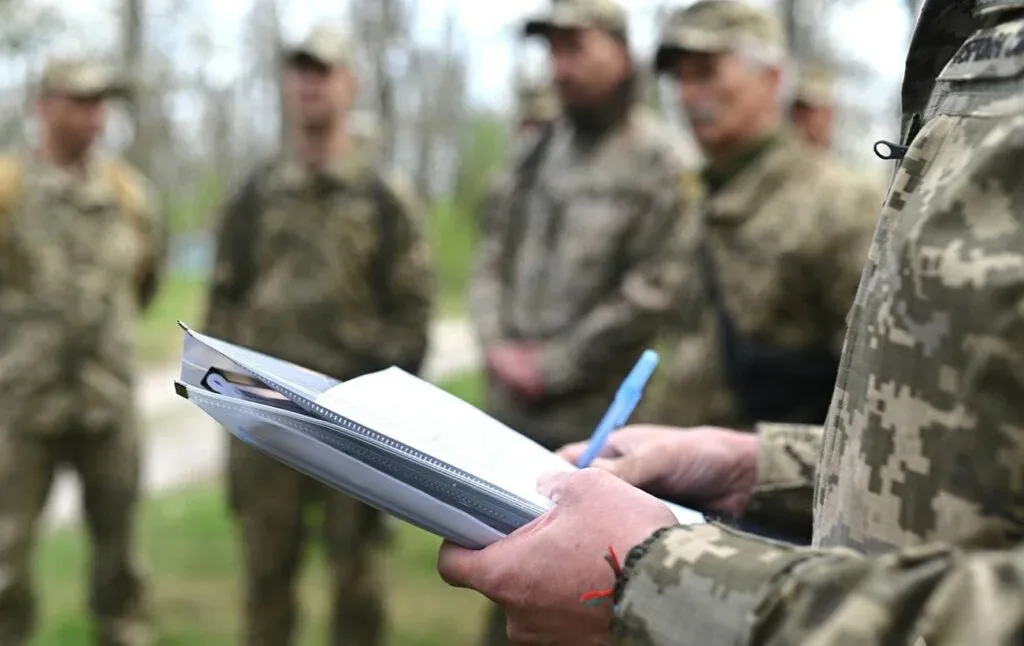
Conscription in Ukraine has been extended until 2 August 2026. The Verkhovna Rada adopted the relevant decision on 28 April.
From 1 June, no new conscription rules will be introduced – the current procedure will remain in force.
For those liable for military service, it is not just the date on the calendar that matters, but their status in the military registration system. It is this status that determines whether a person can receive a summons and be referred for a military medical examination.
Age and status of a person liable for military service
The Law “On Mobilisation Preparation and Mobilisation” sets the general age limits at 18 to 60 years.
However, men under 25 who have not served and are not in the reserves are considered conscripts. They are not mobilised under the general procedure.
They may join the army voluntarily, in particular under the “18–24” contract.
The situation is different if a man under 25 has already served or has military training.
In this case, he acquires the status of a conscript, and a call-up notice may be served on him before he reaches the age of 25.
For most conscripts, the upper age limit for mobilisation is 60.
For senior officers, it can be as high as 65.
Men over 60 can continue their service voluntarily – under a ‘60+’ contract – if the command supports such a decision.
Who is most likely to receive a call-up
In June, men aged between 25 and 60 are most likely to be called up.
This applies to those who are not entitled to a deferment, exemption or release from service on health grounds.
Conscripts aged between 18 and 60 may also receive call-up papers if they have already served, are in the reserves or hold a military qualification.
A separate category concerns individuals who were previously removed from military registration due to health reasons but were subsequently deemed fit for service following a re-examination by the Medical Commission.
Following the abolition of the ‘partially fit’ status, decisions regarding such citizens are made based on the results of a new medical examination.
What changes are being discussed
While the basic rules of mobilisation remain unchanged, the authorities are discussing certain new mechanisms.
Commander-in-Chief of the Armed Forces of Ukraine Oleksandr Syrskyi stated that military personnel discharged from service should be granted a deferment from re-conscription.
The duration of this deferment is planned to be determined in proportion to the number of days spent on the front line.
According to Syrskyi, the mechanism has already been defined by the military command.
Its practical implementation is underway at brigade level, and the preparation of decisions is scheduled to be completed by the end of May.
What might change in the work of the TCC
Another idea being discussed at the Ministry of Defence is the transformation of the TCC into “Reserve+ Offices”.
This involves dividing functions into two areas.
The first are recruitment offices. They will be responsible for military registration, recruitment and enlistment.
The second are support offices. They will be responsible for social issues, in particular compensation for wounded servicemen and payments to the families of those killed in action.
At present, this model remains at the discussion stage.
It has not yet been formalised either as a draft law or a government resolution.
As reported by ThePublic, the TCC explained why phones are confiscated during mobilisation.
Follow us on Telegram