Contracts for military personnel: Ministry of Defence explains new terms of service and pay

This was announced by the Ministry of Defence of Ukraine.
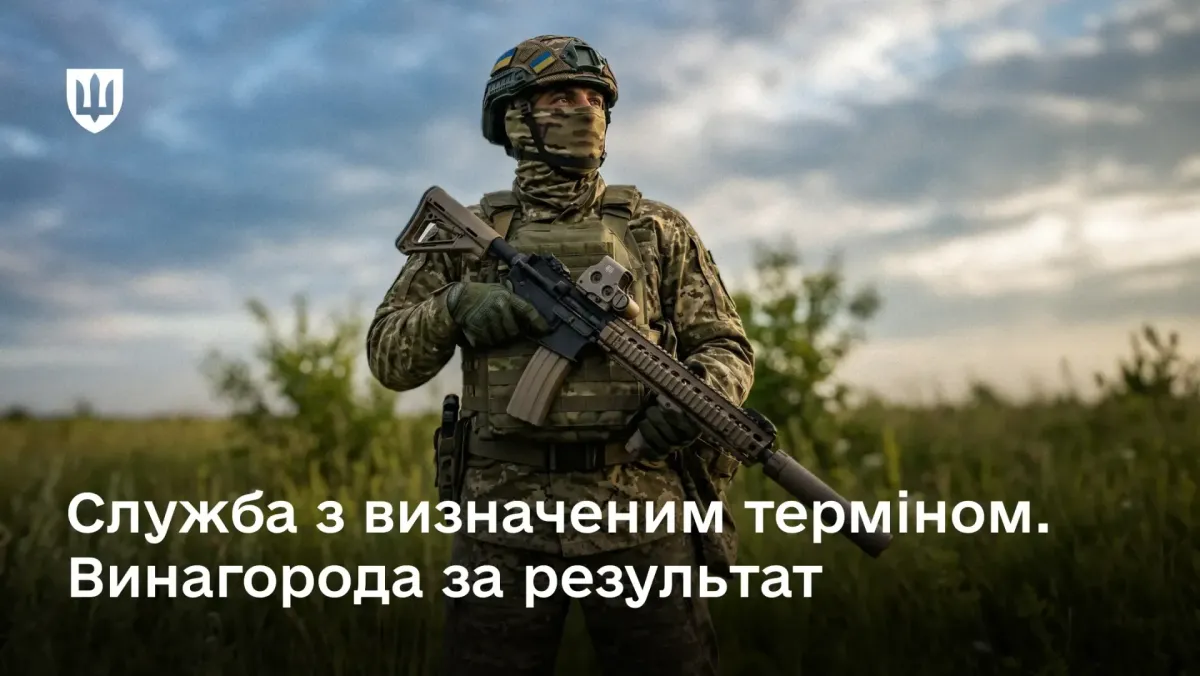
Cabinet of Ministers Resolution No. 768, adopted on 12 June, amends the procedures for contract service and the system of financial remuneration for military personnel.
The main change is that contract terms are now clearly defined according to the category of serviceperson and their post. Upon completion of their contract, service personnel are guaranteed the right to be discharged without this being linked to the end of martial law.
For military personnel already serving in combat units, the contract will be for 10 months. Civilians and reservists taking up combat posts for the first time will sign a 14-month contract, of which at least one year must be spent serving in combat units.
For veterans returning to the armed forces after discharge, the minimum contract term will be six months. A two-year contract is provided for non-combat roles.
What payments will military personnel receive?
The decree does not alter the basic pay of military personnel. At the same time, it introduces a new system of additional allowances depending on the place of service and the combat tasks performed.
In particular, military personnel in the rear will receive an additional 10,000 UAH per month. Together with the basic pay, the minimum payment will amount to 30,000 UAH.
For military personnel carrying out tasks directly on the front line, the payment of 100,000 UAH will remain in place, proportional to the time spent in combat operations.
Separate provisions have been made for increased payments for those carrying out duties at platoon and company strongpoints, as well as daily allowances for assault operations.
In addition, service personnel will be able to receive separate bonuses for taking enemy personnel prisoner or eliminating them in close combat, provided there is video evidence.
What guarantees are provided after discharge
Servicemen who sign an incentive contract will, upon completion of their service, receive a guaranteed deferral from re-conscription. The basic duration of this deferral is six months and may be extended depending on participation in combat operations and the total length of service.
For service personnel who are discharged by decree of the President of Ukraine without signing a motivational contract, a three-year deferral from mobilisation will apply.
When will the new payments come into effect?
The new rules apply to all military personnel, regardless of their branch of service or whether they have signed a new contract.
The Ministry of Defence has announced that military personnel are due to receive their first payments under the new rules for June 2026 by 20 July.
The reform is intended to make the service system more predictable. Servicemen will know the duration of their contract in advance, and the new remuneration model provides for higher payments depending on the complexity and danger of the combat missions they carry out.
Follow us on Telegram