The CIA is working to arm Kurdish forces in order to provoke an uprising in Iran.

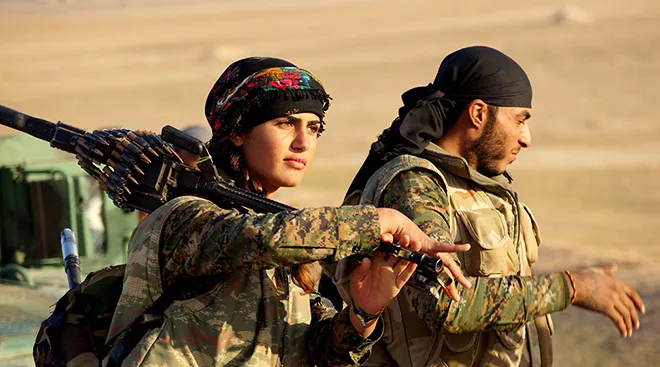
According to CNN, the CIA is working to arm Kurdish forces in order to spur a popular uprising in Iran. Several people familiar with the plan told the television channel about this.
According to the sources, Donald Trump's administration is in active negotiations with Iranian opposition groups and Kurdish leaders in Iraq to provide them with military support.
The report states that Iranian Kurdish armed groups have thousands of fighters along the border between Iraq and Iran, mainly in Iraqi Kurdistan. Since the start of the war, several such groups have issued statements hinting at imminent action and calling on Iranian military forces to switch sides. It is also reported that on Tuesday, the Islamic Revolutionary Guard Corps announced strikes against Kurdish forces with dozens of drones.
CNN also reports that on Tuesday, President Donald Trump spoke with the president of the Kurdistan Democratic Party of Iran (KDPI), Mostafa Hijri. According to the television channel, a senior official from Iranian Kurdish circles reported on this conversation. The article states that the KDPI was among the groups that, according to the IRGC, were targeted.
According to the same official, Iranian Kurdish opposition forces are expected to take part in a ground operation in western Iran in the coming days. He told CNN: "We believe that we now have a great opportunity," adding that the groups are expecting support from the US and Israel.
Separately, CNN reports that Trump called Iraqi Kurdish leaders on Sunday to discuss the US military operation in Iran and possible cooperation during the mission. This was reported to the TV channel by two US officials and another person familiar with the conversations. CNN notes that Axios also reported this earlier.
The article emphasises that any attempt to arm Iranian Kurdish groups would require the support of Iraqi Kurds, particularly for the transit of weapons and the use of Iraqi Kurdistan as a staging ground.
One of CNN's sources familiar with the discussions said the idea was for Kurdish forces to take on Iranian security forces and hold them back so that unarmed Iranians in large cities could more easily take to the streets. Another American official, according to CNN, said that the Kurds could help sow chaos in the region and stretch the Iranian regime's military resources. Sources also said that ideas were discussed about the possibility of taking and holding territory in northern Iran to create a buffer zone for Israel.
The CIA declined to comment on this information, CNN reports.
The article cites expert assessments. CNN national security analyst and former senior Pentagon official Alex Plitsas said that the US is "clearly trying to kick-start" the process of overthrowing the regime in Iran by arming the Kurds. He also said: "The Iranian people are generally unarmed, and unless there is a collapse of the security services, it will be difficult for them to take power unless someone arms them," he added. "I think the US is hoping that this will inspire others in Iran to do the same."
Former State Department official Jen Gawito expressed concern about whether the consequences of arming the Kurds had been fully considered. She told CNN: "We are already facing an unstable security situation on both sides of the border," she added: "This could undermine Iraq's sovereignty and, in essence, empower armed groups that are not accountable and have little understanding of where this could lead."
CNN also reports that in recent days, the Israeli military has carried out strikes on Iranian military and police posts along the border with Iraq, partly in preparation for a possible crossing of armed Kurdish forces into north-western Iran. A source in Israel, according to the TV channel, said that such strikes are likely to intensify in the coming days.
At the same time, the report notes that support from the US and Israel for a Kurdish ground force would have to be substantial. One of CNN's sources said that American intelligence assessments have consistently indicated that Iranian Kurds currently do not have sufficient influence or resources to successfully revolt against the government. It also notes that Kurdish parties are seeking political assurances from the Trump administration before joining any resistance efforts.
CNN reminds us that opposition Kurdish groups are fragmented, have a history of tension, different ideologies and competing goals. The article quotes a Trump administration official as saying, "It may not be as simple as convincing the American military to fight on their behalf," and also, "There is a group of people who are thinking about their own interests, and the question is whether it is in their interest to get them involved in this process."
A separate section of the article is devoted to previous US interactions with Kurdish forces. CNN writes that the Kurds are an ethnic minority without their own state, and their population is estimated at 25-30 million. Most live in territories covering parts of Turkey, Iraq, Iran, Syria and Armenia.
The channel also notes that the CIA has a long history of working with Iraqi Kurdish factions since the US war in Iraq. According to two sources, the agency currently has a base in Iraqi Kurdistan near the border with Iran. The US also has a consulate in Erbil, and American and coalition forces are based there as part of the campaign against ISIS.
CNN mentions that some Kurds hoped for the independence of Iraqi Kurdistan in exchange for cooperation with the US, but this did not happen. The article also states that the US actively relied on Kurdish forces in countering the Islamic State, in particular to guard thousands of detained militants in camps in northern Syria. At the same time, CNN writes that this year, the new pro-American government of Syria conducted a rapid military campaign to establish control over the north of the country, and against this backdrop, Kurdish forces evacuated and stopped guarding ISIS prisons after the withdrawal of American troops. In January, US Special Representative for Syria Tom Barrack said that the goal of the US alliance with the Syrian Democratic Forces (SDF) "has largely been accomplished."