Russian production of petroleum products has seen its sharpest decline in two decades

Production of petroleum products in Russia continues to fall sharply. According to Rosstat, output fell by a further 12 per cent in June and was 21.7 per cent lower than in the same period last year.
According to the agency’s statistics, the current decline in the production of coke and petroleum products is the most significant since at least 2006. In April, output was 9.2 per cent lower than a year earlier, whilst in May the decline reached 13.5 per cent.
Against the backdrop of falling production in Russia, a fuel shortage has emerged and prices have risen. According to Rosstat, during the week of 14–20 July, petrol prices rose by 1.7 per cent and diesel prices by 1.9 per cent. Since the start of the year, prices have increased by 18.3 per cent and 20.2 per cent respectively.
Due to the shortage, Russia has begun importing petrol and diesel, and has also extended tax breaks to imported fuel. Deputy Prime Minister Alexander Novak spoke of a “partial stabilisation” of the fuel market; however, according to a source, restrictions on refuelling military equipment have even affected the armed forces.
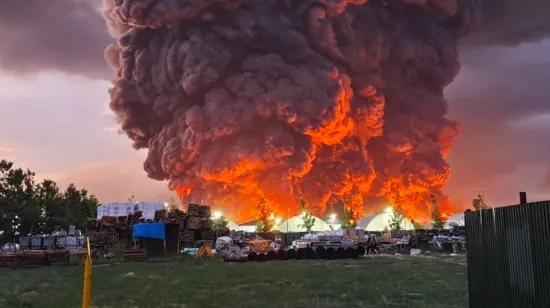
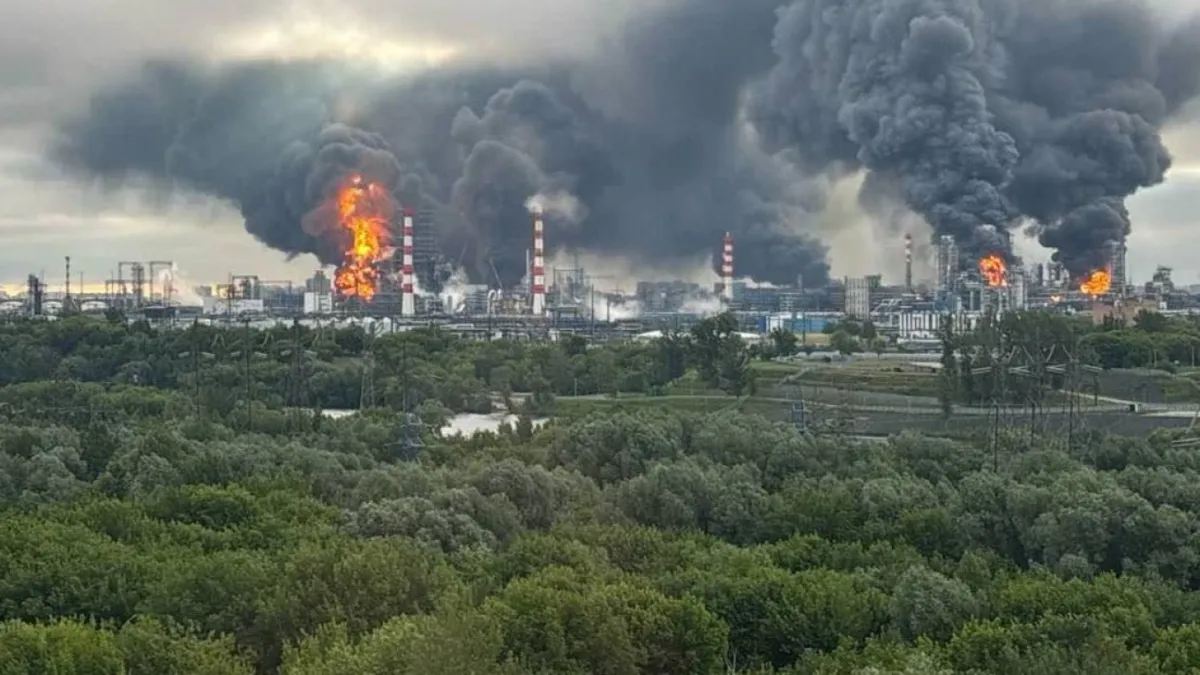
The report notes that Ukrainian drone attacks on Russian oil infrastructure intensified at the end of March and put up to 40 per cent of diesel production capacity out of action.
Sergei Aleksashenko, a leading expert at the NEST think tank, assessing the volume of exchange-traded sales of petroleum products by Russian refineries, suggested that the loss of refining capacity could be around 35 per cent. According to him, sales in June stood at 50–70 per cent of last year’s level. In particular, the Ryazan Oil Refinery, which has been attacked 15 times, has not participated in exchange trading since mid-May, whilst the Moscow Oil Refinery is selling roughly half as much product as last year.
Drone attacks continued in July. Among the facilities damaged was Russia’s largest oil refinery, the Omsk Oil Refinery. According to the source, only about half of the capacity at the facilities damaged in recent months has been restored.
The analytics firm Kpler estimates that by mid-July, processing volumes at Russian oil refineries had fallen to their lowest level in 21 years. According to its calculations, 58 per cent of Russia’s refining capacity has been targeted by attacks over the course of the year, and as of mid-July, between 20 per cent and 27 per cent of this capacity remained idle.