Shipowners have suspended calls at Ukraine’s Black Sea ports

This was reported by ThePublic, citing a statement by Taras Vysotsky, Minister of Agrarian Policy and Food, published by Latifundist.
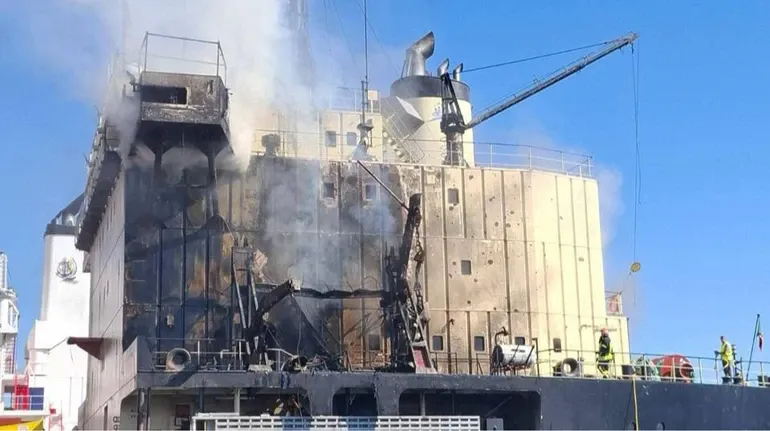
According to Vysotsky, the decision to temporarily suspend operations was taken by the shipowners themselves following an intensification of Russian attacks on merchant vessels and port infrastructure in the Odesa region.
As recently as 22 July, four or five vessels entered Ukrainian ports. The following day, no new arrivals were recorded.
The minister emphasised that this was specifically a decision by the shipowners, who are assessing the risks to crews and the fleet. For its part, the state has not issued any orders to close the ports or the maritime corridor.
Does this mean a maritime blockade?
Vysotsky believes it is too early to speak of a complete blockade of maritime exports. The pause concerns the arrival of new vessels, but the port infrastructure itself continues to operate.
The situation may change within a few days. Following a sharp increase in risk, shipowners usually suspend voyages, review insurance and charter agreements, and then decide whether transport can resume under the new conditions.
According to the minister, the current escalation has lasted around four days and has not yet led to a critical reduction in exports. The actual impact on agricultural exports will need to be assessed based on the results of a month or a longer period.
The government is working on solutions to restore safe shipping. Vysotsky did not disclose any details, citing security reasons.
What is happening with Maersk’s shipments
Maersk, one of the world’s largest container carriers, has temporarily suspended its service via the Black Sea Fishing Port. The company is redirecting cargo that was due to be delivered to Chornomorsk to Constanta in Romania.
However, Maersk’s decision does not mean that the entire port of Chornomorsk has ceased operations. The Chornomorsk fishing port is a separate operator, whilst the main deep-water port and the other ports in the Greater Odesa area continue to operate.
Companies that had planned to export cargo via this service may cancel their bookings or agree on an alternative route. Maersk will discuss the delivery of import containers from Romania to Ukraine with customers on a case-by-case basis.
What are the risks for Ukraine if the disruption continues?
Due to Russian attacks, the grain export capacity of Ukraine’s Black Sea ports has already been reduced by about a third – from six to four million tonnes per month. Over 90 per cent of Ukraine’s grain and vegetable oil exports pass through the three ports in the Odesa region.
If shipowners resume sailings quickly, a pause lasting several days should not significantly affect annual shipment volumes. A prolonged suspension of operations could lead to higher insurance and freight costs, a build-up of cargo in ports and grain silos, and a fall in purchase prices for Ukrainian farmers.
In the first half of 2026, Ukraine’s seaports handled 42.4 million tonnes of cargo. Future figures will depend on the duration of the pause and the ability to guarantee the safety of civilian shipping.
Follow us on Telegram.