Ebola and the war in the Congo: WHO warns of a catastrophic risk

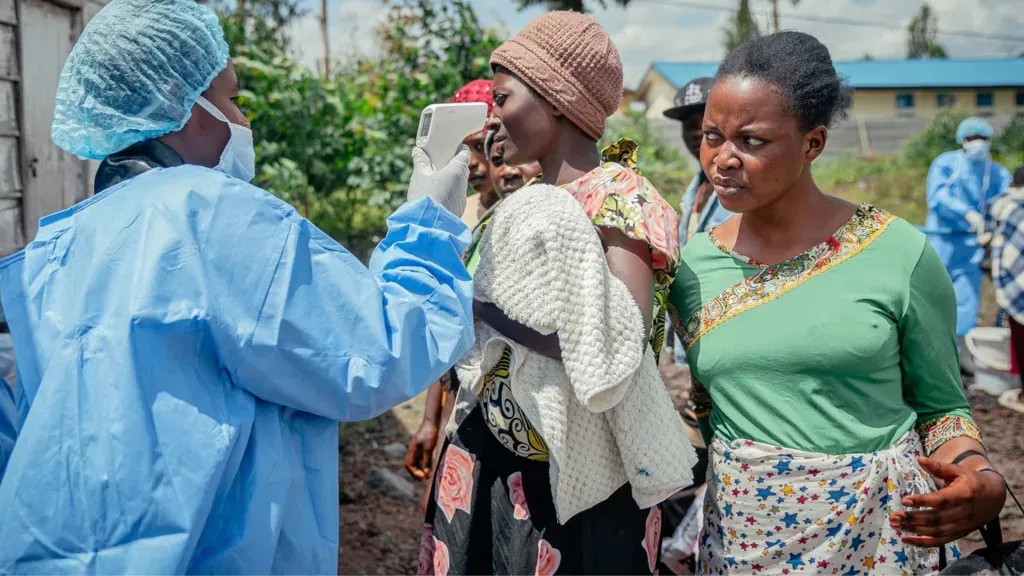
This was reported by the BBC, citing a statement by WHO Director-General Tedros Adhanom Ghebreyesus.
WHO Director-General Tedros Adhanom Ghebreyesus has stated that the conflict in the Democratic Republic of the Congo is hindering efforts to contain the Ebola outbreak.
According to him, the Ituri province in the east of the country has become the epicentre of a “catastrophic clash between disease and conflict”.
Ghebreyesus stressed that the WHO cannot effectively build trust in communities or isolate patients whilst shelling continues. He is due to travel to the DRC this week to coordinate efforts to contain the virus.
What is known about the outbreak
The Democratic Republic of Congo is the epicentre of the outbreak, although several cases have already been detected in Uganda.
Since the outbreak was declared, 220 probable deaths have been reported. However, only 17 deaths from Ebola have been laboratory-confirmed.
According to the Congolese authorities, around 1,000 people are currently showing symptoms similar to Ebola.
Medical staff are also trying to trace 3,600 people who may have come into contact with those infected.
Why the situation is dangerous
Most cases have been recorded in Ituri province. Since 2021, it has been under military administration: a military general replaced the civilian authorities there to counter dozens of armed groups.
Due to the fighting, people are fleeing en masse, and those who may have come into contact with the sick are ending up in overcrowded camps.
According to Ghebreyesus, this is undermining critical infection control measures. He also stated that attacks on medical facilities are making it almost impossible to trace cases and contacts.
The WHO chief called on all parties to immediately agree to a ceasefire so that medical teams can gain safe access.
What is making the work of medical staff difficult
Humanitarian workers are finding it difficult to operate due to poor roads, fighting, mass displacement of people and a weakened health system.
The situation has been further complicated by cuts in international aid.
Ewald Stals, MSF’s director in the DR Congo, told the BBC that the organisation and other humanitarian groups are trying to deliver medical supplies and staff to the epicentre of the crisis. But the danger and poor transport infrastructure in Ituri are seriously hampering their work.
According to him, the situation is not yet fully under control, and medical staff still do not have a complete picture due to insufficient testing.
What strain of Ebola is this?
This outbreak is linked to the rare Bundibugyo strain of Ebola.
There are no vaccines or specific treatments for it.
Around 2,000 tests have been distributed so far, with a further 4,000 due to be sent. Experimental treatments may also be used in the near future, including an antibody developed in the US.
Which countries are imposing restrictions
Due to the risk of Ebola spreading, a number of countries have tightened their entry rules.
Uganda is temporarily closing its border with the DR Congo. Crossings will only be permitted under strict conditions for workers in critical sectors, including medical staff, humanitarian workers, food transporters and security personnel.
Canada has introduced a 90-day entry ban for residents of the DR Congo, Uganda and South Sudan.
The Bahamas has also introduced strict rules: foreign nationals from these countries may be subject to quarantine or isolation measures.
Last week, the US banned entry to non-citizens who had travelled to any of the three countries.
What Europe is doing
The European Centre for Disease Prevention and Control has announced that it will step up its on-the-ground presence.
Additional experts will be deployed via the EU Health Task Force.
Follow us on Telegram