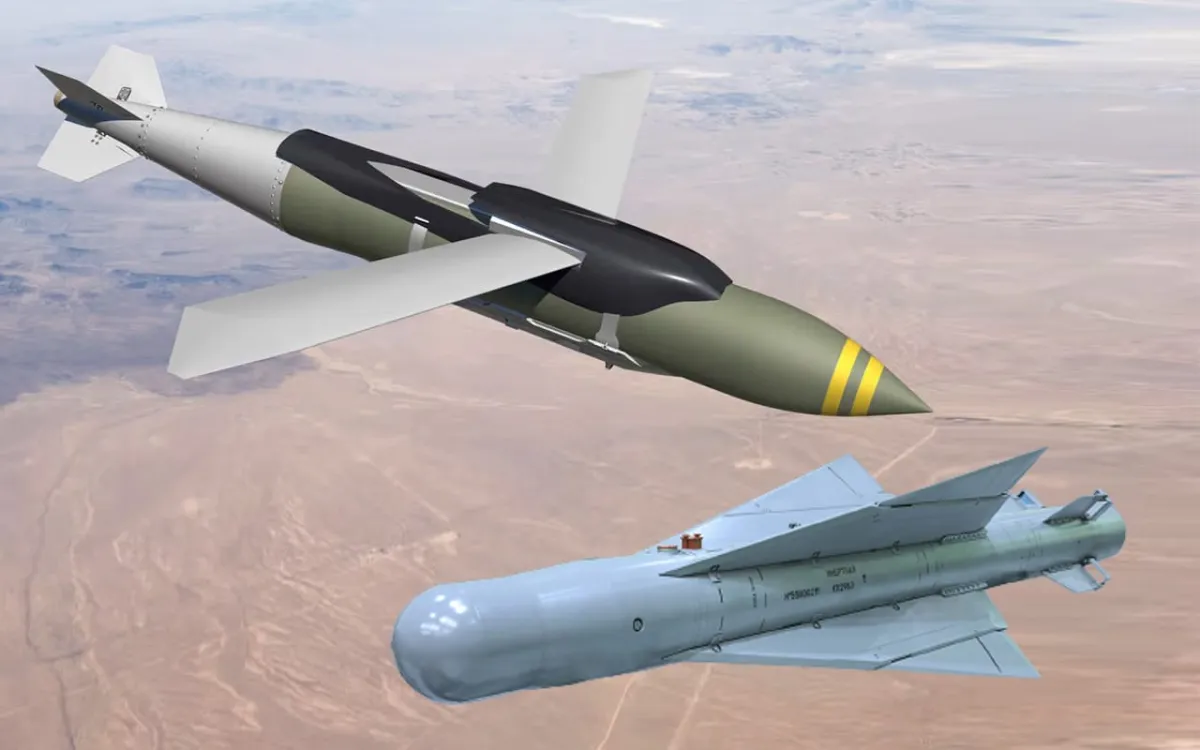
Guided aerial bombs (GABs) are one of the key factors in modern aerial warfare

Зміст
What is a guided aerial bomb (GAB)?
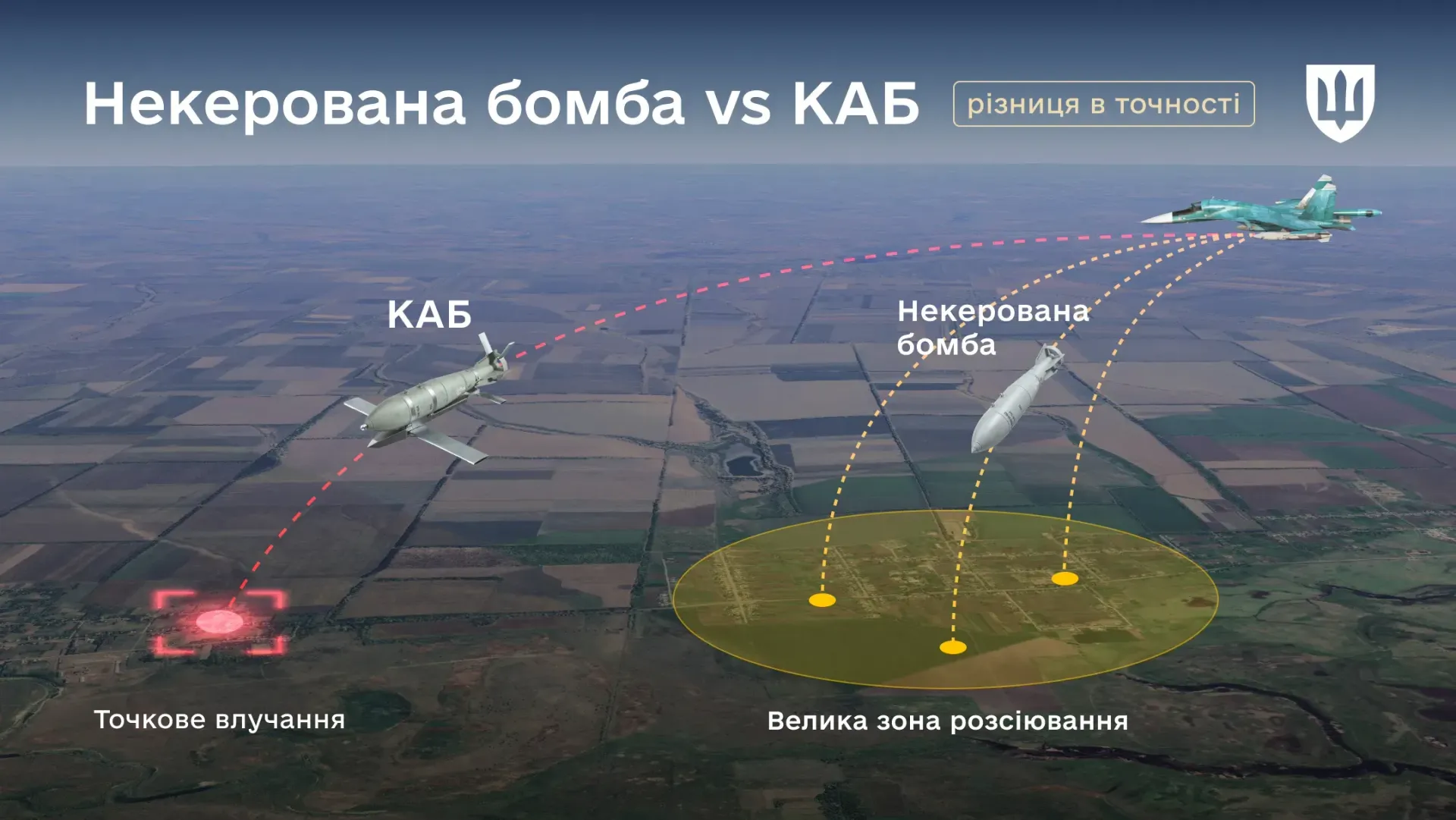
A guided aerial bomb, or GAB, is an aerial munition equipped with a guidance system and aerodynamic control surfaces, which enable a significant improvement in target accuracy compared to conventional free-fall bombs. Such munitions are also referred to as precision-guided or ‘smart’ bombs.
The main difference between GBs lies in the presence of guidance systems and flight control elements, in particular tail fins or folding wings. After being dropped, they adjust their flight path, allowing them to strike targets with an accuracy of a few metres.
From early developments to modern technologies
The first effective guided bombs appeared as early as the Second World War. Germany used the radio-controlled Fritz X against ships, whilst the US employed the Azon to strike bridges and railway junctions.
Further development of the technology took place during the Vietnam War, when American forces began using the laser-guided Paveway series of bombs. This significantly improved the accuracy of strikes on fortified targets.
A new stage of development began after the 1991 Gulf War. Subsequently, JDAM technology was developed, which enabled conventional bombs to be converted into high-precision weapons using inertial navigation and GPS. It was precisely the principle of fitting guidance and correction modules to standard aerial bombs that formed the basis for many modern systems.
What types of guided aerial bombs are there?
Modern guided aerial bombs are classified by guidance type and aerodynamic design.
The most common are systems with satellite and inertial guidance, which are not dependent on weather conditions. Laser semi-active guidance and electro-optical or thermal imaging systems are also used.
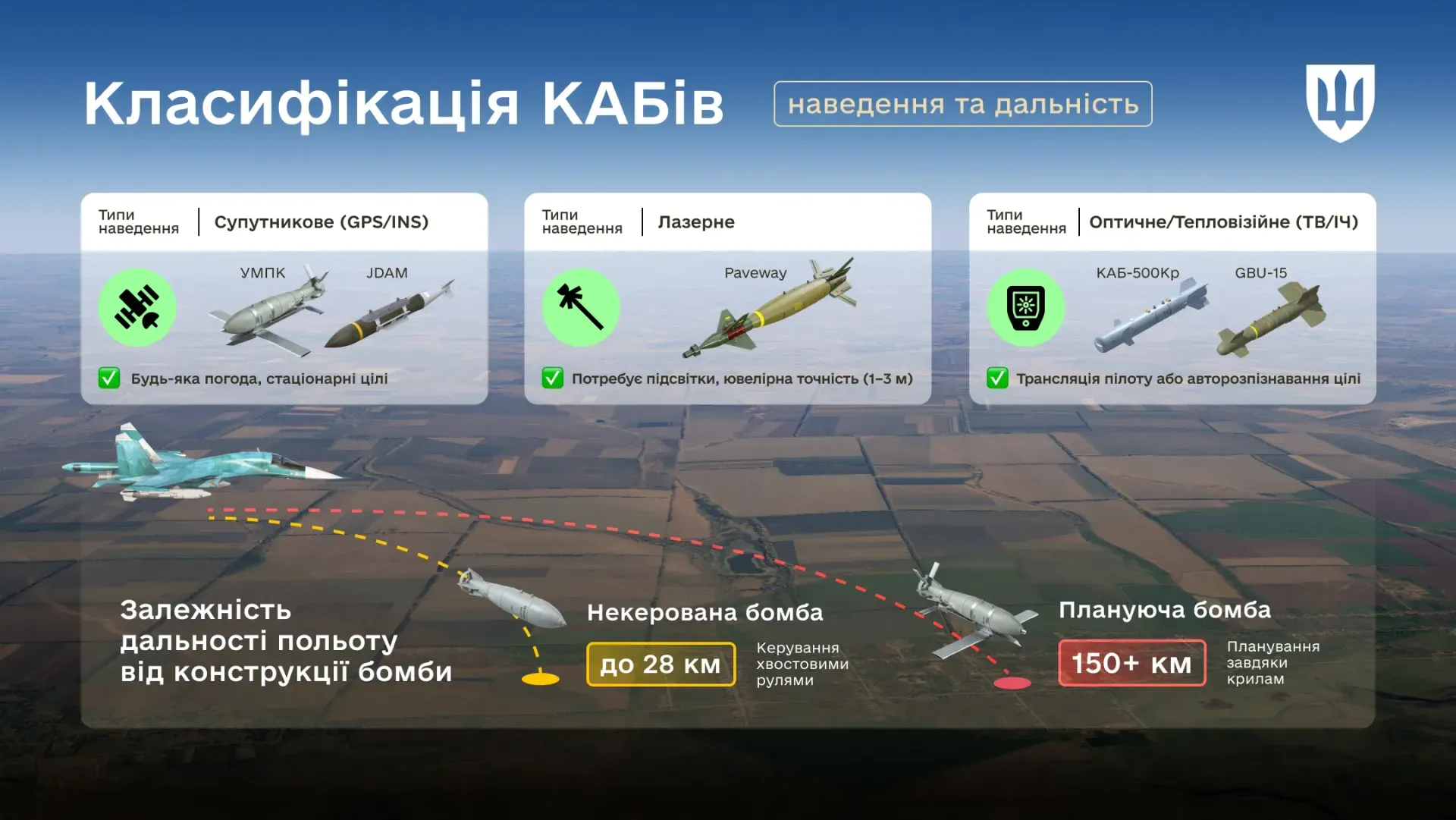
In terms of design, a distinction is made between wingless bombs, which are guided solely by rudders, and gliding bombs with folding wings. The latter are capable of travelling considerable distances after being dropped from an aircraft.
Range and operational characteristics
The warhead weight of modern guided bombs can range from approximately 130 kg to several tonnes. The range depends on the type of munition, as well as the altitude and speed of the carrier aircraft.
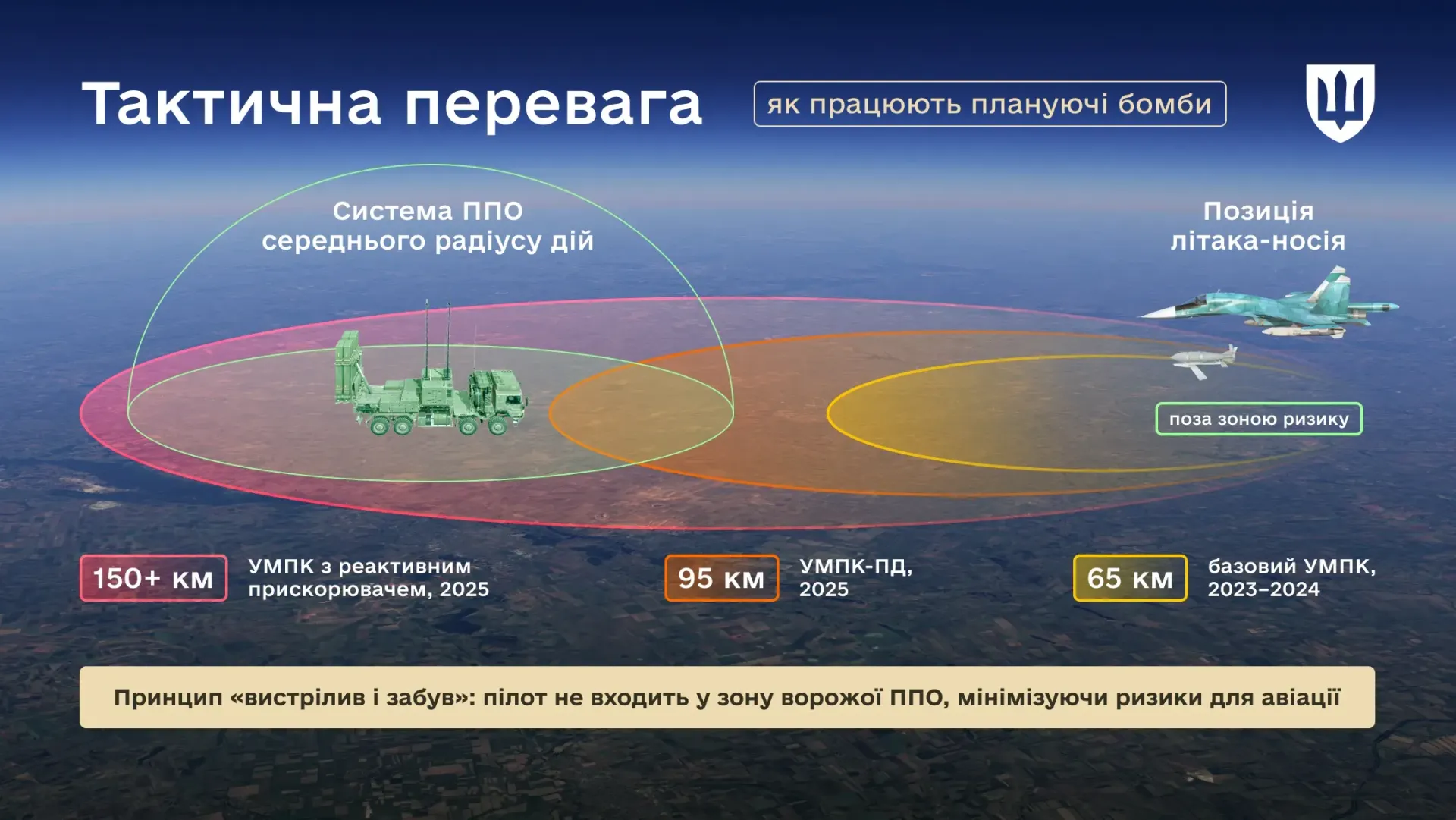
For wingless guided bombs, this can be up to several tens of kilometres, whilst gliding models are capable of striking targets at a distance of over 90 km. Certain variants with rocket boosters have an even greater range.
Guided aerial bombs have become an important component of the strike capability of the world’s leading armies. Their use is based on the ‘fire-and-forget’ principle, whereby an aircraft drops the munition from a safe distance and leaves the area of operations until the target is hit.
What types of guided bombs is Russia using?
Russia is actively using guided aerial bombs in the war against Ukraine. According to military expert Oleksandr Kovalenko, the Russian Federation’s arsenal includes both bombs originally designed as guided munitions and Soviet high-explosive aerial bombs retrofitted with guidance and flight control modules.
Among the guided munitions known to be in use are the UPAB-500V, UPAB-1500V, Grom-E2 and Drill. The Russian army also uses the FAB-250, FAB-500 and FAB-1500, equipped with modules similar in principle to the American JDAM.
There have also been reports of the use of the FAB-3000. Furthermore, the Russian arsenal includes the guided aerial bombs KAB-500Kr and KAB-1500.
The focus on UMPK
One of the Russian Federation’s key decisions was the mass installation of Universal Planning and Correction Modules on old Soviet aerial bombs. Tactical aircraft, in particular the Su-34 and Su-35, can drop such munitions without entering the engagement zone of Ukrainian air defences.
The Ukrainian Air Force Command previously noted that Russian aircraft fly to within approximately 40–50 km of the front line and launch guided bombs whilst remaining out of reach of some Ukrainian air defence systems.
According to the Ukrainian Ministry of Defence, the basic version of the UMPC had a confirmed range of up to 60–65 km, with some instances reaching 80 km. Since early 2025, the use of the UMPK-PD variant has been recorded, with a range of up to 95 km.
The integration of rocket boosters is also ongoing, potentially allowing a range of up to 150 km depending on launch conditions.
At the same time, the accuracy of Russian UMPKs is inferior to their Western counterparts. The circular error probability is estimated at 10–15 metres under normal conditions and may increase under the influence of electronic warfare measures.
How Ukraine is responding
To restore the balance, Ukraine has integrated several types of high-precision air munitions from its partners into its Air Force.
These include the JDAM-ER from the US, the French AASM Hammer manufactured by Safran, and the American GBU-39 SDB. These systems enable precision strikes against targets at significant ranges.
According to experts, effective countermeasures against guided aerial bombs require the development of air defence systems, electronic warfare capabilities and Ukraine’s own high-precision aerial munitions.