Car imports to Ukraine are increasing: which models dominate and why

Boris Bodnar
Boris Bodnar Journalist
Car imports to Ukraine are increasing: which models dominate and why

car showroom
The import of passenger cars into Ukraine — both new and used — continues to grow. Leading models are from China and Europe, with peak demand occurring due to the end of preferential customs clearance.

The import of new and used passenger cars into Ukraine continues to grow, reports "RBC-Ukraine". In October 2025, 7,300 cars were registered for the first time, which is 34% more than in October last year; the growth compared to September is about 11%. Overall, for the ten months of the year, Ukrainian consumers purchased about 60,700 cars, which is 3% more than the same period last year.

Over 98% of new passenger cars are imported, while domestic production accounts for only about 2%. Among the leading brands by import volume in October are BYD (1,113 units), Toyota (929 units), and Volkswagen. Also among the top ten most popular are Skoda, Renault, Hyundai, BMW, Audi, Zeekr, and Nissan. The increased demand for Chinese brands, especially electric and hybrid models, is explained by both quality and competitive pricing, according to commentators.

Electric vehicles and hybrids currently have favorable conditions: until January 1, 2026, import duties and VAT are waived. As a result, electric cars have become almost comparable in price to gasoline models, which has stimulated active demand. In particular, Chinese models feature more modern equipment and design than similar internal combustion engine models.

In the October model ranking, the leader is the Volkswagen ID.Unyx crossover (432 units), followed by the Chinese BYD Song Plus (389 units) and Toyota RAV4 (367 units). All ten top-rated models are crossovers or SUVs, highlighting a persistent trend towards these body types.

The used car market demonstrates an even stronger dynamic: in October, 25,616 used passenger cars were imported into Ukraine, which is 54% more than in October 2024, and 8.4% more than in September of this year. Used cars account for about 78% of the total market volume in October. This growth is explained by the approaching deadline and Ukrainians' efforts to take advantage of preferential conditions for customs clearance of electric cars before the end of December.

Many imported cars arrive from Germany, the USA, and China — during January-August 2025, imports totaled 258,300 cars, which is 20% more than the previous year. The customs value of imports amounted to $3.7 billion — an increase of 25%. Germany remained the undisputed leader in the number of car deliveries to Ukraine.

The structure of electric vehicle imports is also indicative: in August 2025, 9,274 electric cars were imported into Ukraine — twice as many as last year. The majority (7,277 units) are used models. The customs value of such cars reached nearly 8.1 billion hryvnias. Government incentives for customs clearance and the popularity of electric cars have made them more advantageous than traditional internal combustion engine vehicles.

Experts warn that after the end of the preferential period, a reduction in electric car imports is expected, and prices may increase by approximately 20%. Additionally, seasonal fluctuations in the auto market (decline in spring/summer, activity in autumn/winter) accelerate the market at the end of the year.

Thus, the passenger car import market in Ukraine today is characterized by strong growth, dominated by imported models, high demand for electric and hybrid vehicles, large-scale import of used cars before the end of benefits, and a dominant segment of crossovers and SUVs.


Share tittle
Analytics
The NBU has updated the rules on the authorisation of financial institutions: a lawyer explained what has changed in 2026
Analytics

The NBU has updated the rules on the authorisation of financial institutions: a lawyer explained what has changed in 2026

The NBU continues to update regulatory requirements for the financial sector, tightening control over providers of financial and payment services. The latest changes relate to both authorisation procedures and requirements concerning business reputation, ownership structure and business planning for financial institutions. The new rules will also affect pawnbrokers and insurers, which must adapt their internal processes to the updated standards.

21.07.2026
Will there be enough gas and electricity this winter? What Ukrainians need to prepare for in the new heating season
Analytics

Will there be enough gas and electricity this winter? What Ukrainians need to prepare for in the new heating season

Ukraine is approaching another heating season whilst its energy infrastructure comes under constant attack. Whilst the authorities report on gas reserves and the commissioning of new power generation capacity, experts point to disputed figures and problems with connecting new capacity, and in some places power cuts lasting between 10 and 20 days.

20.07.2026
The legalisation of cryptocurrency: how does it (not) work in Ukraine?
Analytics

The legalisation of cryptocurrency: how does it (not) work in Ukraine?

Ukraine is actively moving towards legalising the cryptocurrency market, but for the time being, cryptocurrency transactions remain in a ‘grey area’ of regulation. ThePublic spoke to Yakov Voronin, a lawyer and managing partner of the Yakov Voronin Law Firm, Chairman of the Public Oversight Council at the Economic Security Bureau and Chairman of the Committee on Customs and Tax Law at the National Association of Advocates of Ukraine, Yakov Voronin.

14.07.2026
The NBU has published a macroeconomic review: what is happening with inflation, the economy and public finances
Analytics

The NBU has published a macroeconomic review: what is happening with inflation, the economy and public finances

In May, headline inflation in Ukraine slowed to 8.2 per cent year-on-year, thanks to an increase in the supply of certain raw food products. At the same time, core inflation accelerated to 7.9 per cent, as businesses continued to factor rising labour, energy and logistics costs into their prices, as well as the impact of the previous depreciation of the hryvnia. According to the National Bank’s estimates, headline inflation continued to slow in June, whilst core inflation continued to rise.

07.07.2026
There is talk in the Kremlin of a successor to Putin: who is Alexei Dyumin and why is he being touted as the frontrunner?
Analytics

There is talk in the Kremlin of a successor to Putin: who is Alexei Dyumin and why is he being touted as the frontrunner?

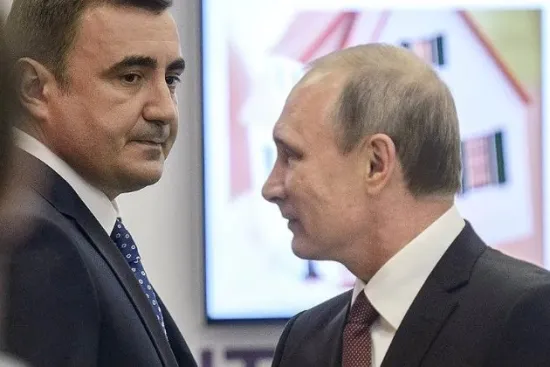
Alexei Dyumin has once again found himself in the spotlight amid reports that discussions about Vladimir Putin’s possible successors are becoming increasingly common in Russian political circles.

06.07.2026