In Russia, it appears that one in four petrol stations has restrictions on petrol sales — Russian media

Boris Bodnar
Boris Bodnar Journalist
In Russia, it appears that one in four petrol stations has restrictions on petrol sales — Russian media
Petrol stations in Russia
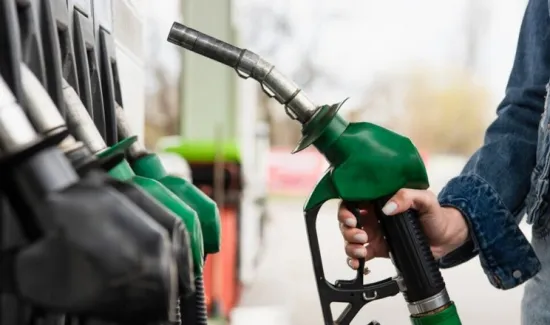
Restrictions on petrol sales in Russia have been introduced by petrol station chains, which account for approximately 25 per cent of the country’s petrol stations – in other words, almost one in four petrol stations in the Russian Federation.

This is reported by the Russian publication *Agency*.

According to media reports, Tatneft — one of Russia’s largest oil companies — has announced the introduction of a limit at its petrol stations across Russia: up to 30 litres of petrol and 60 litres of diesel per tank; for legal entities, the limit is 300 litres. Tatneft operates more than 850 petrol stations across Russia.

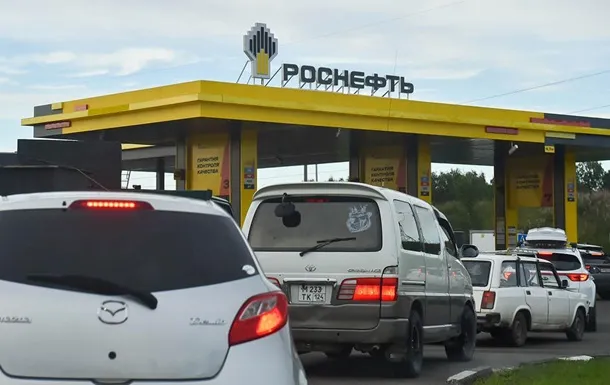
At the same time, it has been reported that a ban has been introduced on the sale of fuel in jerrycans at Rosneft petrol stations (over 2,200 stations across Russia), Bashneft (almost 500 stations) and TNK.

Lukoil has introduced limits of up to 100 litres per tank (it has over 2,800 petrol stations in the country), ‘Neftmagistral’ — up to 20 litres per jerrycan (over 100 petrol stations), and Teboil — up to 100 litres (480 petrol stations).

In addition, the OTRK network (36 petrol stations in Moscow and the surrounding region) has introduced limits at all its petrol stations — no more than 60 litres of petrol and no more than 100 litres of diesel — as has an unnamed network with 19 petrol stations in the Samara Region.

Limits are also in place at ‘Surgutneftegaz’ petrol stations in St Petersburg and the Leningrad Region (no more than 50 litres per receipt), in the Pskov and Novgorod regions (a limit of 20 litres per tank), and in the Tver region (no more than 15 litres per receipt).

In St Petersburg and the Leningrad Region, there is also a limit at ‘Kirishavtoservice’ petrol stations — no more than 50 litres.

It should be noted that, against the backdrop of regular drone attacks on Russian oil refineries, Moscow has banned petrol exports for all market participants until 31 July. Exports of aviation kerosene are restricted until 30 November.

Despite this, fuel shortages have arisen at petrol stations in some regions. In occupied Crimea, the free sale of petrol was suspended in early June, whilst in the Krasnodar Krai of the Russian Federation, fuel sales have been temporarily suspended at 15 petrol stations. Temporary limits have also been introduced at certain petrol stations in Tatarstan.

Furthermore, according to Russian media reports, the Russian government has allowed some oil refineries to produce lower-quality petrol and diesel for the domestic market — labelled as ‘Euro 5’ but meeting only ‘Euro 3’ standards.

Follow us on Telegram

Share tittle
Business
Most Ukrainian companies have no plans to hire foreign nationals and do not see any benefit in doing so — survey
Business

Most Ukrainian companies have no plans to hire foreign nationals and do not see any benefit in doing so — survey

45% of the Ukrainian companies surveyed are not currently considering the possibility of hiring foreign workers, whilst 41% would only consider it in theory.

16.06.2026
Production of Putin’s favourite car is set to cease by the end of 2026 – media reports
Business

Production of Putin’s favourite car is set to cease by the end of 2026 – media reports

The Aurus project, Russia’s flagship car, has been deemed a failure. The plant in Tatarstan will cease operations by the end of 2026, and the company’s Moscow office will begin liquidation proceedings in September.

16.06.2026
Petrol station prices have fallen sharply: how much do petrol, diesel and LPG cost on 16 June
Business

Petrol station prices have fallen sharply: how much do petrol, diesel and LPG cost on 16 June

Major Ukrainian petrol stations have reduced their fuel prices. Diesel, LPG and some grades of petrol are now cheaper.

16.06.2026
Elon Musk has stated that SpaceX could generate over $1 trillion in revenue per year by 2030
Business

Elon Musk has stated that SpaceX could generate over $1 trillion in revenue per year by 2030

American entrepreneur Elon Musk has stated that his aerospace company, SpaceX, could achieve an annual revenue of over $1 trillion by 2030. The businessman made the announcement on the social media platform X.

15.06.2026
The European Business Association has become the most active lobbyist in Ukraine
Business

The European Business Association has become the most active lobbyist in Ukraine

In Ukraine, 183 official lobbyists have already been registered in the Transparency Register, 160 of whom are currently active. The European Business Association has become the most active lobbying entity, leading both in terms of the number of issues raised and the number of contacts with government officials.

15.06.2026