In Russia, state procurement for hospitals and emergency services has begun to break down due to a fuel shortage

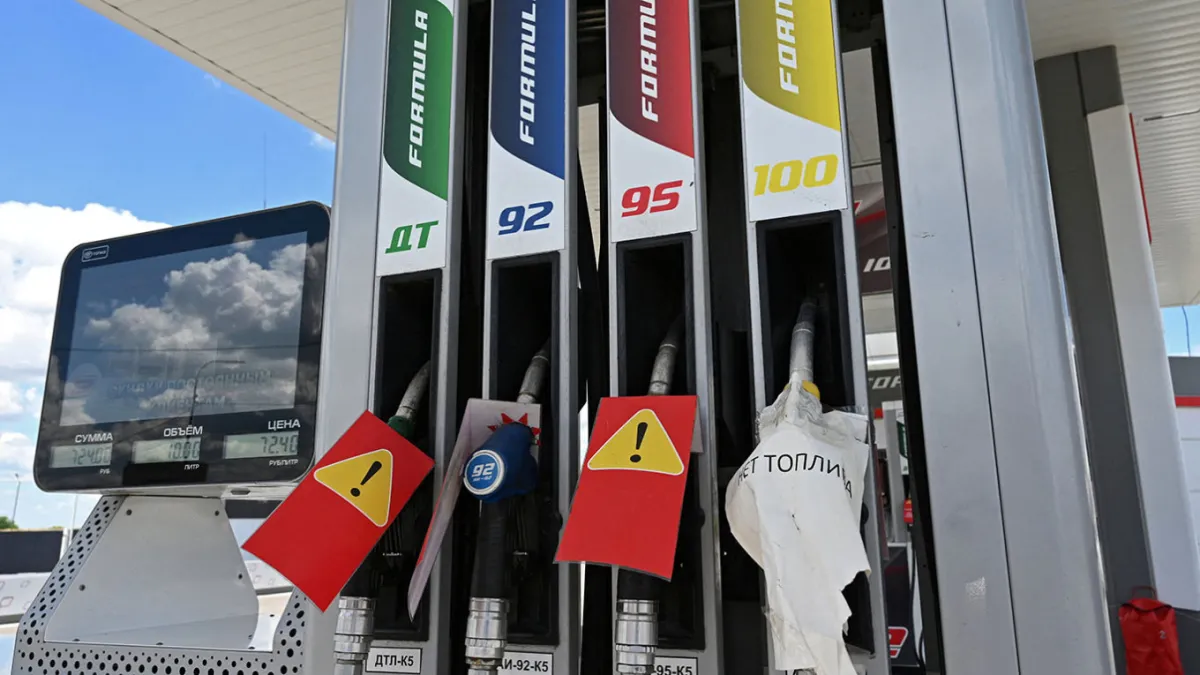
In May and June, the number of public procurement tenders for petrol and diesel fuel for medical facilities, utility companies and emergency services in Russia that were cancelled, did not take place or were re-advertised tripled compared with the same period last year. This was reported by TMT.
According to the publication, it has become unprofitable for suppliers to work under fixed-price government contracts. Whilst the tender process is ongoing, the market price of fuel is rising, so companies are preferring to sell petrol through retail chains or to commercial customers.
In particular, the Samara Regional Medical Centre ‘Dynasty’ was unable to purchase 8,500 litres of AI 92 petrol worth 580,000 roubles, as no bids were received for the tender. For a similar reason, the procurement of 28,000 litres of AI 95 petrol for the ‘Daryna’ rehabilitation centre in the Leningrad Region did not go ahead.
The Tambov Administration’s vehicle fleet, which had planned to purchase petrol and diesel fuel worth 2 million roubles, was also left without a supplier. In the Vladimir Region, a tender by the company ‘Gorelektroset’ worth 2.2 million roubles was declared unsuccessful.
In the Stavropol Krai, the fire and emergency rescue service was forced to re-advertise the fuel procurement several times, after which a contract was awarded to a single supplier. The Tuapse Social Services Centre in the Krasnodar Krai also procured fuel using the same method.
At present, hospitals, fire brigades, public transport and municipal services are being supplied with fuel from reserves and priority deliveries. At the same time, experts believe that if the shortage persists, budgetary expenditure on procurement will rise, and the number of repeat tenders will increase.
Vladimir Chernov, an analyst at Freedom Global, believes that contracting authorities will be forced to raise the initial contract values in line with market prices. In his view, remote areas may be the most vulnerable, where fuel supply disruptions risk becoming a regular occurrence due to procurement failures. This could lead to the postponement of maintenance work, a reduction in non-essential travel and longer intervals between public transport services.
Sergey Kaufman, an analyst at Finam Financial Group, shares this assessment. He highlighted the rise in fuel prices. According to Rosstat, petrol has risen in price by 13.9 per cent since the start of the year, whilst diesel has risen by 14.7 per cent. In a number of regions, a litre of AI 92 petrol already costs over 80 roubles. Under such conditions, the expert believes it is more profitable for suppliers to sell fuel to industrial consumers and independent petrol stations than to participate in state procurement.
According to Energy Intelligence, half of Russia’s oil refining capacity is currently idle due to Ukrainian attacks, and the utilisation rate of oil refineries in the first week of July fell to 3.53 million tonnes per day.
According to Reuters, during the second week of July, petrol production in Russia fell by 35 per cent to 75–80 thousand tonnes per day, whilst domestic summer demand stood at 115–120 thousand tonnes.