The EU is preparing a plan for Ukraine if Hungary blocks €90 billion

Ukraine will receive funding from European Union countries to continue the war even if Hungary and Slovakia continue to block the promised €90 billion loan.
This was reported to POLITICO by two EU diplomats.
Next week, EU leaders are set to meet at a summit in Brussels, where they will try to persuade Hungarian Prime Minister Viktor Orbán and his Slovak counterpart Robert Fico to fulfil their promise and approve the loan.
The €90 billion is expected to cover about two-thirds of the funds Ukraine needs to continue fighting the Russian invasion until the end of 2027.
However, if Budapest and Bratislava do not change their position, the Baltic and Northern European countries have a plan that will provide Ukraine with sufficient funding for at least the first half of this year.
According to the publication, this was also reported by two EU diplomats familiar with the discussions.
Another source familiar with the negotiations said that the amount in question is €30 billion.
As these may be bilateral loans, they will not require approval at the level of the European Union as a whole.
Separately, Dutch Finance Minister Elco Geenen told his colleagues on Tuesday that his government had provided for the possibility of providing Kyiv with €3.5 billion in bilateral support each year until 2029.
Two other diplomats told POLITICO about this.
Although all countries agreed to this loan in December, Budapest or any other EU capital can still block it.
The reason is that one of the bills that must be approved before the money can actually be allocated requires the unanimous support of all member states.
Responding to a question from POLITICO on Tuesday, European Commissioner for Economic Affairs Valdis Dombrovskis said that this is not the first time Hungary has caused such difficulties.
He stressed that "we will provide this loan one way or another."
The option of individual financing for Ukraine was discussed even before the December summit, when leaders of all countries agreed to move forward with a single EU loan.
At that time, the format of individual loans was considered undesirable, as it would undermine EU solidarity with Ukraine and demonstrate deep divisions within the bloc.
However, if Orbán does not back down from his opposition, this scenario may be the only way forward.
Kyiv's financing needs have temporarily decreased after the International Monetary Fund approved an $8.1 billion loan at the end of last month.
US$1.5 billion was transferred immediately.
According to four POLITICO sources familiar with Kyiv's finances, these funds should be enough to keep Ukraine solvent until early May.
Previous EU estimates suggested that Kyiv could run out of money as early as the end of March.
This would have put Ukraine in a much worse position in the war against Russia amid US-mediated peace talks and increased the urgency of European aid worth €90 billion.
The situation changed at the end of January after a Russian drone attack damaged the Druzhba oil pipeline.
This pipeline transports Russian oil through Ukraine to Hungary and Slovakia.
Budapest and Bratislava have an exemption from EU sanctions on Russian oil.
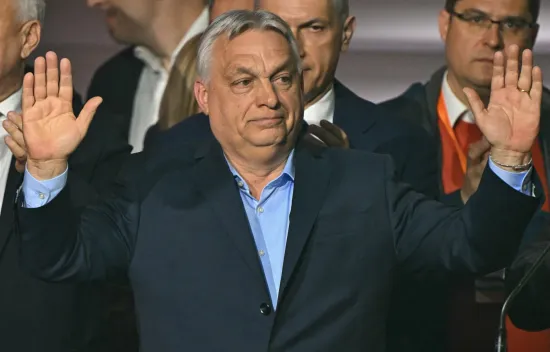
Orbán accused Ukraine of deliberately delaying repairs to the pipeline for political reasons and reneged on a commitment he made at the December summit to support a loan for Ukraine.
The Hungarian prime minister also blocked the 20th package of EU sanctions against Russia, which requires the unanimous support of all 27 leaders to be adopted.
Orbán, who is preparing for important national elections on 12 April, is campaigning on an anti-Ukrainian platform.
His Fidesz party, according to POLITICO, is significantly behind the opposition Tisza party in the polls.
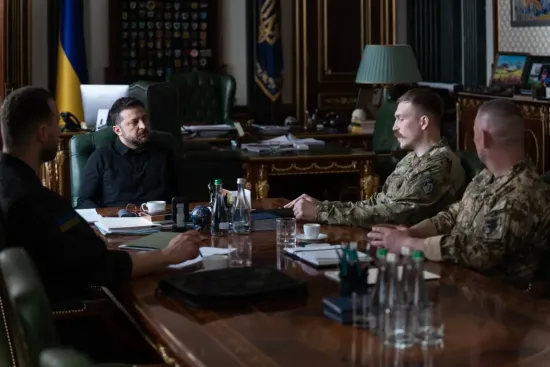
Ukrainian President Volodymyr Zelensky, who has denied accusations of political delays in repairing Druzhba, told reporters last week that although he would prefer not to do so, he could resume oil pumping through the pipeline "in a month or a month and a half."
This would mean that supplies could resume after the Hungarian elections.
Last month, Zelensky also told journalists, including POLITICO, that Ukraine was not repairing the pipeline because Russia had repeatedly attacked it, including while repair crews were working on site.
Kyiv and Brussels hope that if Orbán loses the election, opposition leader Péter Magyar may be more inclined to support a loan for Ukraine.
Three diplomats told POLITICO about this.
According to them, this could happen, especially if Druzhba is repaired or if Hungary receives other concessions from the EU.
During the election campaign, Magyar also made critical statements about Ukraine and, like Orbán, ruled out sending troops or supplying weapons.
However, he also recognised Russia as the aggressor in this war.
Diplomats hope that the prospect of unfreezing EU funds blocked for Hungary could be an additional motivator for him.
Another possible incentive could be Hungary's application for €16 billion in loans under the SAFE programme, which provides cheap financing for countries that purchase weapons in bulk.
The European Commission has not yet approved this application.
If Orbán wins the election against all odds, the EU hopes that he will back down after the vote, as he will no longer need to use anti-Ukrainian rhetoric to mobilise voters.
According to the publication, this assessment is shared by three diplomats.
As for Slovakia, Brussels considers Prime Minister Robert Fico to be less of a problem.
Two other EU officials told POLITICO about this.
On Sunday, Fico said he would block the loan until the Druzhba oil pipeline was restored, even if Orbán lost the election.
However, on Tuesday, Fico met with European Commission President Ursula von der Leyen in Paris on the sidelines of the Nuclear Energy Summit.
After the meeting, he appeared to soften his position somewhat.
In a video message on social media, Fico said that they "discussed the need to resume the transit of Russian oil through Ukrainian territory to Slovakia."
He also added: "I am glad that we share a common position with the European Commission on this issue."
One EU official noted that "we are making progress" in convincing Fico.