‘Khrushchev-era’ blocks set for demolition: Parliament explains what will happen to the flats

Katerina Melnychenko
Katerina Melnychenko Deputy Editor-in-Chief
‘Khrushchev-era’ blocks set for demolition: Parliament explains what will happen to the flats

There is an ongoing debate about how many co-owners need to agree to the demolition of the building.
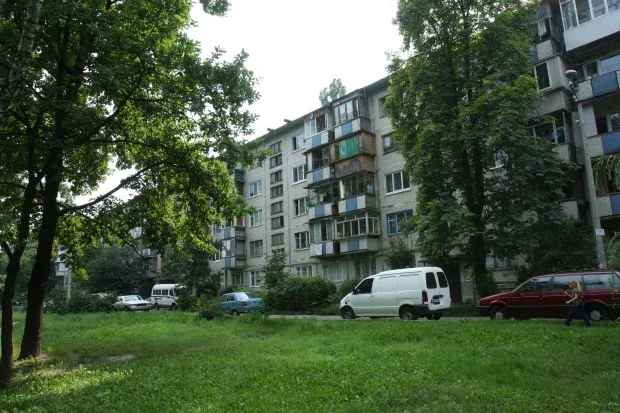
Discussions are underway in Ukraine regarding new rules for the renovation of the old housing stock, particularly ‘Khrushchev-era’ blocks, some of which are already in a dilapidated or critically dilapidated state. The Verkhovna Rada has stated that there are no plans for mass compulsory evictions, but that the mechanism for obtaining co-owners’ consent may be amended.

This was announced by Olena Shulyak, chair of the parliamentary committee on urban development.

Ukraine is preparing to renovate its housing stock, which may affect old apartment blocks, particularly the so-called ‘Khrushchev-era’ buildings.

According to Olena Shulyak, there are currently around 30,000 such buildings in Ukraine. Many of them were built in the late 1950s, and some have already reached the end of their useful life.

The Verkhovna Rada is discussing a new renovation mechanism: old buildings may be demolished, and new high-rise blocks built in their place.

Will there be forced evictions?

Parliament emphasises that there are no plans for forced mass evictions.

At the same time, there is an ongoing debate over how many co-owners must agree to the demolition of a building.

Previously, such decisions effectively required the consent of all residents. This approach may now be reviewed, as even in a dilapidated building, some owners may be categorically opposed to moving.

The new law may provide for a different decision-making mechanism – without the need for unanimous support from all flat owners.

What will happen to flat owners

Separately, the Rada is discussing compensation for residents of buildings that may be slated for demolition.

No final decision has been made yet. According to Shulyak, people may be offered new housing or financial compensation.

The key issue is that such compensation should realistically enable them to purchase another flat, rather than leaving the owners of the old property without a viable alternative.

The location of the new housing also remains important. For many people, it is essential to stay in their neighbourhood – close to work, schools, hospitals, transport and familiar amenities.

What bill is being prepared

The plan is to launch the reform through Bill No. 6458.

The bill has already passed its first reading in the Verkhovna Rada and is being prepared for the second.

It is this bill that is set to define the new rules for the reconstruction and demolition of old buildings, compensation for owners, and the mechanism for decision-making by co-owners.

Follow us on Telegram

Share tittle
Society
Ani Lorak's concerts in Russia have been cancelled following accusations that she supports the Ukrainian Armed Forces
Society

Ani Lorak's concerts in Russia have been cancelled following accusations that she supports the Ukrainian Armed Forces

Ani Lorak’s concerts in cities across the Far East have been cancelled in Russia following accusations that she allegedly supports the Ukrainian military.

03.06.2026
The 50+ mobilisation in June 2026: the home front or the front line
Society

The 50+ mobilisation in June 2026: the home front or the front line

Men over the age of 50 who are liable for military service may be called up in Ukraine if they are fit for service and do not have a deferment or exemption.

03.06.2026
Sweden wants to ban social media for children under the age of 15
Society

Sweden wants to ban social media for children under the age of 15

Sweden may join the ranks of countries that restrict children’s access to social media. A government commission is proposing to introduce a minimum age of 15 for using social media, and the relevant legislation could come into force as early as 1 January 2028.

03.06.2026
Epiphanius, Onuphrius or the Pope: which church leader do Ukrainians trust?
Society

Epiphanius, Onuphrius or the Pope: which church leader do Ukrainians trust?

Most Ukrainians are not very familiar with the country’s religious leaders – but among those they do know, Metropolitan Epiphanius enjoys the highest level of trust. Kirill, Patriarch of the Russian Orthodox Church, has no trust at all in Ukraine.

03.06.2026
The ECHR has banned the automatic detention of journalists during protests
Society

The ECHR has banned the automatic detention of journalists during protests

The European Court of Human Rights has ruled that the authorities cannot automatically detain a journalist during a protest simply because they have refused to comply with a police order to leave the scene.

03.06.2026