Cyber brigades and media patrols: young people in Russia are to be enlisted to make online ‘reports’

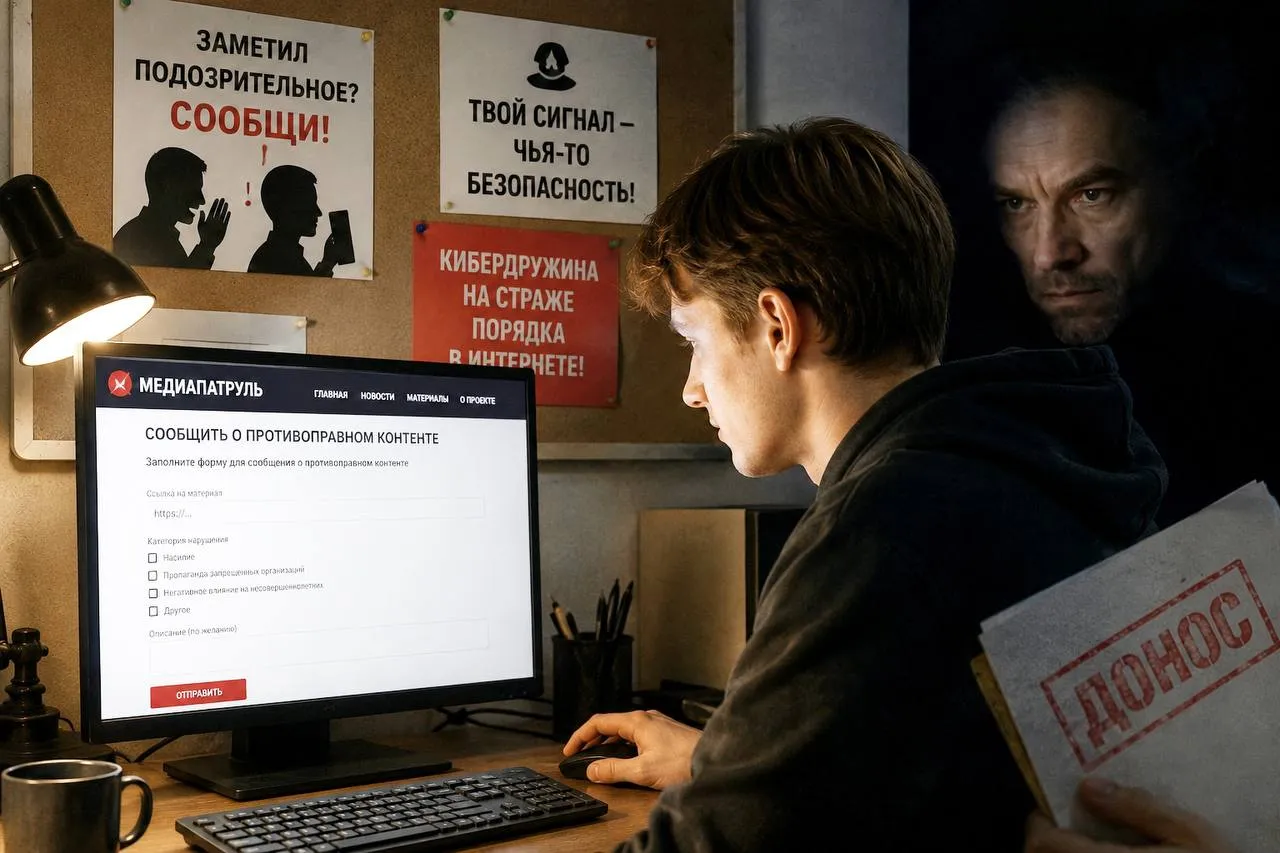
This has been reported by Russian media, citing a government document published on the Russian Federation’s legal portal.
Russia is launching a system of ‘cyber squads’ and ‘media patrols’ at the state level, which are to operate in the regions until 2030.
The programme is officially described as a set of measures to prevent “negative social phenomena” among children and young people.
It consists of 41 points and is scheduled to run from 2026 to 2030.
The document covers schools, universities and patriotic movements. In other words, this is not a one-off initiative, but the systematic integration of such monitoring into the educational and youth environment.
According to the document, Russian regions are to organise preventive measures among pupils within educational institutions. Separately, it provides for the creation or revitalisation of ‘cyber squads’ involving active students from vocational educational institutions, as well as ‘media patrols’.
Officially, such structures are intended to combat harmful content.
Russian sources refer to material related to violence, cruelty involving minors, attacks on educational institutions and other “negative” phenomena.
However, the very logic of the initiative implies that part of the control over the internet will be shifted not only to state bodies but also to “volunteers” from the youth community.
In effect, students and, through the education system, young people may be enlisted to search for content that the Russian authorities deem undesirable, with the information subsequently passed on for verification, restriction or blocking.
That is precisely why, from a Ukrainian perspective, this programme looks not like “digital security” but like the formalisation of a mechanism for online denunciation.
What is changing
The key aspect of this initiative is its scale. Whereas previously such practices in Russia might have existed on an ad hoc basis, they are now being enshrined in a state programme running until 2030.
Educational organisations, students, regional bodies and relevant government departments are being drawn into the process. The programme also provides for inter-agency cooperation to swiftly restrict the dissemination of certain materials in regional media and popular social media communities.
In other words, the Russian authorities are creating not just a system for blocking content, but a network of people tasked with seeking out, recording and passing on such content.
Officially, this is presented as a concern for children and young people. But in the context of Russian censorship and political control, such a model could become yet another means of exerting pressure on internet users.
As reported by ThePublic, mobile network operators are sending messages to Moscow residents warning of ‘temporary restrictions’ on mobile internet and SMS services from 5 to 9 May.
Follow us on Telegram