End of Energy Dependence: EU Approves Timeline to Phase Out Russian Gas

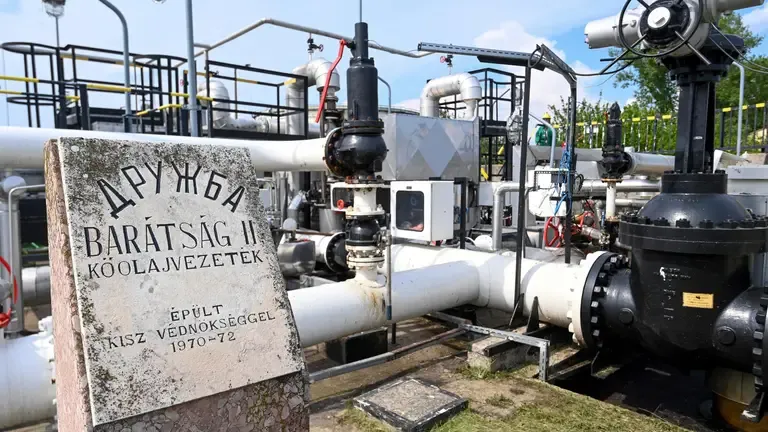
The European Union has approved a new regulation requiring member states to completely phase out imports of Russian natural gas by 2027. The agreement was reached by the Council of the European Union and the European Parliament as part of the REPowerEU initiative. The announcement was published on December 3 on the official website of the Council of the EU.
Lars Aagaard, Denmark’s Minister for Climate, Energy and Utilities — the country currently presiding over the Council — described the decision as an important step toward reducing the EU’s dependence on Russian energy resources.
The regulation sets different deadlines for banning imports depending on the type of contract.
For short-term contracts signed before June 17, 2025, imports of Russian liquefied natural gas (LNG) will be prohibited starting April 25, 2026, while pipeline gas imports will be banned from June 17, 2026.
For long-term LNG contracts, the ban will take effect on January 1, 2027, in accordance with the EU’s 19th sanctions package.
Long-term contracts for pipeline gas will be phased out beginning September 30, 2027, and must end no later than November 1, 2027, provided that required gas storage levels are met.
To ensure compliance, the EU will introduce a pre-authorization mechanism for gas imports. For Russian gas, importers will be required to submit all necessary documentation at least one month before the delivery date.
At the same time, the procedure will not apply to:
-
countries that exported more than 5 billion cubic meters of natural gas to the EU in 2024;
-
states that have fully banned or significantly restricted imports of Russian gas;
-
countries without the infrastructure needed to import natural gas.
Following Russia’s full-scale invasion of Ukraine, the European Union committed to sharply reducing imports of Russian gas, though achieving complete disengagement proved difficult.
As of October 2025, Russian gas accounted for 12% of total EU gas imports, compared with 45% at the beginning of the war.