Kyiv in the fourth winter of the war, life under power cuts

In an article by Masha Gessen, a columnist for the NY Times, she describes an episode at the end of January when hundreds of people gathered for a rave on the frozen Dnipro River. The author notes that due to the curfew, parties in Kyiv have long since moved to daytime hours, and with the lack of light and heat, people are more likely to gather outdoors. After the music ended, some of the participants went to a café near the river, but soon they announced that there was no water, and then the electricity went out. Later, the café started a generator, but without water, it could not serve food.
The text talks about Kyiv's fatigue and how, for most of the four years of full-scale war, the city has tried to maintain its usual urban life. It mentions the work of theatres, galleries and museums, education in universities and schools, and the functioning of the metro and railway, which, according to the author, has become a symbol of Ukrainian resilience. At the same time, it notes that Russian attacks on energy infrastructure, which leave people without light and heat for long periods of time, make normal life impossible.
The author also links 24 February to the fourth anniversary of the full-scale invasion and explains why four years have a special symbolic meaning for people who grew up in the Soviet environment with memories of the Second World War. The article mentions that Ukraine lost about 10 million people during World War II and describes how these stories influence the perception of the current war.
The text cites estimates by sociologist and rector of the Kyiv School of Economics Tymofiy Bric regarding the population and displacement of people. It notes that at the beginning of the full-scale invasion, excluding territories already occupied by Russia, the population could have been around 36 million. It goes on to mention six million internally displaced persons and about four million people who have left Ukraine, mainly women and children. The article also states that, according to estimates, more than 100,000 Ukrainians, both military and civilian, have been killed, and millions of people are living under occupation.
A separate section is devoted to the stories of people mentioned by the author. In particular, it talks about Taras Vyazovchenko from Irpin, who took his wife and two children out of the country on 3 March 2022, and the family now lives in Switzerland. He talks about the change in their lives and the distance in communication. The text describes how, after the Russian troops retreated from the Kyiv region, Vyazovchenko helped identify the bodies of those killed in Irpin and Bucha, and later, at the age of 46, joined the army.
The article also mentions Olena Samoilenko, who has a Ph.D. in mathematics and has been volunteering for many years, and later joined the army. The author writes that Samoilenko worked in Kherson after the occupation and after the Kakhovka dam was blown up in June 2023, and also mentions that her marriage ended. On the day of the meeting, according to the text, Samoilenko was promoted to staff sergeant. The article also mentions that 2025 was the deadliest year for civilians since the start of the war, and that the agreement to stop attacks on energy infrastructure, which, according to the text, was supposed to last a week, did not work.
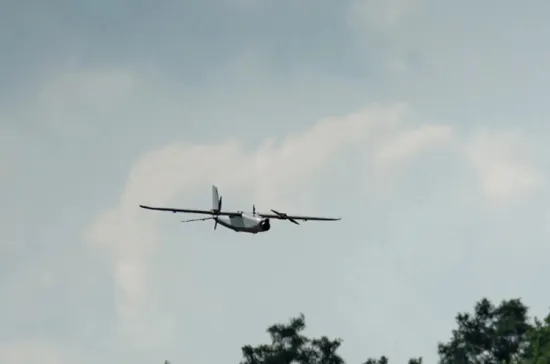
Describing adaptation to everyday risks, the author mentions underground schools in Kharkiv and the work of the Kyiv School of Economics, where classes are organised so that students can go down to shelters during air raid alerts. The article also mentions a training class for professional soldering, which is described as a skill that has become in demand in the growing drone industry.
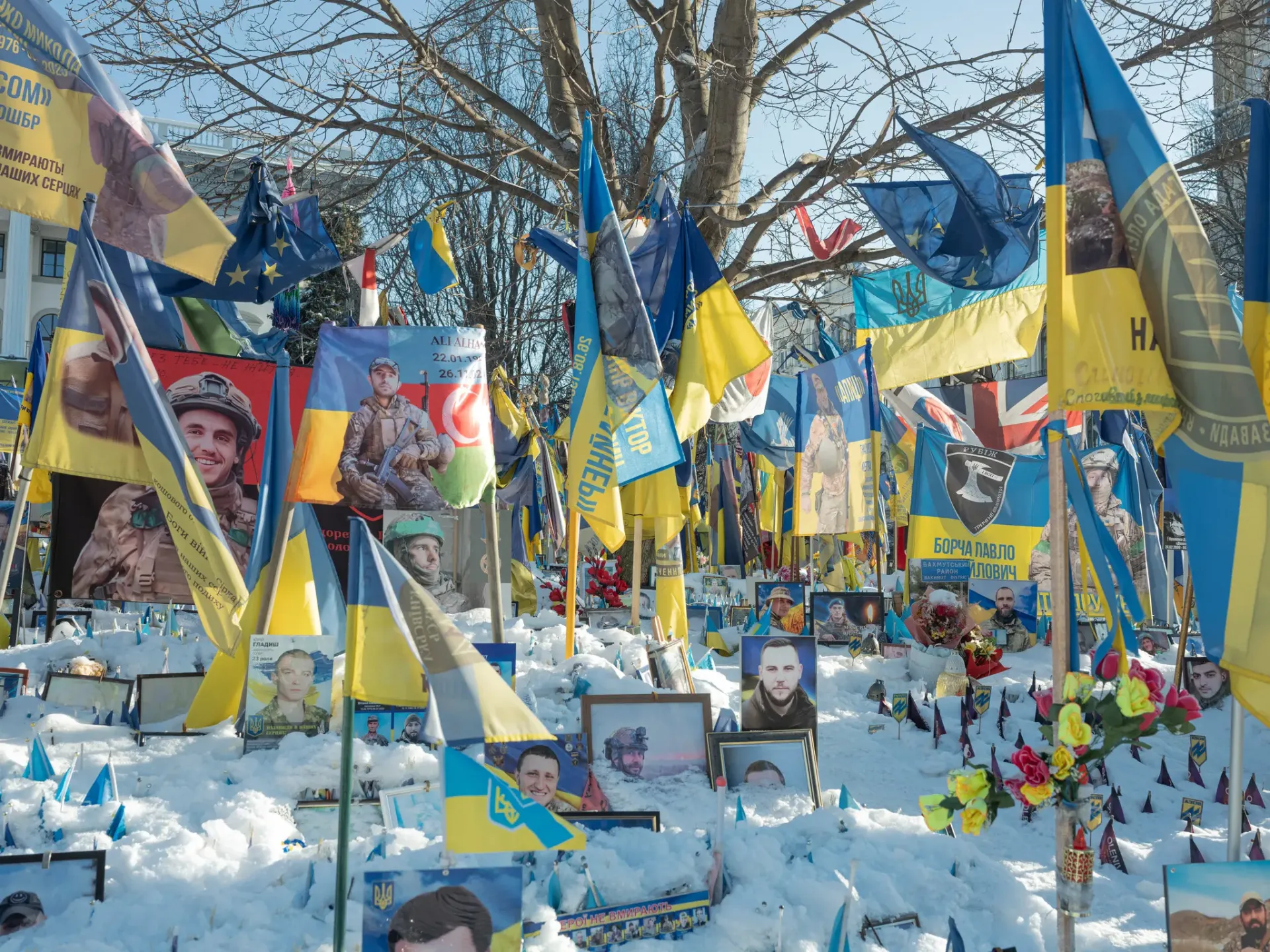
The text describes Lviv in detail as a city living through war, in particular the daily burials of soldiers. It is noted separately that Lviv has become a major centre for amputations and prosthetics, where the Unbroken and Superhumans centres operate. The article estimates that, at the time of writing, approximately 100,000 Ukrainians have lost limbs in this war.
At the end, the author mentions Mariana Mamonova, who was a military doctor in Mariupol, was captured in April 2022, spent almost seven months in a camp near occupied Olenivka, and gave birth less than a week after her release as part of an exchange. According to the text, she now works as a therapist at Unbroken. In a conversation with the author, Mamonova compares the situation in Ukraine to captivity and says that cold and lack of basic conditions have become a means of pressure.