Exchange rates in Ukraine: the euro is falling, whilst the hryvnia has stabilised

This was reported on 27 April by financial analyst Andriy Shevchyshyn.
At the end of April, Ukraine’s currency market showed signs of stabilisation.
Against this backdrop, the European currency fell in value, whilst the hryvnia took a temporary breather following the previous pressure.
The global market recorded a 0.4% fall in the euro against the dollar.
This trend was influenced by the protracted standoff between the US and Iran. Despite the cessation of active shelling, the blockade of the Strait of Hormuz is keeping oil prices high.
This is creating additional energy pressure on the European economy.
The euro is also under pressure from the risks of reduced US security support and statements about a possible direct confrontation with Russia.
In these circumstances, the European Central Bank is currently refraining from raising base interest rates, which is also weakening the European currency.
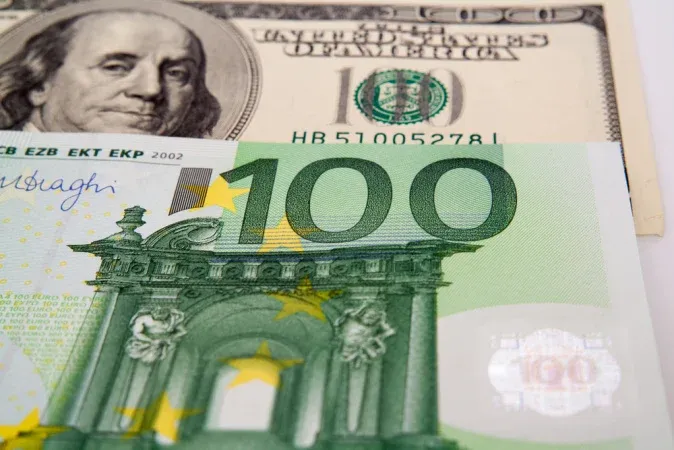
At the end of the week of 20–25 April, the official euro exchange rate in Ukraine fell by 0.4% to 51.54 UAH.
On the cash market, the fall was more pronounced – the euro fell by 0.9% to 51.87 UAH.
Meanwhile, the official dollar exchange rate rose by 0.2% to 44.00 UAH.
The cash dollar fell marginally by 0.2% to 43.97 UAH.
According to statistics for 20–22 April, activity on the interbank market increased significantly.
Average daily demand rose by 9.7% to $375 million.
Currency supply also rose – by 13.9%, from $245 million.
The average daily deficit on the interbank market rose by 2.5% – from $127 million to $130.5 million.
This corresponds to the peak figures for March.
Currency sellers have become noticeably more active in the cash market.
The average daily volume of currency sales by clients rose by 33.5% – from $57 million to $76.3 million.
This even allowed a surplus to be formed on the first day of the week.
At the same time, cash currency purchases rose by only 4.4% – to $81 million.
As a result, the average daily deficit in the cash market fell by 75.6% – from $20.8 million to $5.1 million.
The analyst attributes this massive surrender of currency by the public to the tax payment period.
Sole traders settled their tax liabilities for the first quarter by 20 April, whilst citizens filed their annual tax returns for 2025.
The total average daily currency deficit in the cash and non-cash markets fell by 8.4% over the week.
It fell from $148 million to $135.5 million.
As a result, the National Bank of Ukraine reduced currency sales from reserves by 3.5% – to $812.4 million.
At the same time, the NBU’s off-market interventions rose by 32% – to $26.9 million.
Despite this, this figure remains below the 2025 average.
A range of macroeconomic data is expected to be published next week.
These include the budget, wages, and the trade and current account balances.
The market will also be monitoring meetings of key central banks.
The NBU is expected to keep its key policy rate at 15%.
The US Federal Reserve is forecast to keep its rate at 3.75%, and the European Central Bank at 2%.
The market also expects significant payments on government bonds.
This involves UAH 18.5 billion in hryvnia redemptions and coupon payments, as well as USD 200 million in foreign currency securities.
Andriy Shevchyshyn forecasts stable exchange rate movements in the coming days.
The market will be influenced by the tax period and expectations regarding central bank decisions.
Under the base scenario, the cash dollar exchange rate will fluctuate within the range of 43.75–44.25 UAH.
The euro exchange rate is expected to be within the range of 51.25–52.00 UAH.
At the same time, the long-term trend towards the devaluation of the hryvnia remains. According to the
analyst’s assessment, the National Bank will curb the pace of this process, as it is outpacing inflation and the returns on bank deposits.
As reported by ThePublic, cryptocurrencies in political financing were discussed in Ukraine: the experience of Moldova and Romania
. Follow us on Telegram