The Ministry of Defence has explained how military personnel can appeal against a commander’s decision

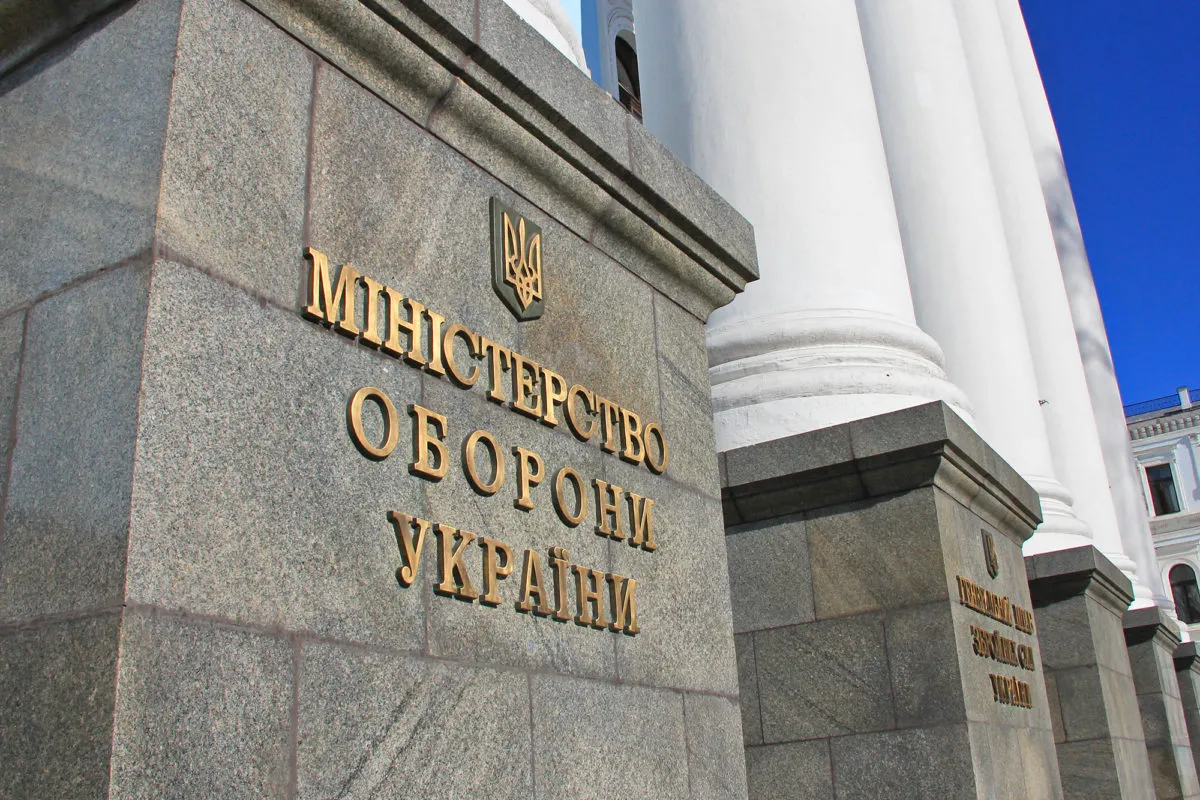
This was reported by the Ministry of Defence of Ukraine.
The Ministry of Defence has published guidance for Ukrainian Armed Forces personnel on challenging the actions and decisions of commanders.
The Ministry explained that a serviceman may lodge a complaint if a commander or other servicemen have taken an unlawful decision, or committed an act or omission that infringes upon his rights, legitimate interests or freedoms.
Also subject to appeal are the unlawful imposition of duties, unlawful prosecution, violations of the equal rights of women and men, sexual harassment, gender-based violence, or offences against sexual freedom and integrity within the military community.
In addition to the actions of commanders, decisions by military authorities may be appealed. In particular, this concerns decisions by the military medical commission, orders regarding disciplinary sanctions, and the procedure for calculating and paying financial allowances.
Three rules before filing a complaint
The Ministry of Defence has outlined three basic rules that you need to know before initiating an appeal.
Firstly, filing a complaint does not suspend the order. The order must be carried out even whilst the complaint is being considered.
The exception is a clearly criminal order. A subordinate is obliged to refuse to carry out such an order.
Second – complaints must be submitted individually and in accordance with the chain of command. Collective complaints do not comply with the statutory procedure for lodging complaints within the Armed Forces of Ukraine.
Thirdly, complaints must not be lodged whilst performing official duties. In particular, this applies whilst in formation, on guard duty, on standby or during training. An exception is made for established procedures, such as official personnel surveys.
Where can a serviceman turn
The Ministry of Defence explains that there are two ways to protect one’s rights – extrajudicial and judicial.
The extrajudicial route involves appealing to the command, control and supervisory bodies within the military hierarchy and the system of state control.
The judicial route involves appealing to an administrative court if other mechanisms have failed or the situation requires immediate independent review.
The basic option is a written report to one’s immediate commander. If the actions of the immediate commander are being challenged, the report is submitted to a senior officer.
The commander who receives the complaint must consider its substance, verify the circumstances and make a reasoned decision. If the matter does not fall within their competence, the complaint must be forwarded to the appropriate authority.
The standard processing time is up to 30 days. In complex cases, up to 45 days.
How to submit a report correctly
The Ministry of Defence emphasises: the report must be submitted in such a way that proof of submission remains.
This could be a registration stamp on the second copy or sending it by registered post with a list of contents.
Without such confirmation, it will be difficult to prove the very fact of the complaint in the future.
The report must include the full name of the addressee, the applicant’s details, a chronology of events, specific provisions of regulations or laws which, in the soldier’s opinion, have been breached, as well as a clear request: to revoke the decision, conduct an investigation, carry out a recalculation, or take other action.
Copies of orders, acts or other documents confirming the circumstances described should be attached to the appeal.
Hotline, VSP, ombudsmen and DBR
If an appeal at unit level yields no result, the serviceman may contact the Ministry of Defence hotline on 1512. It deals with issues relating to provisions, payments and procedural violations.
You can also contact the Military Law Enforcement Service. The Military Law Enforcement Service investigates breaches of the military code, abuse of authority by commanders and physical violence.
The Office of the Military Ombudsman considers complaints regarding violations of servicemen’s rights, particularly concerning social protection, provisions and compliance with statutory regulations. The processing time is 10 working days, and in cases involving a threat to life or health, no later than 3 days.
The Verkhovna Rada Commissioner for Human Rights should be contacted if the violations concern discrimination or the humiliation of a service member’s honour or dignity.
The Specialised Prosecutor’s Office for Defence matters considers complaints regarding unlawful actions by the command, violations of military personnel’s rights, and issues relating to continued service.
The State Bureau of Investigation (SBI) should be contacted when the actions of the command show signs of a criminal offence. For example, abuse of power involving the use of violence or bullying of a subordinate.
When to go to court
If out-of-court mechanisms have not helped, a military personnel has the right to apply to an administrative court.
The subject of the appeal may include unlawful orders, decisions of the Medical Examination Commission, disciplinary sanctions and other decisions by military authorities.
The Ministry of Defence has reminded the public of the time limits. In cases concerning public service, there is a one-month time limit for bringing a case to court from the date on which the person became aware or should have become aware of the violation of their rights.
If a pre-trial appeal was used before the court, the time limit is three months from the date of receiving the response.
Servicemen are exempt from paying court fees in cases related to the performance of military duty and official duties, provided the court confirms this connection.
The Ministry of Defence advises first to document the violation, keep copies of documents, prepare a written appeal, submit it with a receipt of service, and, in the event of inaction, appeal to higher authorities or the court.
As reported by ThePublic, Yuriy Gudymenko, Chairman of the NGO “Ukrainian Association Mriya” and Head of the Public Anti-Corruption Council at the Ministry of Defence, stated that for demobilisation in the Ukrainian Defence Forces, it is necessary either to automate the army more actively or to find more people for service.
Follow us on Telegram