Mobile checkpoints during martial law, document checks and the actions of the TCC

Contents:
What is a mobile checkpoint?
Where can checkpoints be set up
Who is authorised to check documents
Can they serve a summons or take you to the TCC at a checkpoint
What to do if you are stopped at a mobile checkpoint
What happens if you do not stop when ordered by the TCC
Mobile checkpoints in Ukraine form part of the defence measures implemented under the Law of Ukraine on the Legal Regime of Martial Law. Their number is determined by orders from the military command, decisions by military administrations and the Command of the Territorial Defence Forces of the Armed Forces of Ukraine.
The specific number of such posts is not established by publicly available regulations, as information regarding their location and numbers is classified.
What is a mobile checkpoint
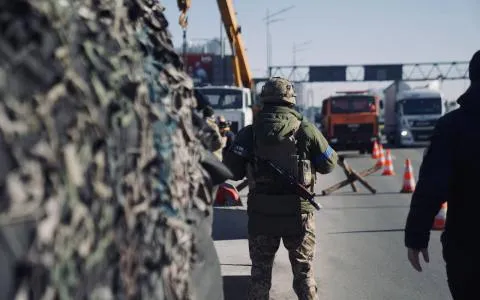
A mobile checkpoint is a temporarily deployed control point that may change location depending on the operational situation. It is used to control traffic flows, check documents, inspect vehicles and prevent sabotage.
The establishment and operation of mobile checkpoints are based on Articles 8 and 11 of the Law of Ukraine “On the Legal Regime of Martial Law” of 12 May 2015 No. 389 VIII, Article 18 of the Law of Ukraine “On the National Police” of 2 July 2015 No. 580 VIII, and Article 24 of the Law of Ukraine “On the Armed Forces of Ukraine” of 6 December 1991 No. 1934 XII. It is these provisions that define the legal grounds for the introduction of a special regime of movement and the powers of law enforcement agencies during martial law.
Where checkpoints may be established
The deployment of mobile and stationary checkpoints is carried out on the basis of Articles 8 and 11 of the Law of Ukraine “On the Legal Regime of Martial Law” dated 12 May 2015 No. 389 VIII, as well as in accordance with the Resolution of the Cabinet of Ministers of Ukraine dated 29 December 2021 No. 1455 "On the Approval of the Procedure for Carrying Out Measures at Checkpoints".
Checkpoints may be established at the entrances and exits of populated areas, on internal roads of strategic importance, near critical infrastructure facilities, at the boundaries of administrative territories and in other locations determined by military administrations and the National Police, taking into account security requirements.
Who is authorised to check documents
Only entities authorised by law are entitled to check documents at checkpoints. These include servicemen of the Armed Forces of Ukraine, whose powers are defined by Article 24 of the Law of Ukraine “On the Armed Forces of Ukraine” dated 06.12.1991 No. 1934 XII and Article 8 of the Law of Ukraine “On the Legal Regime of Martial Law” dated 12.05.2015 No. 389 VIII.
National Police officers carry out document checks on the basis of Articles 23 and 31 of the Law of Ukraine “On the National Police” of 2 July 2015 No. 580 VIII.
Such powers are also held by servicemen of the National Guard of Ukraine in accordance with Articles 2 and 5 of the Law of Ukraine “On the National Guard of Ukraine” of 13 March 2014 No. 439 VIII. Territorial defence forces have specific powers to check persons and vehicles at checkpoints in accordance with Article 8 of the Law of Ukraine “On the Fundamentals of National Resistance”.
Can a summons be served or delivered to the TCC at a checkpoint?
A summons may be served at a checkpoint if this is done by authorised representatives of territorial recruitment and social support centres. This right stems from Articles 22 and 38 of the Law of Ukraine “On Military Duty and Military Service” of 25 March 1992 No. 2232 XII, which allow representatives of the TCCs to notify conscripts and persons liable for military service at their place of residence.
The checking of documents and identification at a checkpoint is lawful provided that police officers or military personnel authorised under Article 18 of the Law of Ukraine “On the National Police” and Article 24 of the Law of Ukraine “On the Armed Forces of Ukraine” are present.
At the same time, a person cannot be taken away or forcibly brought to the TCC without legal grounds. Administrative escort is possible only in the cases specified in Article 259 of the Code of Ukraine on Administrative Offences, and is carried out by the police, not independently by representatives of the TCC. If a person has no documents or there are signs of an offence, law enforcement officers may escort them for the purpose of establishing their identity, but not for forced mobilisation.
Any actions must comply with the legal regime of martial law, as enshrined in the Law of Ukraine “On the Legal Regime of Martial Law”.
What to do if you are stopped at a mobile checkpoint
When stopped at a mobile checkpoint, a driver or pedestrian is obliged to comply with the lawful demands of authorised persons, as stipulated by the Law of Ukraine “On the National Police” dated 2 July 2015 No. 580-VIII.
You must present identity documents and vehicle registration documents, and comply with instructions regarding the inspection of the vehicle or luggage, if this is provided for by a decision of the military command on the basis of Article 8 of the Law of Ukraine “On the Legal Regime of Martial Law”.
Once identity has been established, further questions may be asked regarding the route of travel or the purpose of being in a particular area. If representatives of the Military Registration and Enlistment Office are present at the checkpoint, they may verify details regarding military service for cross-referencing with the register. If no offences are detected, the citizen has the right to continue their journey freely. The procedure, as stated in the text, must be carried out correctly and within the law, without exceeding powers.
What happens if you do not stop when requested by the TCC
Only those entities authorised by law may issue a request to stop a vehicle. TCK staff do not have the authority to stop vehicles on the roads on their own, as such powers belong to the National Police in accordance with Article 35 of the Law of Ukraine “On the National Police” dated 02.07.2015 No. 580 VIII.
If the request to stop comes from the police or military personnel acting within the scope of Article 8 of the Law of Ukraine “On the Legal Regime of Martial Law”, failure to comply may be regarded as an administrative offence under Article 122-2 of the Code of Ukraine on Administrative Offences, namely as failure to comply with a request to stop a vehicle.
Furthermore, ignoring a lawful order may constitute grounds for pursuit or the forced stopping of a vehicle, which is lawful during the period of martial law. However, if a person fails to stop at the request of TCC personnel alone, without the involvement of the police or military, no legal liability arises, as such requests have no legal force. At the same time, when working jointly with the police, failure to comply with a signal to stop will result in the consequences specified by law.