Oil exceeds $107 per barrel: market reacts to blockade of Strait of Hormuz

This was reported by Bloomberg.
At the start of trading on Monday, 9 March 2026, the price of WTI crude oil exceeded $100 per barrel for the first time since July 2022. After the opening of trading, prices continued to rise, with both key grades — WTI and Brent — trading above $107 per barrel.
According to Bloomberg, prices jumped by about 20% just a few minutes after the market opened.
The main factor behind the sharp rise was the war between the US and Israel against Iran, which began in late February 2026. The conflict effectively blocked the Strait of Hormuz, one of the world's most important energy arteries.
More than $500 billion worth of oil and gas was transported annually through the narrow strip of water between Iran and Oman. This is approximately 20% of all global oil and liquefied natural gas supplies.
The worst crisis in a decade
Oil market analyst Phil Verleger compared the current situation to two previous global shocks — the 1990 Gulf War and Russia's invasion of Ukraine in 2022.
According to him, the scale of the disruption to supplies could be greater than during previous crises.
In 1990, after Iraq's invasion of Kuwait, the market lost approximately 4-5 million barrels per day. In 2022, sanctions against Russia gradually restricted access to 7-9 million barrels of oil per day.
However, at that time, the Strait of Hormuz was not blocked, whereas now almost no tankers pass through it.
Empty strait
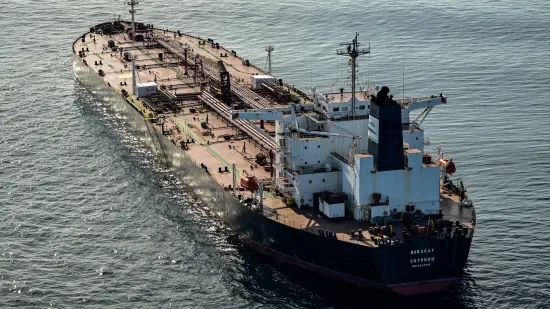
According to Vortexa, only four oil tankers passed through the Strait of Hormuz on Sunday, 1 March. At the beginning of the year, the average was approximately 24 tankers per day.
The Joint Maritime Information Centre reports that normally about 138 ships pass through the strait every day.
Major shipping companies, including Maersk, have officially suspended transit. Iran's Islamic Revolutionary Guard Corps has issued warnings that effectively ban shipping in the area.
The alternative route around the Cape of Good Hope increases delivery times to Asian markets by 10–14 days, significantly increasing logistics costs.
How prices have changed
Brent crude closed at $72.48 per barrel on Friday, 28 February. By Sunday, after the resumption of futures trading, the price had risen to $79.11.
At the end of the week, WTI rose 35.63%, the largest weekly increase since the launch of the futures contract in 1983.
Brent rose by almost 28% over the same period, the largest increase since April 2020.
Since the start of the war until 9 March, oil prices have risen by more than 55% compared to January lows.
Qatar's Energy Minister Saad al-Kaabi told the Financial Times that Gulf countries could halt production in a matter of days if tankers are unable to pass through the Strait of Hormuz.
In that case, he said, prices could rise to $150 per barrel and pose serious risks to the global economy.
Consequences for consumers
The average retail price of petrol in the US reached $3.41 per gallon over the weekend, an increase of $0.43 over the week.
In Ukraine, which is heavily dependent on imported diesel fuel and petrol, a sharp rise in oil prices could affect prices at petrol stations. This usually happens with a delay of about 2-4 weeks after a global price jump.
Analysts at Capital Economics have calculated that a stable oil price of $100 per barrel could add 0.6-0.7 percentage points to global inflation.
This creates additional difficulties for central banks, in particular the US Federal Reserve and the European Central Bank.
Attempts to stabilise the market
US President Donald Trump said that, if necessary, the US Navy could begin escorting tankers through the Strait of Hormuz.
However, the market reacted cautiously. Further price increases indicate that traders do not yet consider these statements sufficient to stabilise the situation.
Trump also said that the conflict could last a month or longer and demanded Iran's "unconditional surrender," which effectively rules out the possibility of negotiations in the near future. Market
participants view such statements as a signal of prolonged uncertainty in the energy markets.