Grain prices in Ukraine have fallen below production costs: how the suspension of shipping is hitting farmers

This is reported by Latifundist.com, citing analysts at Barva Invest.
The ports of Greater Odesa remain the main route for Ukrainian grain exports. When shipowners cancel voyages, traders are unable to guarantee the export of crops that have already been purchased.
As a result, exporters are cutting back on purchases, renegotiating previously concluded agreements or lowering prices to factor in the costs of insurance, storage and the potential need to find an alternative route.
The government has not imposed any restrictions on shipping. The decision to temporarily avoid calling at Ukrainian ports was taken by the shipowners themselves following an intensification of Russian attacks.
According to Reuters, over the course of a month – from 20 June to 20 July – Russia attacked 28 civilian vessels. Twenty-one people were killed. Ukraine has already lost around a third of its capacity to export grain via key Black Sea ports.
Global grain prices are rising, whilst Ukrainian grain is falling in price
The halt to Ukrainian maritime exports has created opposing price trends. On global exchanges, grain prices are rising due to fears of reduced supplies from the Black Sea region, whilst within Ukraine prices are falling due to weak demand from traders.
According to Barva Invest’s calculations, the September wheat futures contract on the Chicago Board of Trade rose by the equivalent of $10.2 to $259.3 per tonne. On Euronext, the corresponding figure rose by $11.1 to $278.7 per tonne.
At the same time, the price of Ukrainian wheat delivered to deep-water ports stood at $190–195 per tonne. This is a DAP price, which already takes into account delivery of the product to the port.
The difference between global and Ukrainian prices essentially comes down to logistics, insurance and risks. The more difficult it is to export grain from Ukraine, the less traders are willing to pay the producer directly.
How much have purchase prices fallen?
The first sharp changes in the market began following the intensification of attacks on ports and vessels in mid-July. NIBULON informed suppliers of a reduction in purchase prices at its grain elevators and suspended grain acceptance at certain port terminals.
Kernel also revised prices at its terminal in Chornomorsk. The purchase price for second- and third-grade wheat and maize fell by 200 hryvnias per tonne – to 10,200 hryvnias. Fourth-grade wheat was valued at 9,700 hryvnias per tonne, and barley at 9,150 hryvnias.
According to Barva Invest, at some grain elevators the price on offer no longer covers production costs. There is no single cost indicator: it depends on yield, the cost of seed, fertilisers, fuel, land rent, loans and the region.
How this will affect farmers
Selling grain below production costs means that farmers will lose money on every tonne. At the same time, not all producers can afford to delay sales.
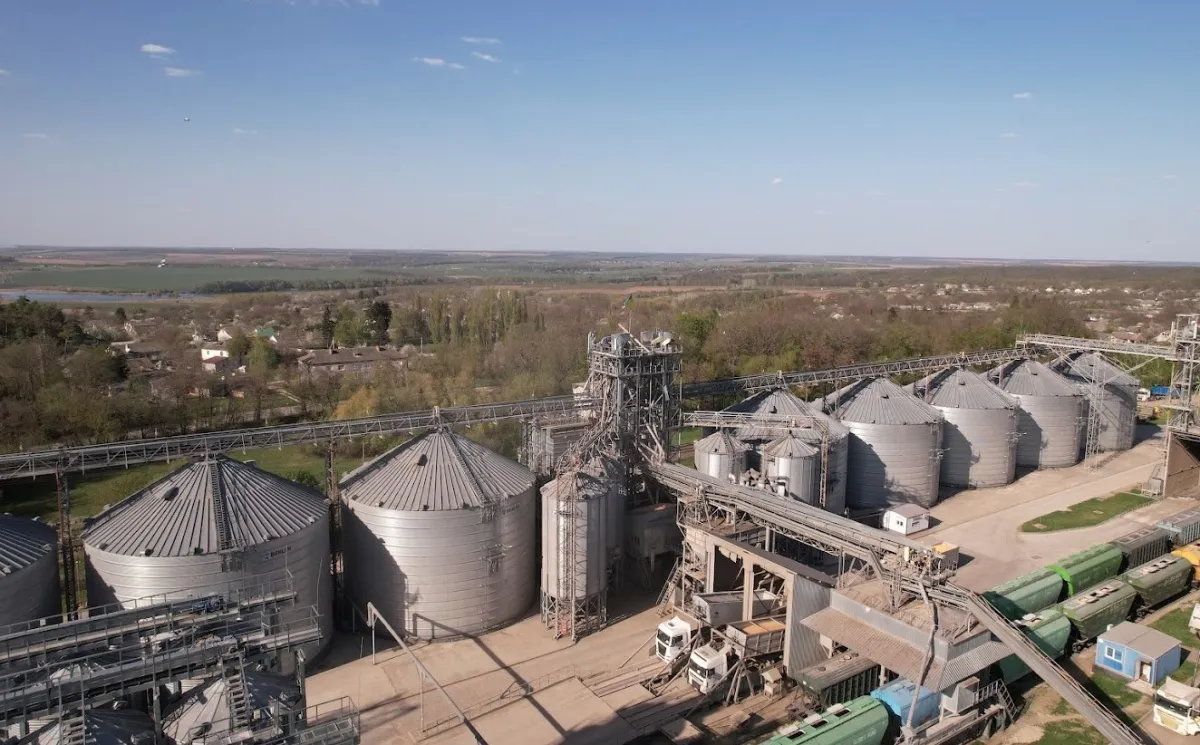
Farmers need funds for harvesting, fuel, wages, land rent payments and loan repayments. If they do not have their own storage facilities, they will have to pay grain elevators extra for storing the grain.
A prolonged export ban could also lead to warehouses becoming overfilled. In that case, the domestic supply of grain will increase, putting further pressure on purchase prices.
The situation is most difficult for small and medium-sized farms that do not have their own grain silos, sufficient cash reserves or the ability to organise transport to alternative export points themselves.
Can the Danube ports and the railways help?
Alternative routes include the Danube ports, dry ports and railway crossings on the western border. Taras Vysotskyi, Minister of Agrarian Policy, has stated that their capacity is not yet being fully utilised.
However, for producers in the central, northern and eastern regions, transporting grain to the Danube or the EU border is more expensive. Additional costs for rail, road transport and transhipment reduce the amount the farmer ultimately receives.
The Danube ports are the most convenient for farms in Bessarabia. They also remain under threat of Russian attacks and therefore cannot fully replace the deep-water ports of Greater Odesa.
When the situation becomes critical
Taras Vysotskyi has urged farmers and traders not to rush into selling grain, as the situation with shipping could change from one day to the next.
A brief pause in ship arrivals will not ruin the year’s exports. However, if the restrictions last for several months, Ukraine may miss out on foreign exchange earnings, whilst farmers may face a shortage of funds and storage facilities for the new harvest.
A fall in grain purchase prices does not automatically mean that bread or other food products will become cheaper in shops. A significant portion of the retail price is made up of costs for processing, energy, packaging, transport and distribution.
Follow us on Telegram.