Pension reform in Ukraine: who is set to receive higher payments, and what will happen to length of service?

The forthcoming pension reform is set to be based on a three-tier model. The first tier is the revamped pay-as-you-go system, which currently provides the bulk of pension payments. The second tier consists of occupational pensions for specific categories of workers. The third is voluntary savings schemes with automatic enrolment of employees.
The main idea behind the reform is that a pension should depend not on formal status, position or the year of retirement, but on how much a person has actually paid in contributions throughout their life. In other words, the longer a person has officially worked and the higher their contributions have been, the larger their pension payment should be.
The Ministry of Social Policy has previously explained that the current system creates inequality: people with the same length of service and salary may receive different pensions simply because they retired in different years. It is precisely this imbalance that the government wishes to eliminate.
They want to raise the minimum pension to 6,000 UAH
One of the most notable points is the minimum benchmark for pension payments. The Ministry of Social Policy has proposed that the total pension amount should be at least 6,000 UAH. This involves combining the basic and insurance components.
The basic payment is intended for people who have reached retirement age but have not been able to accumulate sufficient insurance contributions. The ministry noted that this model should help reduce poverty amongst some pensioners.
Who is eligible for a higher pension
One of the aims of the reform is to encourage long-term formal employment. For citizens with 40 years or more of employment history, the possibility of increasing pension payments by one and a half to two times compared with current levels is being considered.
However, there is an important condition: this applies specifically to official insurance periods for which contributions were paid. Under this logic, undeclared work, ‘envelope’ wages or years without paying social security contributions do not entitle a person to a higher pension.
What will happen to the retirement age
The government is not currently considering raising the retirement age. However, the requirements for the insurance record are already increasing under the current rules.
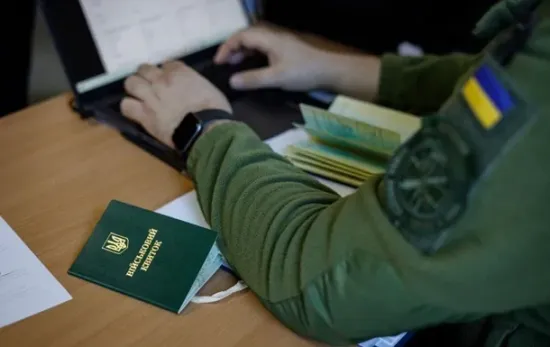
According to the Pension Fund, by 2026, a person will need at least 33 years of insurance record to retire at 60. At the age of 63, a pension can be claimed with at least 23 years’ insurance record, and at the age of 65, with at least 15 years.
The requirement for retiring at 60 will gradually increase: in 2027, 34 years of insurance will be required, and from 2028 onwards, 35 years.
Changes to special pensions
A separate part of the reform concerns special and preferential pensions. According to RBC-Ukraine, payments for preferential service or early retirement will no longer be funded from the general solidarity budget. The aim is to create a mechanism for occupational pensions for these categories.
In other words, the logic is as follows: if a particular profession entitles the holder to an earlier retirement or special conditions, this should be funded separately — through increased social security contribution rates or other funded schemes. According to preliminary data, the transition to the new model could take up to 13 years.
How the funded system will work
The third tier consists of voluntary pension savings with ‘automatic enrolment’. The Ministry of Social Policy explained that every employee will be automatically enrolled in the funded tier with contributions deducted, but individuals will be able to opt out.
If an employee opts out, they will rely solely on the pay-as-you-go system in the future. The ministry also noted that, together with other bodies, it is exploring options for investing funds to protect pension savings.
What is important to understand
At present, this is a reform concept rather than a law that has already been passed. Therefore, specific amounts, formulas, launch dates and detailed rules may still change during the discussion and drafting of the bill.
For the public, the main takeaway is simple: the pension system is moving towards a model where the official salary, contributions paid and length of service will be the decisive factors. Simply reaching the age of 60 no longer guarantees automatic retirement if the required length of service has not been met.
Follow us on Telegram.