Poland abolishes the Central Anti-Corruption Bureau

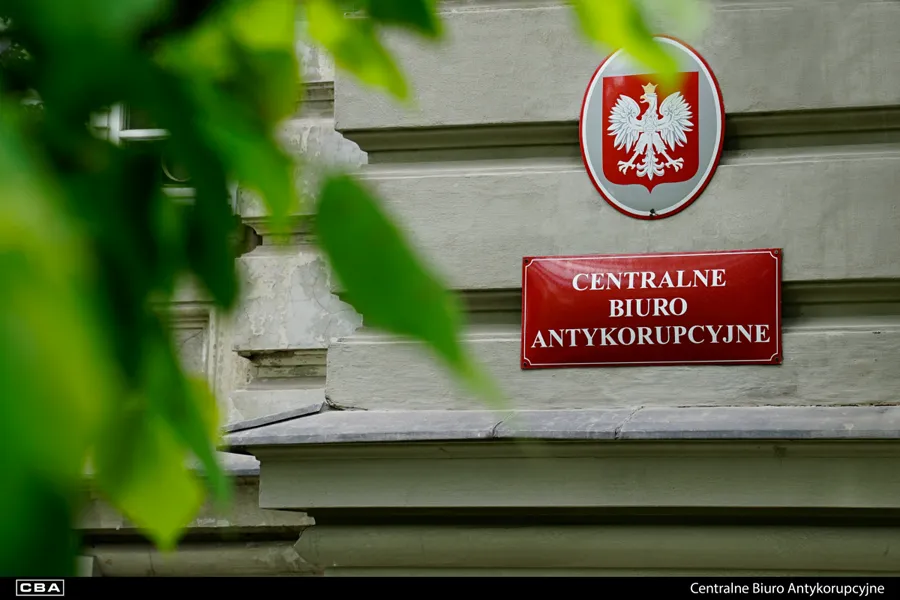
Poland has decided to abolish the Central Anti-Corruption Bureau — CBA, reports ThePublic.info , citing the publication «Apostrophe».
"It is the very agency that for over fifteen years was a symbol of «zero tolerance» for bribery and corruption. The irony is that it is being abolished not by enemies of corruption, but by those who believe: the system created to fight evil has itself become part of it," - the publication notes.
For Ukraine, this is a worrying signal. After all, many today ask: does the NABU (National Anti-Corruption Bureau of Ukraine) not repeat the Polish path — from a symbol of reform to a tool of political games?
The Polish government announced: CBA will cease to exist on May 1, 2026. Its functions will be divided among the police, the Internal Security Agency (ABW), and the Tax Administration (KAS). A new unit will be created within the police — Centralne Biuro Zwalczania Korupcji (CBZK), which is to become the successor to the bureau. Formally — this is modernization. In fact — dissolution.
Minister of Justice Adam Bodnar explains: «CBA has lost trust, has become politicized and ineffective». In other words, what was once meant to uncover corrupt officials has itself fallen into a political trap. And indeed, in recent years, the bureau resembled not so much a law enforcement agency as an instrument of internal political struggle. Investigations against the opposition, selective cases, “leaks” of information — all of this undermined trust.
The process of abolishing the Central Anti-Corruption Bureau (CBA) in Poland is unfolding gradually, with clearly defined stages. On December 10, 2024, the Polish government approved the first draft law on coordinating anti-corruption activities, which envisaged the abolition of CBA. According to the initial version of the document, the bureau was to cease operations on July 1, 2025. However, by mid-2025, it became clear that President Andrzej Duda would not sign this bill due to identified legal “errors” (usterki prawne). As a result, the reform was postponed.
The next stage took place on October 4, 2025, when the Polish government announced an updated version of the bill. It states that CBA will be abolished on May 1, 2026, with some preparatory provisions coming into force as early as February 2026.
The Polish budget for 2026 allocates 334.7 million zlotys for the financing of CBA. After its abolition, these funds are planned to be redistributed among other structures: 73% will go to the police, 15.5% to the Internal Security Agency (ABW), and 11.5% to the Tax Administration (KAS). According to government plans, from the staff of CBA, which includes about 1,300 employees and 200 civilian workers, 950 officials and all civilian employees will join the new structure — Centralne Biuro Zwalczania Korupcji (CBZK). The rest are planned to be transferred to ABW and KAS.
Minister of Justice Adam Bodnar calls the reform «a reboot», arguing that CBA «lost trust, became politicized and ineffective». On the other hand, critics point out: transferring anti-corruption functions to the police and subordinate structures could create an even greater risk of these bodies being used for political control. They also say that the bill has legal gaps (“usterkiprawne”) and that some changes may have been rushed.
Lessons for Ukraine: how to lose trust and what to do about it
Ukraine has its own «anti-corruption triangle» — NABU, SAP, the High Anti-Corruption Court. And although these institutions were created with the support of international partners and under public oversight, discussions around their work in a negative light are not diminishing. NABU has repeatedly been at the center of scandals — conflicts with prosecutors, leaks of cases, mutual accusations between agencies, as well as completely unfounded cases, as in the case of Archer. Each new conflict erodes trust in the body that was supposed to be a model of integrity.
The Ukrainian society signals that expectations for real results from the anti-corruption system are decreasing: according to a March 26, 2025, survey by the Razumkov Center, distrust in NABU, SAP, and the High Anti-Corruption Court has risen to approximately 62-73% for these institutions. This means that the «symbol of anti-corruption», often represented by NABU, no longer works as it did before.
The Polish experience demonstrates: when society stops believing in an «independent anti-corruption officer», this institution becomes doomed. In Warsaw, they did not wait for the system to collapse — they decided to reboot it forcibly.
The Polish authorities explain the reform as an attempt to «increase efficiency and eliminate political influence». But experts are skeptical. Instead of an independent body, now anti-corruption functions will be carried out by structures subordinate to the government. Formally, the fight against corruption will remain, but will independence?
This is the key question, which, by the way, Ukraine also faces. Because if tomorrow the anti-corruption system turns into a battlefield of political wars, it can be — even if reformed ten times — but trust will not be restored.
CBA was created with the same slogans as NABU: «independence», «professionalism», «new standards». But in practice, it became hostage to politics, suspicions, and internal conflicts. And now its abolition is an acknowledgment of the failure of a system that did not withstand the test of power. Ukraine should learn from the Polish colleagues' experience. Because if society sees not a fight against corruption, but a fight among anti-corruption officials — the end of the system is only a matter of time.
The Polish scenario is not only about bureaucracy. It is a warning: an anti-corruption body can lose trust not because of enemies, but because of its own secrecy and political games. NABU still has a chance not to repeat the fate of CBA. But for that, it needs not only to investigate cases but also to restore society's faith in justice. The Polish experience shows: even the best institutions can lose trust if they stop listening to society. For NABU, this is not just a lesson — it is a warning.