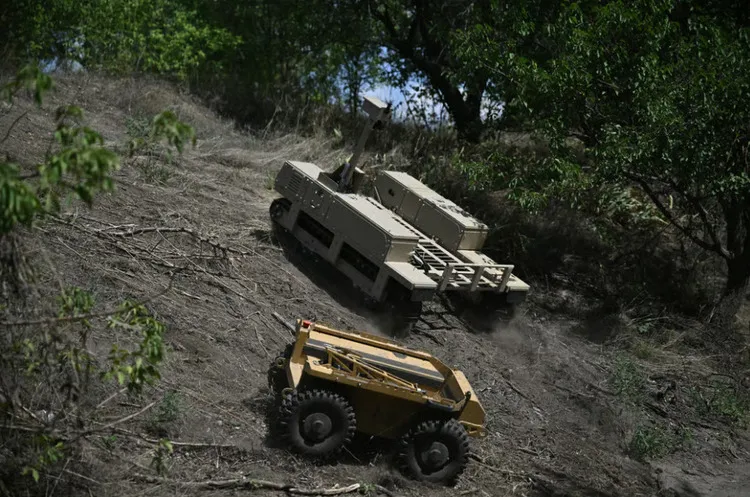
The robot revolution: Ukraine aims to replace 30% of its frontline troops with combat vehicles

This is reported in an article by Politico.
President Volodymyr Zelenskyy recently announced an unprecedented development: Ukrainian forces have, for the first time, captured a Russian position using only unmanned systems – ground robots and drones.
According to Mykola Zinkevych, commander of the ground robotic systems unit, the operation looked almost like a scene from a science fiction film.
Two ground-based ‘kamikaze robots’ attacked the fortifications; the first destroyed the entrance, the second approached the position. After that, the Russian soldiers raised a white flag to signal their willingness to surrender. Ukrainian troops entered and took the position without firing a single shot.
Today, ground robots perform a wide range of tasks: delivering ammunition, evacuating the wounded, reconnaissance, laying mines, and striking enemy positions. All this is done without putting people directly at risk.
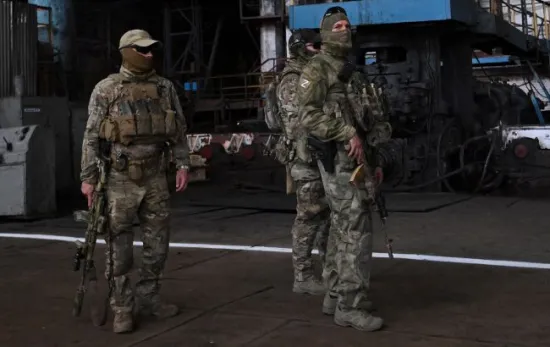
“Infantry must be withdrawn from the line of fire. Our goal is to replace up to 30% of personnel with technology in the most dangerous areas by 2026,” explains Zinkevych.
For Ukraine, this is not just innovation, but a matter of survival. Russia continues to use tactics of massive infantry assaults resulting in heavy casualties. In response, Kyiv is relying on technology to minimise its own losses and inflict maximum damage on the enemy.
A new model of warfare is taking shape, where efficiency, not manpower, is paramount.
As Politico reports, Ukraine is currently experiencing a real ‘boom’ in military robotics. Today, there are over 200 manufacturers of ground robots in operation. Over the past year, around 15,000 systems have been delivered to the armed forces, and more than 40 new models have been approved for use since the start of 2025 alone.
Minister for Digital Transformation Mykhailo Fedorov has stated that the goal is to transfer 100% of frontline logistics to robots.
One of the best-known is TerMIT from the Ukrainian company Tencore, which can carry up to 400 kg, operate over a range of up to 40 km and can be armed with machine guns or grenade launchers.
According to the company’s CEO, Maksym Vasylchenko, a single such robot managed to lay over 1,500 anti-tank mines before it was destroyed.
Despite this breakthrough, there are certain challenges: vulnerability to enemy drones and difficult terrain, which complicates their deployment. Most importantly, there is a lack of funding and slow government procurement.
However, the government has already promised to speed up contracts and increase funding, as well as to integrate Ukrainian companies into the European defence market.
Analysts compare this transformation to the advent of tanks or machine guns in the 20th century. Ukraine is currently setting a new standard for warfare – one that other countries will be forced to study.
At the same time, the military emphasise that, despite all the technology, people remain key.
“Robots take on the most dangerous tasks. And the infantry becomes an elite force for those tasks that machines cannot perform,” says Zinkevych.
If this trend continues, future wars will look very different – fewer people on the front line – and more machines fighting in their place.
Follow us on Telegram