Court Ruling Changes the Rules for Freight Wagon Use in Ukraine

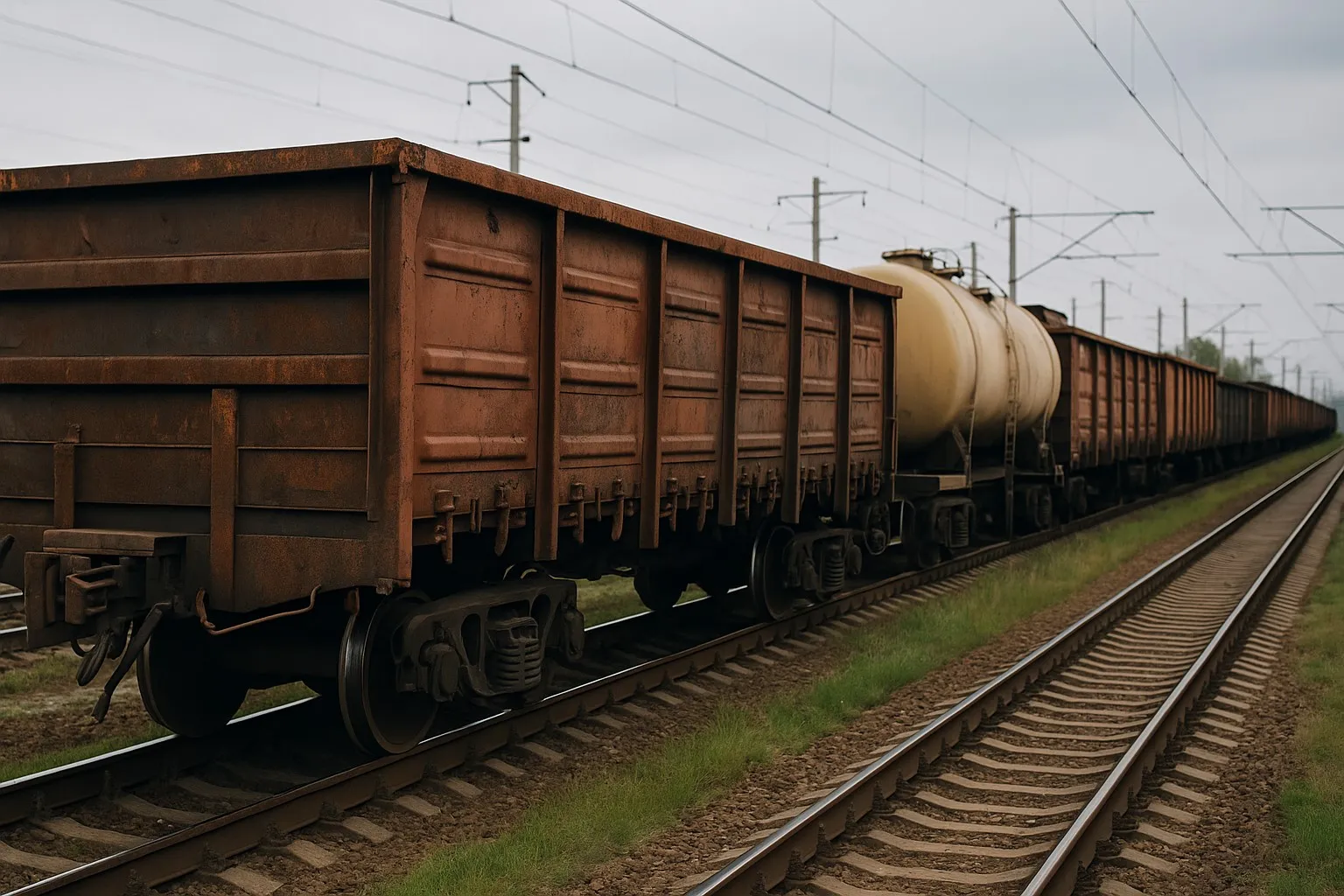
Significant changes have been recorded in Ukraine’s railway regulation system. According to ThePublic.info, citing Railinsider, the Sixth Administrative Court of Appeal upheld the decision of the first-instance court, declaring the Ministry of Infrastructure’s Order No. 647 of November 30, 2021, illegal and invalid. This document had defined the rules for extending the service life of freight wagons and introduced the concept of a “maximum operational period.”
Experts note that this ruling will have a substantial impact on the use of private wagon fleets, particularly on wagons whose service life had already been extended following technical diagnostics. Previously, the rule stipulated that even if diagnostics allowed operation until 2031, but the “maximum operational period” for that wagon type expired in 2027, it was deemed unfit for use in loaded service.
Order No. 647 became the foundation for a large-scale fleet renewal programme for 2022–2031. Ukrzaliznytsia stated that service life limits should be aligned with manufacturer standards:
-
open wagons: from 44 to 22 years;
-
grain carriers: from 45 to 30 years.
In April 2024, the Ministry of Restoration issued another order allowing the use of “extended” wagons that had passed technical inspection. In August, a proposal was made to revise Order No. 647 and introduce restrictions on wagons manufactured or diagnosed in Russia, as well as raise requirements for organizations conducting technical diagnostics.
ThePublic.info recalls that several key decisions have already been implemented as part of wagon fleet reform:
-
The Verkhovna Rada approved the seizure of wagons belonging to entities linked to Russia;
-
Over 21,500 wagons seized after the full-scale invasion were transferred to the Asset Recovery and Management Agency;
-
A competitive selection is underway for managers of 2,710 wagons and 3 locomotives;
-
Ukrzaliznytsia’s repair plants forecast ₴600 million in losses due to a decline in cargo transport and excess wagons on the market.
Additionally, Ukrzaliznytsia signed contracts with the Kryukiv Railway Car Building Plant for the production of 95 sleeper passenger wagons, with a total value exceeding ₴5.37 billion including VAT.
The cancellation of Order No. 647 may mark the beginning of a new phase in regulating freight wagon operations in Ukraine and could reshape state policy regarding the renewal of rolling stock.