Russia upgrades Geran drones to increase speed through Ukrainian interceptors

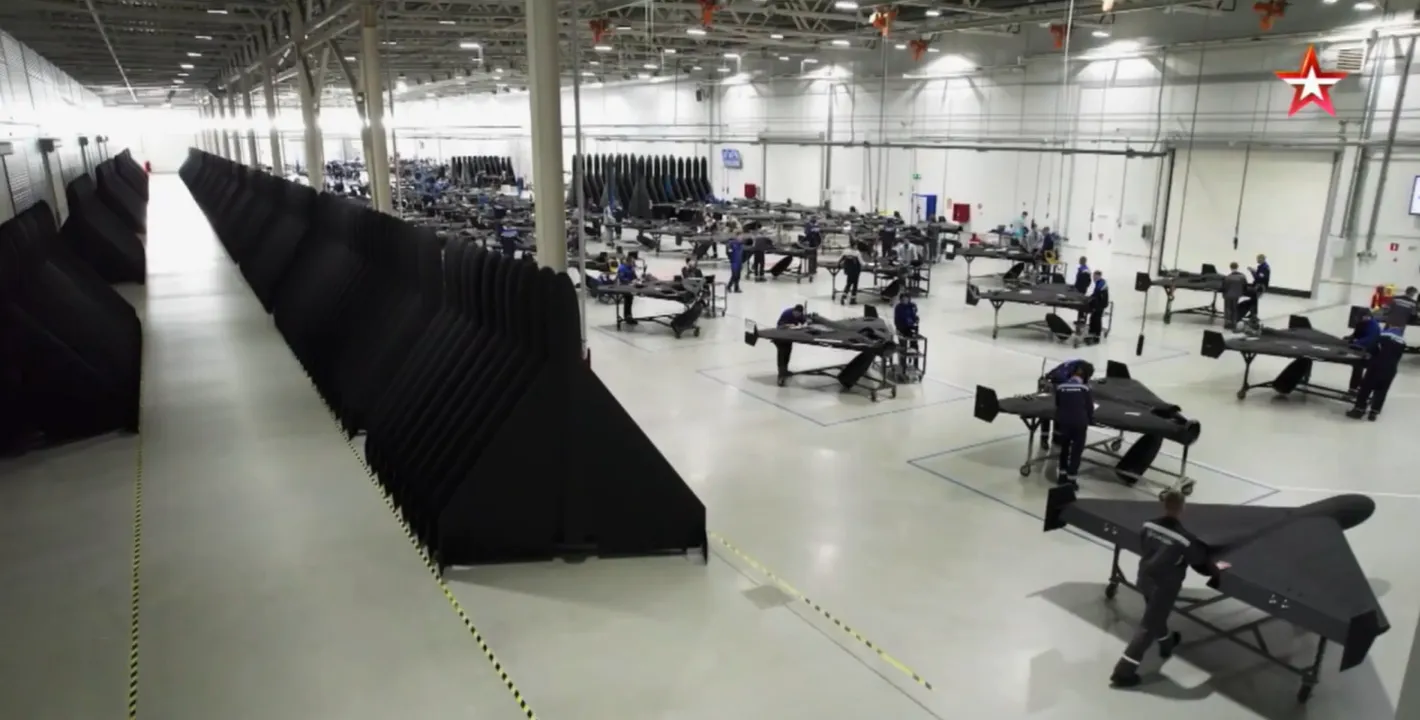
Russia's strategic air attack campaign is largely based on the use of Geran drones, which are based on Iranian Shahed drones. They were first used in the war against Ukraine in 2022 and have undergone several upgrades since then. This was reported by The Public, citing Forbes.
These drones belong to the class of relatively inexpensive loitering munitions. Their design uses simple autopilot systems, inertial navigation sensors, and satellite receivers. The drone can autonomously move along a predetermined route to a specified target.
As the war progressed, Russia began to make technical changes to these systems to increase the probability of hitting targets. Newer modifications use additional protection for satellite receivers through the multi-channel Kometa system, which distinguishes real signals from fake ones.
Some variants also have limited remote control capabilities during the final phase of flight, allowing them to perform manoeuvres to evade air defences. Other modifications integrate cameras and on-board data processing systems using artificial intelligence to adjust the flight path.
At the same time, Russia is employing new tactics in the use of such drones. These include the use of decoy drones and launching devices in pairs so that one drone masks the signature of the other.
Despite these changes, the number of drones reaching their targets has decreased. Starting in 2023, Ukraine began using interceptor drones as part of a multi-layered air defence system.
Ukrainian interceptors can reach speeds of up to 300 kilometres per hour. They use tracking systems with artificial intelligence elements to capture targets and destroy them kinetically.
The interception rate of such drones exceeds 60 per cent. In combination with other air defence systems, this significantly reduces the number of drones that can reach their targets.
In addition, such interceptors are relatively inexpensive. They cost approximately $1,000 to $1,600 per unit, which allows them to be used in large numbers to protect frontline units and critical infrastructure.
According to Serhiy Flesh, an adviser to the Ukrainian Ministry of Defence, Russia has several options for upgrading Geran drones. These include the ability to add evasive manoeuvres to interceptors, fly at very low altitudes, or increase speed.
The first two options require either a separate operator for each drone or more complex autonomous control systems. Due to the design features of the Geran, this requires significant modernisation of the device and additional sensors.
Therefore, increasing speed is considered a more realistic option.
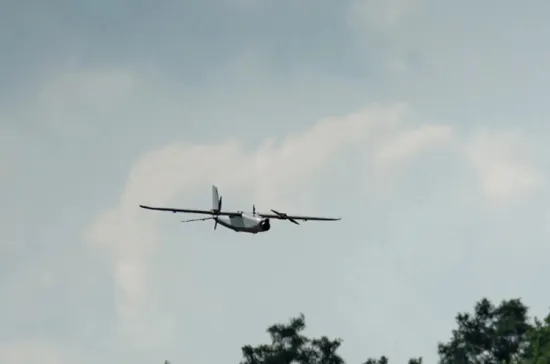
One such modification was the Geran-3 drone with a jet engine. It began to be used in Russian strikes on Ukraine in June 2025. According to the Main Intelligence Directorate of Ukraine, it uses a Chinese-made Telefly turbojet engine, which allows it to exceed a speed of 500 kilometres per hour.
The Geran-3 remains similar in design to the Geran-2. It has a delta wing and a wingspan of approximately three metres, as well as similar flight control systems.
Russia has also developed a larger drone, the Geran-5. According to Ukrainian intelligence, its first combat use was recorded in early January 2026.
This aircraft is approximately six metres long and has a wingspan of about 5.5 metres. It uses a more powerful jet engine from the same family as the Geran-3.
Unlike previous models, this drone has a more traditional aircraft design with straight wings and a cylindrical fuselage.
Thanks to its larger body, it can carry approximately 90 kilograms of explosives and has a strike range of nearly 1,000 kilometres at a speed of about 600 kilometres per hour. At the same time, the use of this model remains limited.
The jet-powered versions of the Geran fly much faster than the current Ukrainian interceptor drones. This could make it easier for Russia to mess with Ukraine's countermeasures.
At the same time, the use of turbojet engines complicates the design of drones and creates additional problems with the production and supply of components.
The original concept of Geran was simplicity and low cost for mass production and large-scale attacks. The transition to jet engines increases the cost and complexity of production, which may limit the scale of their use.
Ukraine is also working on countermeasures against the new modifications. The Ministry of Defence is calling on Ukrainian companies to develop faster interceptor drones that can more effectively counter jet drones.
This requires more powerful propulsion systems, faster data processing, and advanced autonomous target tracking systems.
In addition, Ukraine is trying to influence the production of such drones. Ukrainian forces are conducting long-range strikes on facilities related to the production and storage of Geran drones on Russian territory.
The aim of these operations is to disrupt production processes, destroy stocks and complicate logistics until the drones are launched.
According to estimates, the confrontation between Ukraine and Russia in the field of unmanned technologies continues to develop. Both sides are constantly creating new systems that remain effective only until new countermeasures appear.