The Kremlin is cutting off its own internet: how Russia is stifling communications and its own war machine

This is reported in a POLITICO article.
Russia is tightening the digital screws at an ever-increasing pace. This is no longer a matter of selectively blocking individual platforms, but of systematically reshaping the entire information landscape to suit the needs of war, censorship and surveillance.
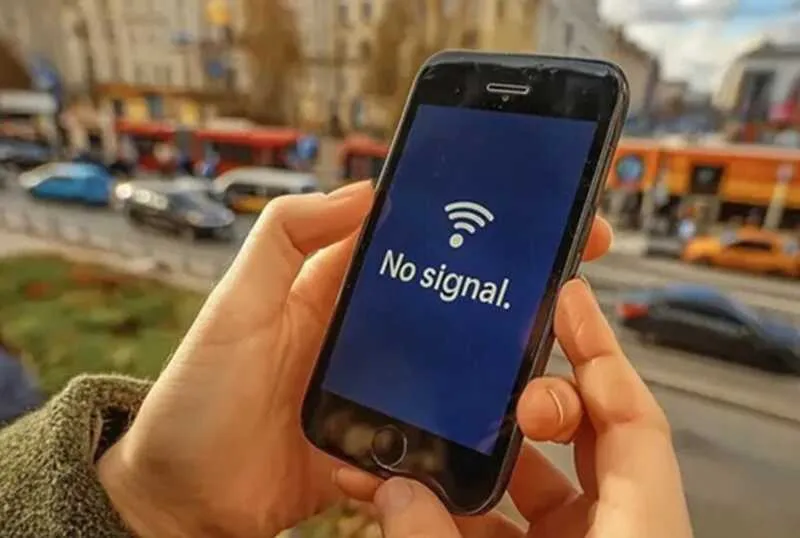
This process is happening on two fronts simultaneously. Western companies are restricting Russians’ access to their services, whilst the Kremlin itself is simultaneously limiting, slowing down or eliminating key communication channels within the country. As a result, Russia is effectively pushing itself towards digital self-isolation.
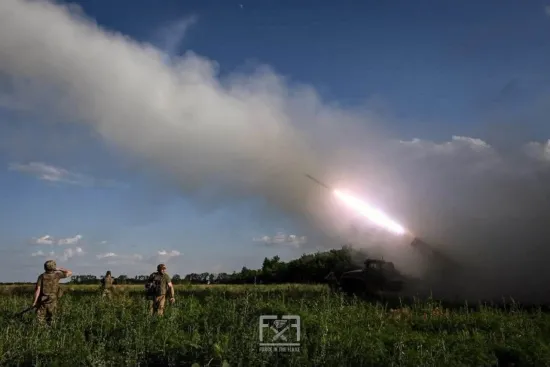
One of the most painful blows was the shutdown of some of the Starlink terminals used by Russian units in the war against Ukraine. Following the tightening of the authentication system, many devices operating via unauthorised connections lost access to the network. For the Russian army, this meant not just a technical problem, but a breakdown in the communication model that had enabled the rapid transmission of drone footage, coordinates and other data between different levels of command.
Almost immediately afterwards, the Russian authorities began to slow down Telegram across the country. This messaging app had long since become the main working tool for the Russian army, military volunteers and the ‘Z-community’. Through it, the military bypassed the slower official command channels, whilst volunteer networks raised funds for transport, fuel, body armour, evacuation equipment and other items that the state had not completely blocked.
It is important to get the emphasis right in this story. This is not about the ‘suffering of the Russian people’, but about the fact that the repressive system, launched for the sake of the war, has begun to undermine its own military infrastructure. The Kremlin is itself undermining the very digital tools on which Russian frontline coordination, Z-propaganda and rear-area mobilisation for the war have relied for years.
Telegram in Russia risks following the path of other major platforms that have already become virtually inaccessible or severely restricted there. The Kremlin has previously blocked or significantly restricted access to Facebook, Instagram, WhatsApp, YouTube, LinkedIn, FaceTime, Snapchat, X, Signal, Discord and Viber. Some of these services are not formally banned outright, but operate so slowly or unreliably that they effectively cease to exist for most users.
At the same time, the authorities are promoting a state-run or state-controlled alternative. This platform is the MAX messenger, which is already being compared to China’s WeChat. Russians are increasingly being directed there via employers, school and residential chat groups, the state portal ‘Gosuslugi’, banks and retailers. According to the authorities’ plan, MAX is set to become the foundation of a domestic digital ecosystem that is easier to control, censor and use for surveillance.
It is precisely for this reason that the new service is viewed with suspicion not only by opposition-minded Russians, but also by a section of the pro-government community. The reason is simple: when a messaging app is tightly integrated with the state, it is automatically perceived as a tool of control. And the more the Kremlin forces people into such a system, the more obvious the main goal becomes – not convenience, but controllability.
The Russian model of internet control differs from the Chinese one in this respect. Whilst China has built a centralised digital wall at the border of its network, Russia operates through an internal filtering system. Providers are obliged to route traffic through state-owned deep packet inspection equipment, which allows them to slow down specific services, filter traffic and selectively cut off mobile internet or communications in specific areas.
This is precisely why restrictions in Russia increasingly take the form not of outright bans, but of pressure without a clear procedure. A service may not be formally blocked, but made so slow that it practically ceases to function. This mechanism has already been applied to YouTube, and now to Telegram.
A new law has marked a separate stage, allowing the FSB to demand that operators cut off mobile and fixed-line internet. Since it came into force, Moscow has already seen widespread disruptions to communications, mobile internet, calls and messages. Moreover, the problems were not confined to specific areas of the city, but even occurred within the State Duma itself. This is a telling moment: the repressive mechanism does not stop at the opposition or ‘undesirable’ services, but is beginning to gnaw away at the entire system.
Digital isolation is hitting various segments of Russian society, but what matters in this story is not the everyday inconvenience, but the political impact. The Kremlin is increasingly closing off the information environment within the country, making access to the outside world more difficult, whilst simultaneously attempting to steer society towards controlled channels. This is not the logic of modernisation, but of a besieged fortress.
Against this backdrop, the war against VPNs has intensified in Russia. The authorities have banned their advertising, and legal cases are already being brought against media outlets for promoting services that circumvent blocks. Yet demand is only growing. This is also a symptom: the tighter the state squeezes the digital space, the more actively society seeks loopholes to get around it.
Despite this, the Kremlin is not yet ready to cut Russia off from the internet entirely. The reason here is not liberalism, but pragmatism. A total disconnection would hit not only opposition voices or Western services, but also banks, trade, logistics and state functions. Therefore, the current model looks like a controlled escalation: not a complete blackout, but a slow, layer-by-layer tightening of the screws.
The result is a paradoxical, yet very Russian picture. A state that for years has built digital control to ensure the regime’s stability and to wage war is now itself undermining the communication channels without which the civilian sector, the military machine and the propaganda apparatus all function. Russia is not simply distancing itself from the global internet – it is moving towards a model where any connection, any platform and any communication exists only for as long as it suits the security services.