Russia is threatening 'systematic' strikes on Kyiv: what is really behind this?

This is stated in the ISW report.
On 25 May, the Russian Ministry of Foreign Affairs warned of “systematic” strikes on targets within Ukraine’s defence-industrial complex – drone manufacturing and design facilities, command centres and headquarters in Kyiv.
The Russian Foreign Ministry urged foreign nationals, diplomats and international organisations to leave Kyiv. Residents of the city were advised to avoid areas with military and government infrastructure.
Putin is trying to cover up Russia’s failures
According to the ISW, these new threats are an attempt to divert attention from his own difficulties:
- humiliation at having to ask Ukraine for permission to hold a Victory Day parade on 9 May;
- setbacks on the battlefield – the ‘Spring-Summer 2026’ offensive is failing to yield significant results due to Ukrainian counterattacks, an advantage in drones and medium-range strikes;
- growing economic pressure within Russia, which is fuelling public discontent with Kremlin leader Putin.
The Starobilsk excuse – manipulation
Russia presented the threat as a response to an alleged Ukrainian strike on 21–22 May against a college in the occupied town of Starobilsk in the Luhansk region. The same excuse was used for the massive strike on 23–24 May – over 90 missiles and 600 drones.
But it is impossible to prepare such a large-scale strike in 24–48 hours. The planning took several weeks.
Moreover, Russia has not provided any evidence that the strike was directed exclusively against a civilian target. Ukraine has stated that a military camp was located on the college grounds. Russia has previously placed military targets within civilian buildings.
Why strike now?
The ISW notes: Russia traditionally intensifies its strikes ahead of important negotiations or following its own setbacks. The aim is to derail or prolong the peace process.
Strikes on Kyiv began to intensify as early as the night of 12–13 May – less than 24 hours after the end of the Victory Day ceasefire. This happened more than a week before the strike on Starobilsk.
Russia also deliberately exploited the global shortage of Patriot interceptor missiles to maximise the impact of its strikes, particularly those using ballistic missiles.
Furthermore, on 25 May, Russian Foreign Minister Sergey Lavrov telephoned US Secretary of State Marco Rubio to promote the Kremlin’s narrative that it is Ukraine and its partners who are undermining the peace process.
The attack on Kyiv on 24 May: what is known
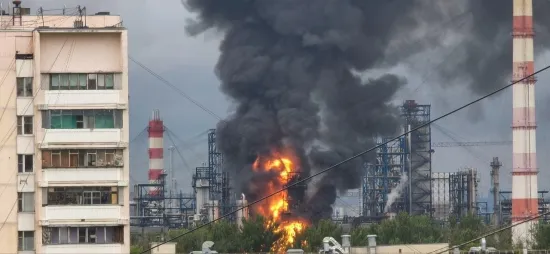
On the night of 24 May, Russian forces launched 90 missiles of various types against Ukraine, including a medium-range ballistic missile (the ‘Oreshnik’) and 600 drones of various types. Air defences intercepted 55 missiles and 549 drones.
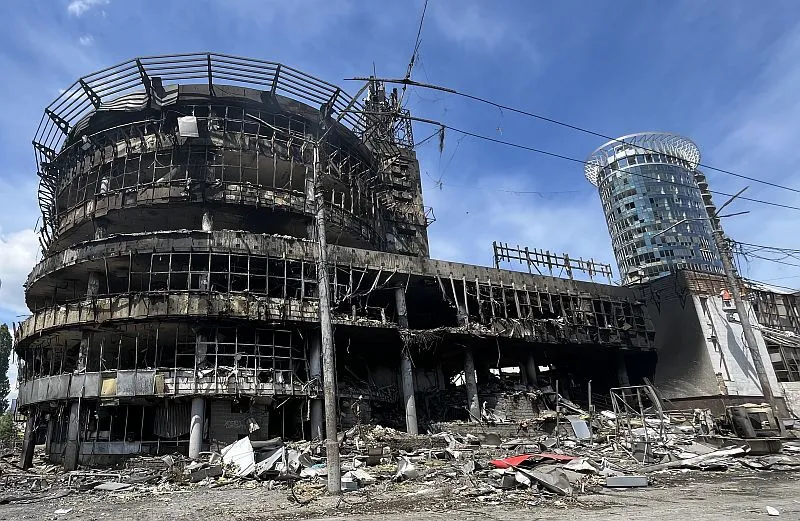
Kyiv was the main target of the massive Russian strike. In terms of the number of locations damaged, this attack was the largest of those carried out by Russia since the start of the full-scale invasion. The number of casualties has already reached 86 people, three of whom are children. Two people have died.
In the capital, damage has been reported across all districts of the city. The Russians struck residential buildings and schools, as well as a food market and the ‘Kvadrat’ shopping centre near the ‘Lukyanivska’ metro station.
Ukraine’s National Commission for UNESCO has described the massive Russian shelling of Kyiv as “cultural genocide” and an “act of terror” and has called for Russia to be held to account.
Follow us on Telegram