Russian strikes have caused over $11 billion in direct damage to Ukraine’s agricultural sector — Bloomberg

Stanislav Sereda
Stanislav Sereda Journalist
Russian strikes have caused over $11 billion in direct damage to Ukraine’s agricultural sector — Bloomberg
Losses incurred by the Ukrainian agricultural sector as a result of the war
Direct losses to Ukraine’s agricultural sector as a result of Russian attacks have already exceeded $11 billion. Agricultural machinery, grain terminals, warehouses and export infrastructure have been hit hardest.

Taras Vysotsky, Deputy Minister of Economy, made this statement in comments to Bloomberg.

According to him, losses from the destruction of machinery, damage to grain silos and warehouses, and stolen or destroyed produce alone are estimated at $6.5 billion. The remainder of the losses stems from the destruction of logistics and production infrastructure.

The strikes on the Odesa region, which serves as the main maritime gateway for Ukrainian agricultural exports, have been particularly severe. In late 2025 and early 2026, Russian attacks on port infrastructure intensified sharply.

According to Vysotsky, in the first few months of 2026 alone, the ports of Greater Odessa suffered over 180 strikes – almost as many as in the whole of the previous year.

“At peak times, this reduced export capacity by 20–30%, although overall the ports remain operational and are coping with the workload,” he noted.

Facilities belonging to international agribusiness companies have also come under Russian attack. This year, the infrastructure of the American giants Bunge and ADM, which operate in the Ukrainian grain and oilseed market, has been damaged.

Damage assessments and restoration work are currently underway at the affected sites. According to the Deputy Minister, it is too early to speak of a full resumption of their operations.

However, the Ministry of Economy stresses that the real cost of the war to the agricultural sector is significantly higher than the officially recorded direct losses.

“The actual losses are many times greater than $11 billion, if we take into account lost profits, foregone investment and human capital,” Vysotsky emphasised.

The agricultural sector traditionally remains one of the key drivers of the Ukrainian economy. Prior to the full-scale invasion, it accounted for around 40% of the country’s commodity exports.

Following the opening of the Ukrainian maritime corridor through the Black Sea, the ports of Greater Odesa have once again become the main route for the export of grain and oilseeds. Consequently, port and agricultural infrastructure are most frequently targeted by Russian attacks.

Despite this, Ukraine retains its status as one of the world’s largest exporters of grain, maize and sunflower oil.

As a reminder, a UN project on demining and support for farmers was launched in the Kherson region at the end of May.

Follow us on Telegram
Share tittle
War
The occupiers are complaining about fresh strikes on bridges in the south — damage has been reported
War

The occupiers are complaining about fresh strikes on bridges in the south — damage has been reported

The occupying ‘authorities’ in the Kherson region have reported new attacks by the Defence Forces on bridges. These include bridges across the North Crimean Canal near Preobrazhenka and Mirne, the road bridge on the Perekop–Armiansk route, and a bridge near the village of Stavky.

11.06.2026
Ukrainian strikes have damaged transport infrastructure on the approaches to Crimea and hampered fuel supplies
War

Ukrainian strikes have damaged transport infrastructure on the approaches to Crimea and hampered fuel supplies

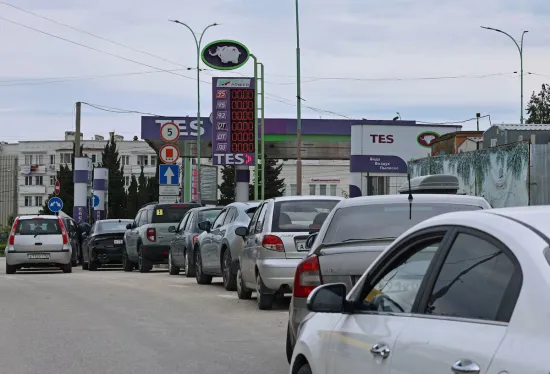
On the night of 11 June, reports emerged from the temporarily occupied Crimea and the Kherson region of attacks on transport infrastructure used to link the peninsula with the occupied territories. Against this backdrop, Sevastopol experienced problems with fuel supplies.

11.06.2026
Russia is building military bases capable of accommodating 120,000 troops near the borders of Finland and the Baltic states
War

Russia is building military bases capable of accommodating 120,000 troops near the borders of Finland and the Baltic states

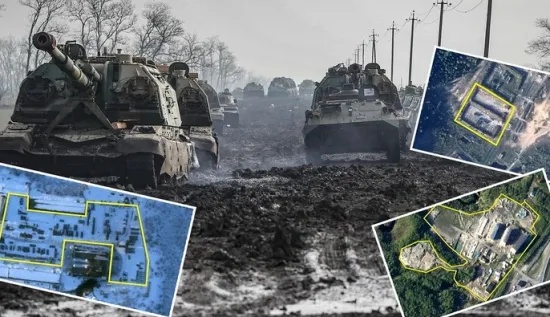
Russia is stepping up its military presence near the borders of NATO countries in north-eastern Europe. Satellite images have captured the construction of new barracks, ammunition depots and facilities for accommodating personnel.

11.06.2026
The Afipsky Oil Refinery in the Krasnodar Krai has come under attack by drones
War

The Afipsky Oil Refinery in the Krasnodar Krai has come under attack by drones

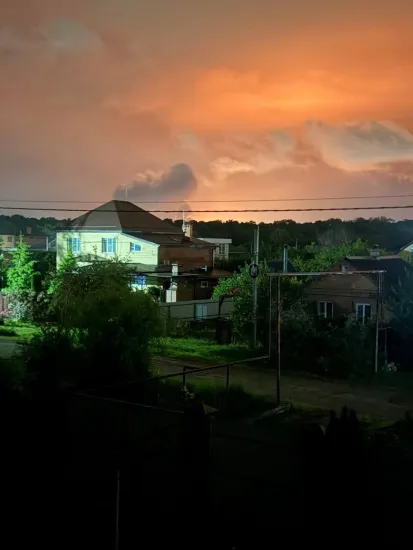
On the night of 11 June, the Afipsk oil refinery in Russia’s Krasnodar Krai came under attack from drones. A fire broke out at the facility, which, according to local authorities, was subsequently brought under control.

11.06.2026
The demobilisation of military personnel depends on conscription – General Staff
War

The demobilisation of military personnel depends on conscription – General Staff

Andriy Gnativ, Chief of the General Staff of the Armed Forces of Ukraine, stated that the possibility of demobilising troops depends directly on the pace of mobilisation.

11.06.2026