Russia is building military bases capable of accommodating 120,000 troops near the borders of Finland and the Baltic states

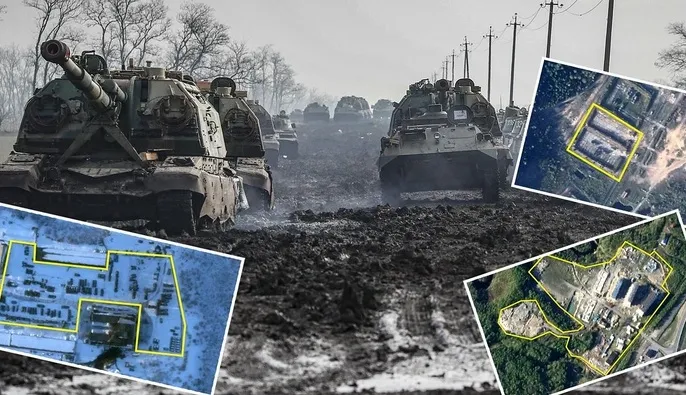
New satellite images analysed by journalists from Sweden, Norway, Denmark and Estonia indicate a significant expansion of Russian military infrastructure near the borders of Norway, Finland and the Baltic states. This involves the construction of barracks for thousands of troops, headquarters, hangars for equipment and ammunition depots. This is reported by ThePublic, citing SVT.
According to the Commander-in-Chief of the Finnish Army, Pasi Välimäki, the size of the Russian force near the Finnish border could increase from around 20,000 to 80,000 troops.
Swedish military intelligence agency Must believes that Russia is building infrastructure that could be rapidly manned once the war in Ukraine ends. Must’s head, Thomas Nilsson, stated that such facilities are not being built merely to demonstrate strength, but may be linked to preparations for a possible future confrontation with NATO.
According to Must’s assessment, eight divisions could be deployed along the borders from Norway to the Baltic region, amounting to at least 80,000 troops. Meanwhile, Marko Eklund, a former deputy military attaché for Finland in Moscow, who has analysed 19 Russian military bases near NATO borders, suggests that the total number of personnel at new and expanded facilities could reach 115,000.
According to him, the garrison in Pechenga, Murmansk Oblast, located approximately 10 kilometres from the Norwegian border, alone could grow from 7,000 to 17,000 troops.
Norwegian broadcaster NRK conducted its own analysis of the sites investigated by Eklund. At 16 of the 19 bases, increased activity or the start of new construction work has been recorded over the past year.
Thomas Nilsson noted that Russia has significant capabilities for the rapid deployment of units and equipment over long distances. According to Must’s estimates, the total strength of the Russian armed forces is around 1.5 million personnel.
Against this backdrop, NATO is strengthening its presence on its eastern flank. One such unit is the FLF Finland forward operating base, led by Sweden. There is also FLF Latvia, where Swedish military personnel serve on a rotational basis.
Major General Brian Nissen, Commander of NATO forces in the Baltic states and Poland, stated that whilst the war in Ukraine continues, the risk of a major military conflict remains low. At the same time, he emphasised that the situation could change rapidly should hostilities cease.
The Russian Ministry of Foreign Affairs stated that the expansion of military infrastructure is of a defensive nature. Meanwhile, Vladimir Putin’s adviser Sergei Karaganov, in an interview with the Danish broadcaster DR, launched a scathing attack on NATO, stating that the Alliance is a threat to world peace and that Russia may resort to further escalation.
Experts interviewed by journalists suggest that once the war in Ukraine ends, some Russian troops may remain on active duty and be redeployed to new bases currently being built or expanded near NATO borders.