The Ministry of Economy has explained how it plans to tackle the staff shortage

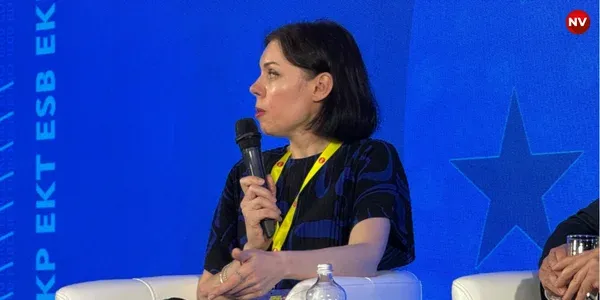
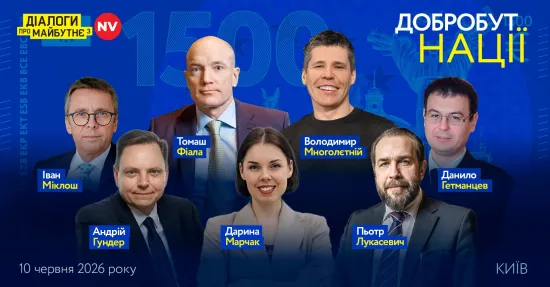
This was stated by Daria Marchak, Deputy Minister of Economy, Environment and Agriculture, during the “National Well-being” event, part of the “Dialogues on the Future” series. Marchak had previously stated that the state is launching initiatives to bring people who have been excluded from the labour market for various reasons back into it, according to the Ministry of Economy’s website.
A paradoxical situation has arisen in Ukraine’s labour market: employers complain of an acute shortage of staff, yet at the same time there remains a significant pool of people in the country who are not officially employed.
According to Daria Marchak, Deputy Minister of Economy, Environment and Agriculture, there are currently around 30 million people living in Ukraine. Of these, only 10.5 million are officially employed.
“Only one in three Ukrainians today is part of the actively employed, officially employed population,” said Marchak.
How many people are not officially employed
Marchak explained that if children, students and people over the age of 60 – who together make up around 15 million people – are excluded, there are still approximately 4.5 million adults of working age in Ukraine who are not officially employed.
She cited the mismatch between people’s skills and employers’ needs as one of the main reasons.
As an example, she cited a miner who moved from Pokrovsk to a rural community in Volyn due to the war. According to her, there may be no work in his field in such a community. In this case, the problem lies not only in professional skills but also in location.
How the state intends to tackle the problem
According to Marchak, the state must either help people acquire a new profession or create conditions for employment where their skills are needed.
She identified the development of adult education and the retraining system as one of the government’s key priorities. Marchak noted that there is currently not enough discussion in Ukraine about lifelong learning.
She said that the labour market is changing rapidly, so learning must become an ongoing process not only for young people but also for adult workers.
The ‘Obriy’ system and employer-led training
Marchak identified the creation of a modern digital labour market infrastructure as a separate priority. In particular, the Ministry of Economy is launching the “Obriy” system, which is intended to give the state a better understanding of labour supply and demand.
Another area of focus is reviewing approaches to vocational training and state-funded education. According to the official, the OnTrack project, implemented in collaboration with the Ministry of Education and Science, is designed to help train personnel in line with the real needs of the economy.
Marchak also explained that the state wants to change its approach to working with the unemployed through the employment service. This involves a model where a potential employer is first identified for the individual, the specific skills they lack are determined, and only then are funds allocated for training.
Barriers in the labour market
Marchak identified physical and social barriers in the labour market as a separate issue. According to her, particular attention needs to be paid to the employment of veterans and people with disabilities.
The official also drew attention to employers’ stereotypes regarding the age, experience and gender of candidates.
“This one is too young for us and lacks experience, whilst this one is too old, too qualified – he’s already 50. And this woman is married – so she might have a baby, which is why we won’t hire her,” Marchak cited as examples.
In her view, tapping into the domestic labour pool should be the primary means of addressing the labour shortage.
The return of Ukrainians from abroad
Marchak identified the return of Ukrainians from abroad as the second area of focus. This refers to people who left due to the war, labour migrants who left the country even before the full-scale invasion, as well as members of the Ukrainian diaspora.
According to the official, for most Ukrainians abroad, housing and employment remain the key factors in their return.
The state, she said, is considering the possibility of introducing remote interviews and remote onboarding. This approach should simplify the return of people to Ukraine.
Follow us on Telegram