Secret conversations between Putin and Bush from 2001-2008

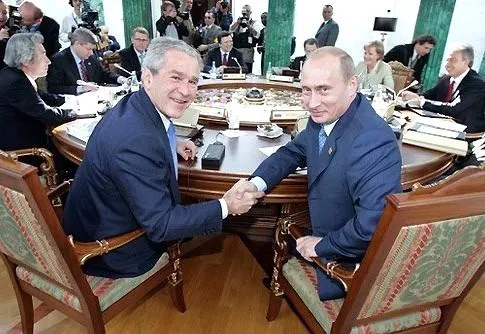
The documents show the path from post-9/11 partnership to deep disagreements over Iraq, missile defence and NATO expansion.
The US has made public verbatim transcripts of meetings and phone calls between Vladimir Putin and George W. Bush for 2001-2008. The documents were declassified after a lawsuit under the Freedom of Information Act filed by the National Security Archive.
The transcripts document the dramatic evolution of relations between Moscow and Washington. In 2001, Putin was a key US ally in the anti-terrorism campaign after the 9/11 attacks, supporting America's actions in Afghanistan and taking a hard line on Chechnya. At the time, Bush called the Russian president a reliable partner.
At the same time, the dialogue became much more difficult at the end of Bush's presidency. The documents record Putin's sharp remarks on the US invasion of Iraq, NATO expansion, missile defence and events in the former Soviet Union. In 2007, these disagreements were publicly manifested during Putin's speech in Munich, and in 2008, Bush privately asked the Russian leader to tone down his rhetoric before the NATO summit in Bucharest.
A separate place in the transcripts is occupied by the topic of Ukraine. Putin has repeatedly expressed irritation over the growing influence of the US and the West in the former Soviet Union and questioned the right of these states to determine their own foreign policy course. The conversations reveal the Kremlin's negative attitude to the Orange Revolution and Kyiv's Euro-Atlantic aspirations. The Archive's researchers note that it was during this period that the highest circles of the Russian government formed a vision of Ukraine as a zone of Moscow's special interests, which later became one of the key factors in Russia's further aggressive policy.
The published materials also contain a discussion of nuclear risks, including missile launch scenarios and the speed of possible responses, as well as frank conversations about Iran, North Korea and China's growing influence. According to the researchers, these recordings provide a unique insight into how mutual distrust between the Kremlin and the White House gradually developed.
The declassification became possible after a lawsuit challenging years of delays in processing requests for access to presidential documents. As a result, the materials were processed and submitted for publication at the end of December 2025.