Solar eclipse of the century: where there will be more than six minutes of darkness in 2027

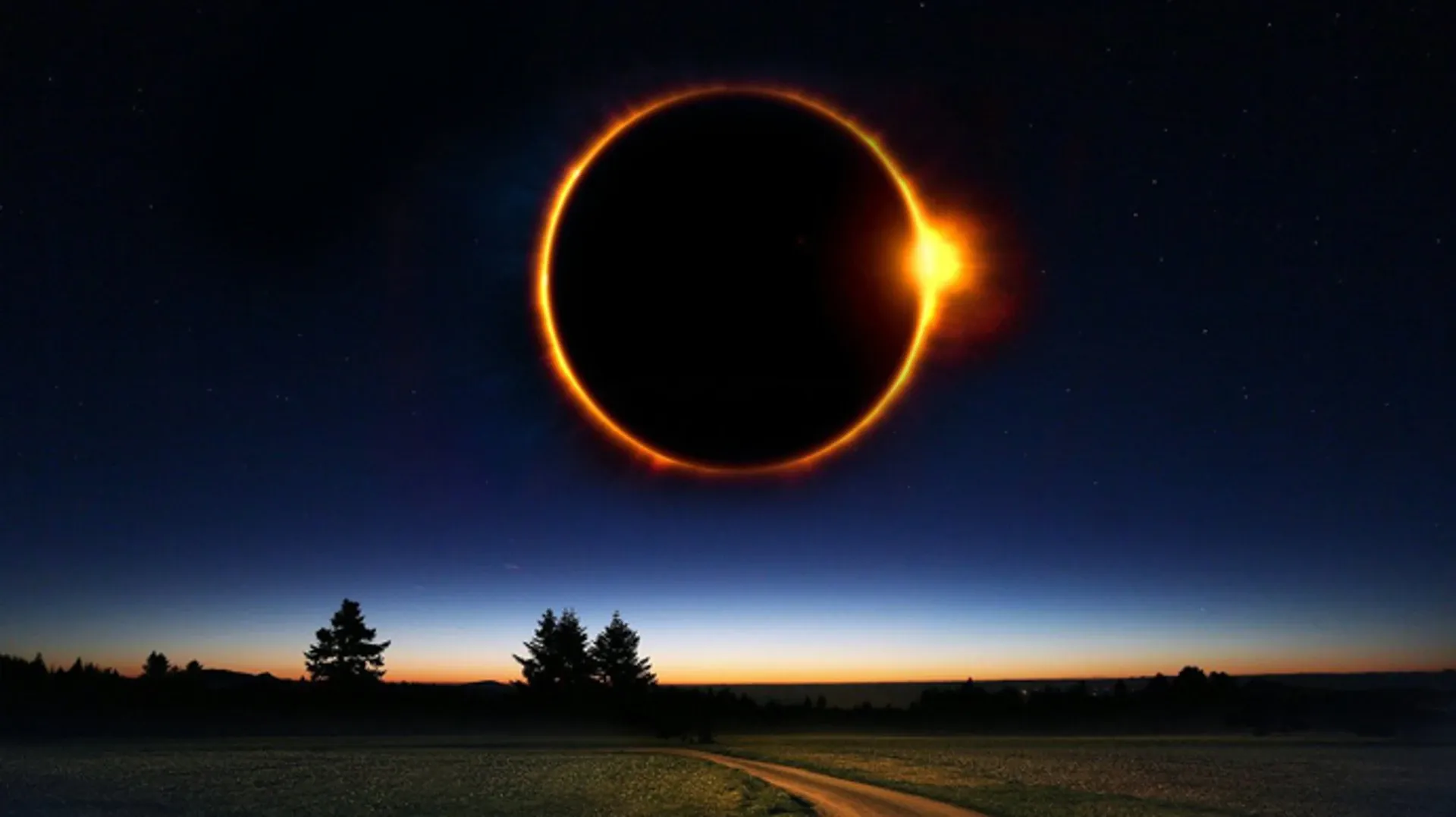
On 2 August 2027, the world will witness a rare total solar eclipse, already being called one of the most spectacular of the 21st century.
The phenomenon will pass through Europe, North Africa and the Middle East.
In a number of regions, the total phase will last more than six minutes, which will be a record-long period of darkness. According to estimates, something like this will not happen again until at least 2114.
Astronomers predict that about 89 million people will be in the path of the total shadow.
The eclipse path will stretch from the coast of Spain to the Horn of Africa.
During the total phase, the temperature will drop, and stars, planets and the solar corona will become visible in the sky.
The unusually long duration of the eclipse is due to a rare combination of several conditions.
The Moon will approach its perigee and appear larger.
At the same time, the Earth will be near its aphelion, so the Sun will appear slightly smaller.
In addition, the moon's shadow will pass over tropical latitudes, where it moves more slowly.
The maximum duration of the total phase is expected near Luxor in Egypt and will be 6 minutes and 23 seconds.
The eclipse route will pass from the Atlantic Ocean through southern Spain, Morocco, Algeria, Tunisia, Libya and Egypt.
After that, the shadow will cross Saudi Arabia, Yemen and Somalia, and then move out over the Indian Ocean.
Residents of Cadiz, Malaga, Tangier, Benghazi, Luxor, Jeddah and Sana'a will be able to see complete darkness, if cloud cover does not interfere.
Such astronomical phenomena are considered a natural experiment, during which lighting and temperature change dramatically in the middle of the day.
During the 2024 solar eclipse in the United States, temperatures dropped by several degrees and there were noticeable changes in humidity.
Researchers also observed changes in animal behaviour at that time.
In particular, more than half of the bird species stopped singing in the dark and began their "morning chorus" when the light returned.
In 2027, similar effects are expected in regions from Spain to Saudi Arabia.
Ecologists and biologists will be able to study the reaction of wildlife, and energy experts will be able to test how power grids respond to a sharp drop and subsequent increase in solar generation.
Observers are advised to use certified solar filters during all partial phases of the eclipse.
They can only be removed when the Sun is completely covered by the Moon.