The US is considering strikes against individual Iranian leaders and the possibility of regime change

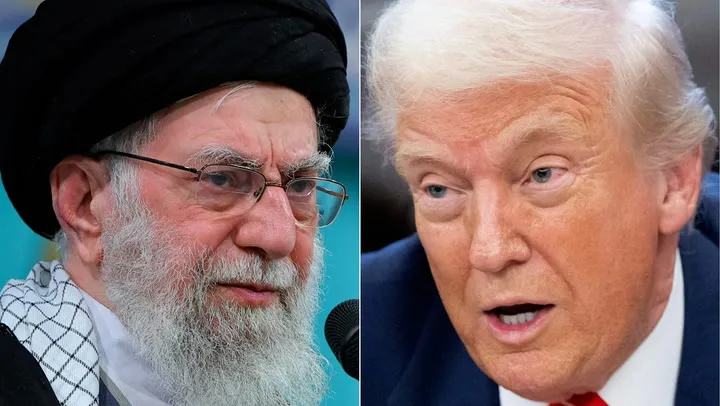
Two American officials, speaking on condition of anonymity, said that military planning includes the possibility of targeting individuals in a potential attack, as well as the option of regime change in Tehran. They did not provide details on who exactly could be targeted or how the United States could bring about a change of power without a large-scale deployment of ground forces.
Reuters previously reported that the US is preparing for a prolonged operation against Iran, which could last several weeks and include strikes on security facilities and nuclear infrastructure. The new information indicates more detailed and ambitious planning ahead of Donald Trump's decision, who in recent days has publicly admitted the possibility of regime change in the Islamic Republic.
A regime change would be a departure from Trump's campaign statements about abandoning the policies of previous administrations, which included military attempts to overthrow the governments of Afghanistan and Iraq.
The US has concentrated significant military forces in the Middle East, but most of its combat capabilities are aboard military ships and fighter jets. In the event of a large-scale campaign, bombers based in the United States could also be deployed.
During his first presidential term, Trump authorised the 2020 strike that killed Iranian General Qasem Soleimani, head of the Quds Force of the Islamic Revolutionary Guard Corps. In 2019, the Trump administration officially recognised the Islamic Revolutionary Guard Corps as a foreign terrorist organisation, applying this designation to a military structure of another state for the first time.
One official pointed to Israel's experience during last year's 12-day war with Iran, when, according to regional sources cited by Reuters, at least 20 senior commanders were killed, including the chief of the armed forces' general staff, Major General Mohammad Bagheri. According to him, such strikes demonstrated the effectiveness of the approach, but require additional intelligence resources, as it is necessary to know the exact location of the target and take into account possible collateral damage. Officials did not specify what information the US has about potential targets among the Iranian leadership.
The White House and the Pentagon did not respond to requests for comment.
Donald Trump has publicly stated that a change of power in Iran may be the best option, but did not specify who he would like to see at the helm of the country. At the same time, he expressed hope for a diplomatic settlement, warning that "very bad things" could happen if no agreement was reached, and outlined a possible timeframe of 10-15 days before potential action.
The Islamic Revolutionary Guard Corps said it was ready to retaliate against US military bases in the region in the event of an attack on Iranian territory. The US has bases in Jordan, Kuwait, Saudi Arabia, Qatar, Bahrain, the United Arab Emirates and Turkey.
In a letter to UN Secretary-General António Guterres, Tehran stated that it would not start a war, but in the event of military aggression, it would respond decisively and proportionately within the limits of its right to self-defence. US officials expect Iran to respond in the event of an attack, increasing the risk of US military casualties and a wider regional conflict.
Trump's threats to strike Iran have contributed to rising oil prices. On Thursday, a Russian warship joined planned Iranian naval exercises in the Gulf of Oman, an important route for global energy supplies.
Tehran had previously threatened to block the Strait of Hormuz in the event of an attack, which could block about a fifth of global oil flows.
On Tuesday, Iranian and American negotiators held a meeting. Iranian Foreign Minister Abbas Arakchi announced the agreement on "guiding principles." White House spokeswoman Carolyn Levitt noted that the parties remain far apart on certain issues.
Iran refuses to make significant concessions on its nuclear programme, insisting that it is peaceful. The US and Israel have previously accused Tehran of attempting to develop nuclear weapons. A senior US official said Iran would prepare a written proposal to address US concerns.
Trump called on Tehran to join the "path of peace," stressing that Iran cannot have nuclear weapons and that their presence would make peace in the Middle East impossible.