The ‘Finnish scenario’ is the most likely outcome of the war in Ukraine

In their report *Ukraine Endgame: The Path to an Imperfect Peace*, analysts at JPMorgan Chase stated that Russia’s war against Ukraine could continue until 2027, although a negotiated end to the conflict is possible as early as next year.
The bank suggests that Russian President Vladimir Putin may seek to conclude an agreement whilst US President Donald Trump is still in office.
The report’s authors note that Ukraine’s position strengthened during 2026 thanks to two key factors. Following a sharp reduction in US aid, European countries increased their support for Kyiv. According to JPMorgan’s estimates, humanitarian and financial aid rose by 59%, whilst military aid increased by 67%.
The bank also believes that the outlines of future Western security guarantees for Ukraine are beginning to take shape.
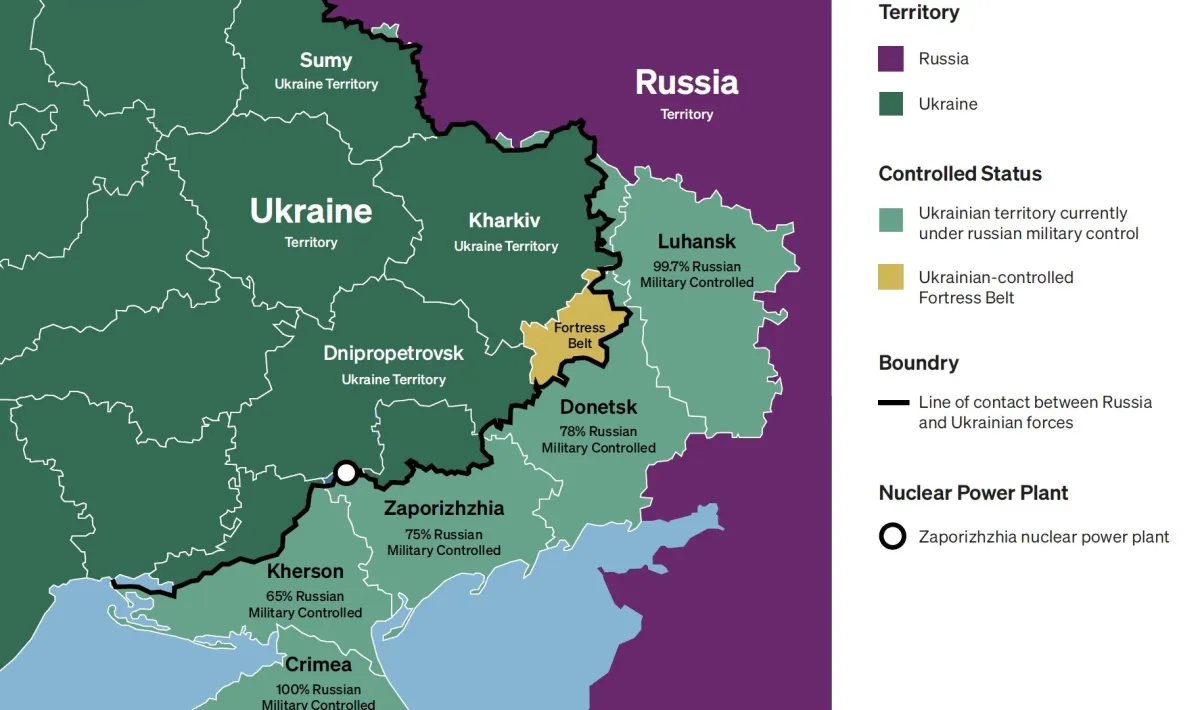
Analysts emphasise that the situation on the front line has effectively reached a stalemate, with the line of contact remaining virtually unchanged for over two years. In their view, this could prompt the parties to engage in negotiations.
JPMorgan suggests that, as part of a possible compromise, Ukraine may agree to the loss of some occupied territories, neutral status and restrictions on the size of its army.
The authors of the report believe that the Kremlin will be able to present such an outcome to Russian society as a victory of its own, without having achieved Ukraine’s complete surrender.
Analysts draw parallels with Finland following the war with the USSR. At that time, the country lost around 10% of its territory, yet retained its democratic system, market economy and ties with the West.
According to JPMorgan, a ‘Finnish scenario’ for Ukraine could mean integration into the European Union and possible future NATO membership without full defence guarantees under Article 5 of the Alliance.
The bank also believes that once a stable peace is achieved, Ukraine’s recovery could become one of the greatest investment opportunities for global business.
As for Russia, analysts predict that a potential peace deal will almost certainly involve a partial easing of sanctions. In their view, even a limited lifting of sanctions could impact global energy and commodities markets.
JPMorgan has estimated the probability of a ‘Finnish scenario’ at 50%. Analysts have put the probability of a ‘Georgian scenario’ at 30%, the ‘Israel’ model at 10%, and the ‘South Korea’ and ‘Belarus’ scenarios at 5% each.
The report also notes that a year ago, JPMorgan considered the “Georgian scenario” to be the baseline case for Ukraine, but revised its forecast following increased support for Kyiv from the European Union.