The Kremlin has written off a further half a billion dollars of debt owed by the regions to avoid default – intelligence sources

Boris Bodnar
Boris Bodnar Journalist
The Kremlin has written off a further half a billion dollars of debt owed by the regions to avoid default – intelligence sources
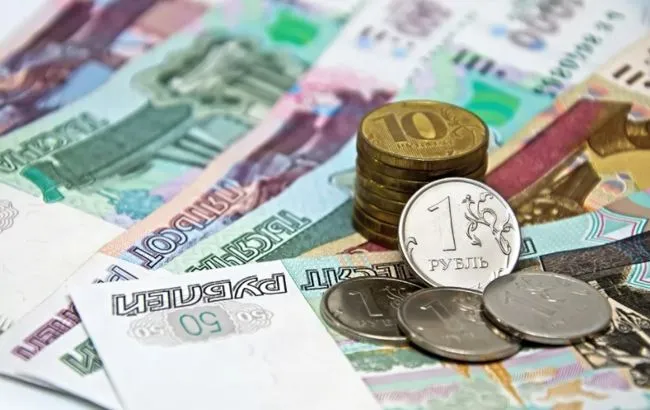
The Russian government has written off budget debts owed by a further six regions of the country, totalling 37.5 billion roubles (around $525 million). Ukraine’s Foreign Intelligence Service believes that Moscow is attempting to avoid a “live default” in this way.

This has been reported by the Foreign Intelligence Service.

As noted by the agency, the Republic of Sakha (Yakutia), Tatarstan, Khabarovsk Krai, as well as Vladimir, Kurgan and Omsk regions are affected by the debt write-off.

According to the SVR, the Russian Ministry of Finance forecasts that the cumulative deficit of regional budgets in 2026 could reach 1.9 trillion roubles ($26.6 billion). At the same time, more than 20 Russian regions already officially have the status of being financially troubled.

Among the main reasons for the deterioration of the situation are cited a decline in tax revenues, an increase in social spending and a growing burden due to military expenditure, part of which the federal authorities are shifting onto the regions.

The report noted that the practice of debt write-offs for Russian federal subjects has become systematic. In 2025, 58 regions made use of this mechanism, which allowed them to reduce their debt portfolio by approximately $3.2 billion.

In 2026, according to the SVR, 54 regions had already been released from debt obligations amounting to around $2.4 billion.

“In effect, the Kremlin is forced to grant a mass financial amnesty to its own regions every year to prevent them from declaring default on live television,” the Foreign Intelligence Service noted.

The agency believes that the current situation demonstrates the regions’ growing dependence on the federal centre, which is intensifying against the backdrop of the war.

"The regions’ own revenue base is not growing, expenditure is not being cut, and the war economy is draining resources faster than they can be replenished. Debt write-offs provide the regions with short-term relief, but do not address any of the causes of the crisis," the SIS emphasised.

Follow us on Telegram
Share tittle
Economy
‘The worst fuel crisis in history’. Russia has lost a third of its refining capacity due to attacks on oil refineries
Economy

‘The worst fuel crisis in history’. Russia has lost a third of its refining capacity due to attacks on oil refineries

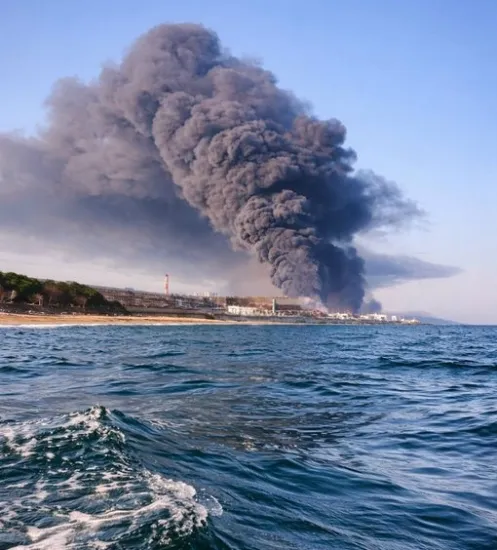
A series of strikes on Russian oil refineries has led to a sharp decline in oil refining volumes in Russia. Against this backdrop, fuel shortages are being reported in certain regions of the country, alongside rising prices in the fuel market.

16.06.2026
Prices for aviation fuel in Russia have reached a record high
Economy

Prices for aviation fuel in Russia have reached a record high

The price of aviation fuel in Russia has exceeded 110,000 roubles per tonne for the first time. The price rise comes against a backdrop of reduced market supply and fuel supply issues at a number of airports.

16.06.2026
Billions on paper: why tax audits do little to boost the budget
Economy

Billions on paper: why tax audits do little to boost the budget

Tax audits in Ukraine result in tens of billions of hryvnias in additional tax assessments every year, yet only a small fraction of these sums actually reaches the budget. According to the Business Ombudsman Council, over 95% of the additional tax assessments never materialise as actual revenue.

15.06.2026
The IMF has approved a new tranche for Ukraine: what conditions has the Fund set?
Economy

The IMF has approved a new tranche for Ukraine: what conditions has the Fund set?

Ukraine has reached an agreement with the International Monetary Fund regarding the next tranche of financial assistance. This amounts to approximately $690 million, which the country is set to receive at the end of the month once the necessary procedures have been completed

13.06.2026
Volkswagen is set to cut nearly 20,000 jobs in Germany by the end of 2026
Economy

Volkswagen is set to cut nearly 20,000 jobs in Germany by the end of 2026

The German car manufacturer Volkswagen AG plans to make 19,000 staff redundancies at its plants in Germany by the end of 2026.

12.06.2026