‘The worst fuel crisis in history’. Russia has lost a third of its refining capacity due to attacks on oil refineries

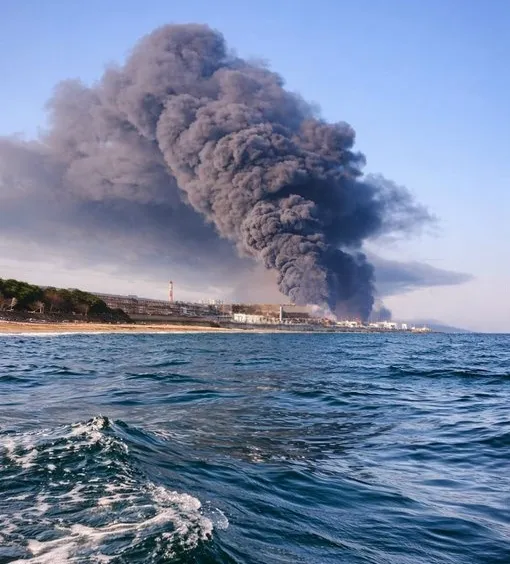
A series of drone attacks in May that struck Russian oil refineries – including eight of the industry’s ten largest facilities – led to a significant reduction in oil refining volumes in Russia.
According to estimates by Energy Intelligence analysts, oil refining volumes in Russia fell below 4 million barrels per day in the first week of June. This is the lowest figure in the last 21 years. According to their calculations, almost a third of Russian refinery capacity is currently idle, amounting to 2.14 million barrels per day.
Energy Intelligence noted that the campaign of strikes against the Russian energy sector, primarily against oil refineries, has caused significant damage to the industry and created the conditions for a large-scale fuel crisis.
The fuel shortage, previously reported in Crimea, has spread to more than 25 regions of Russia. Restrictions on petrol sales have also been introduced in Moscow and St Petersburg. Fuel supply disruptions have been reported in Kuzbass, Tatarstan, and the Ulyanovsk and Nizhny Novgorod regions.
At Tatneft petrol stations in at least six regions, there is a limit on petrol sales of up to 20 litres per customer.
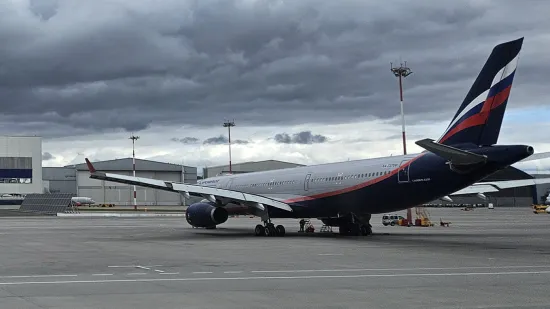
The problems are not limited to petrol. Russian farmers are reporting disruptions to diesel supplies in the south of the country, the Central Black Earth region and the Volga region. At the end of May, airports in St Petersburg, Yekaterinburg and Ufa faced a shortage of aviation fuel, and in mid-June, restrictions on refuelling passenger aircraft were introduced in six cities, including Nizhny Novgorod and Krasnodar.
Yaroslav Kabakov, a strategist at Finam, stated that a full-blown fuel crisis is beginning to take shape in Russia. According to him, the problem is not linked to seasonal price rises or market speculation, but to a shortage of supply in the market.
He also noted that it is increasingly the auxiliary units of oil refineries – responsible for the production of petrol and diesel fuel – rather than the main units, that are being targeted. Repairs to these units can take months, and the supply of necessary equipment is hampered by sanctions.
Against the backdrop of reduced supply, prices continue to rise. Since the start of the year, the price of AI-92 petrol on the exchange has risen by 28%, AI-95 by 34%, diesel fuel by 43%, and aviation fuel by 40%.
According to calculations by the Central Market Analysis and Consulting Agency (CMAC), retail petrol prices rose by 3.93% in the four weeks leading up to 10 June. This was the largest increase since May 2018.
To stabilise the situation, the Russian government allocated 700 billion roubles in subsidies to oil companies in April and May. In June, the sale of ‘Euro 3’ standard petrol was also permitted instead of ‘Euro 5’.
Yaroslav Kabakov believes that the most difficult period is yet to come, as the peak of seasonal demand traditionally falls in August and September. In his view, if the situation regarding the operation of oil refineries does not stabilise, the fuel factor could become one of the key drivers of accelerating inflation in the second half of the year.