The Economic Security Bureau of Ukraine was unable to explain the mechanism behind the tax ‘compromises’ with the business community, as claimed by Tsyvinskyi

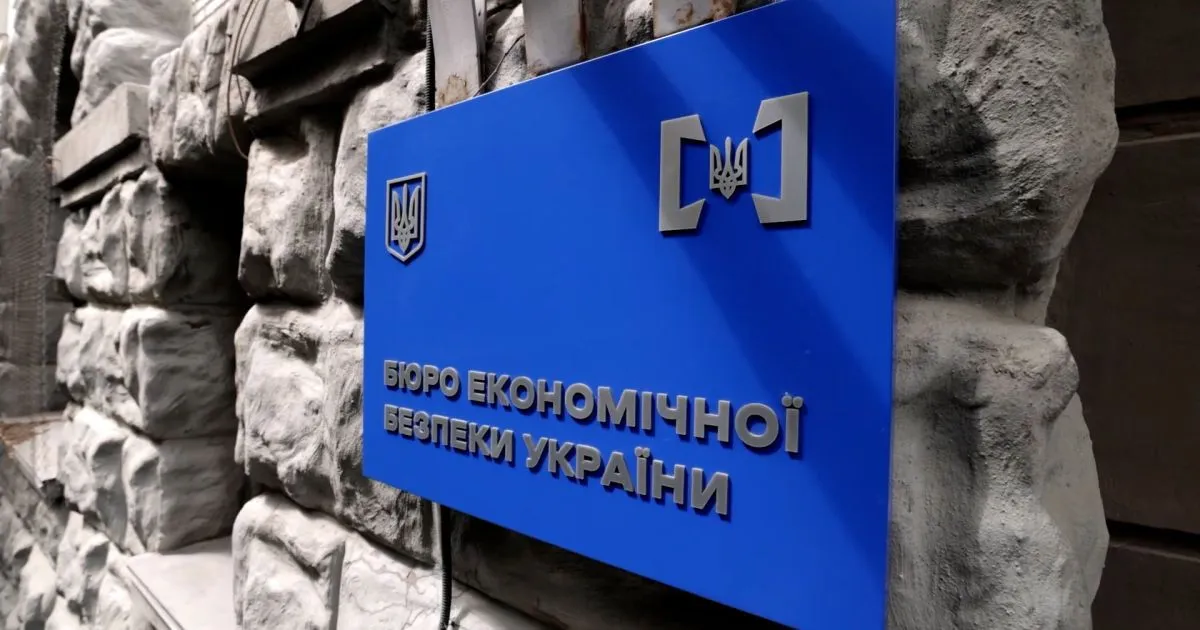
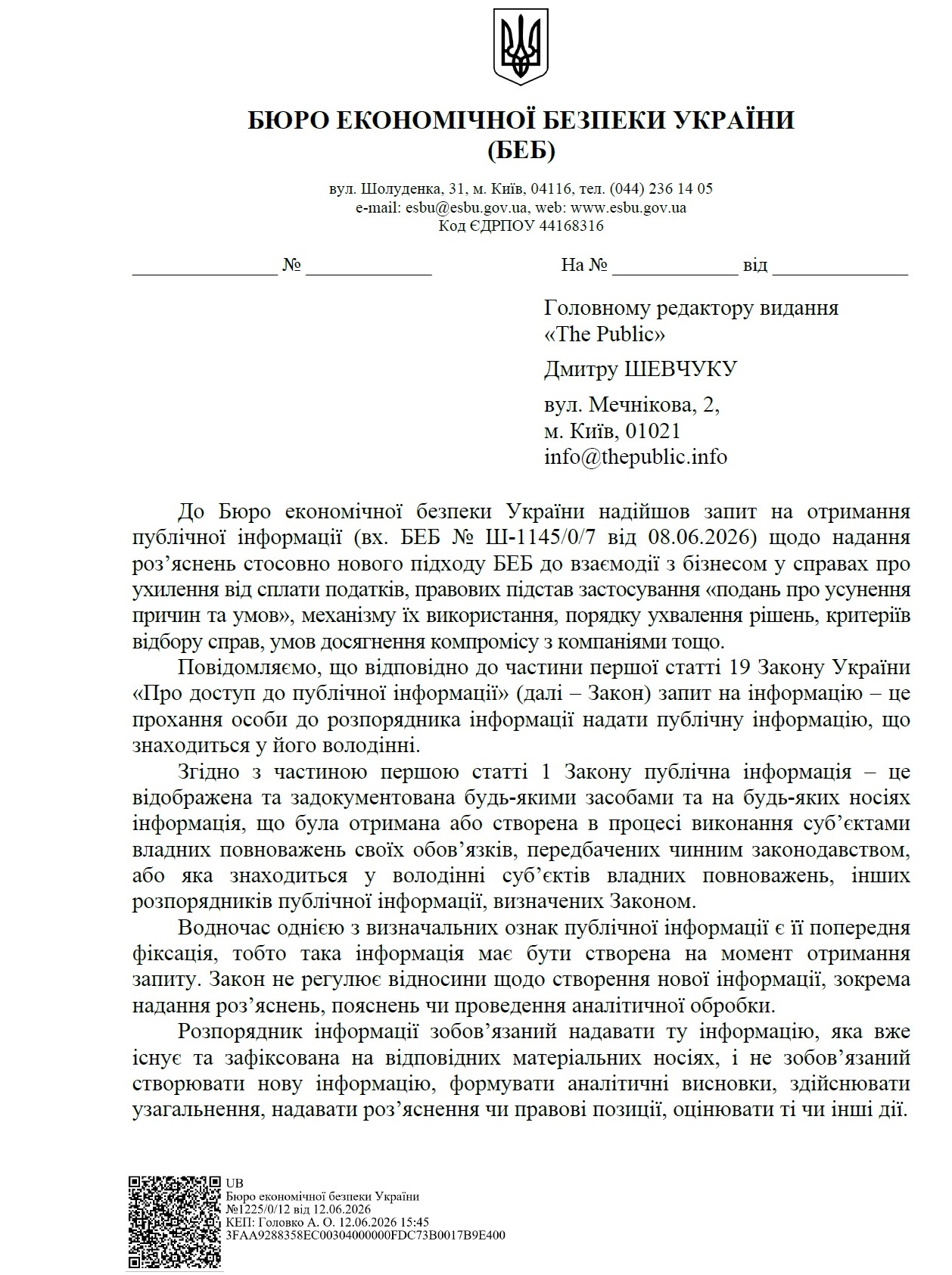
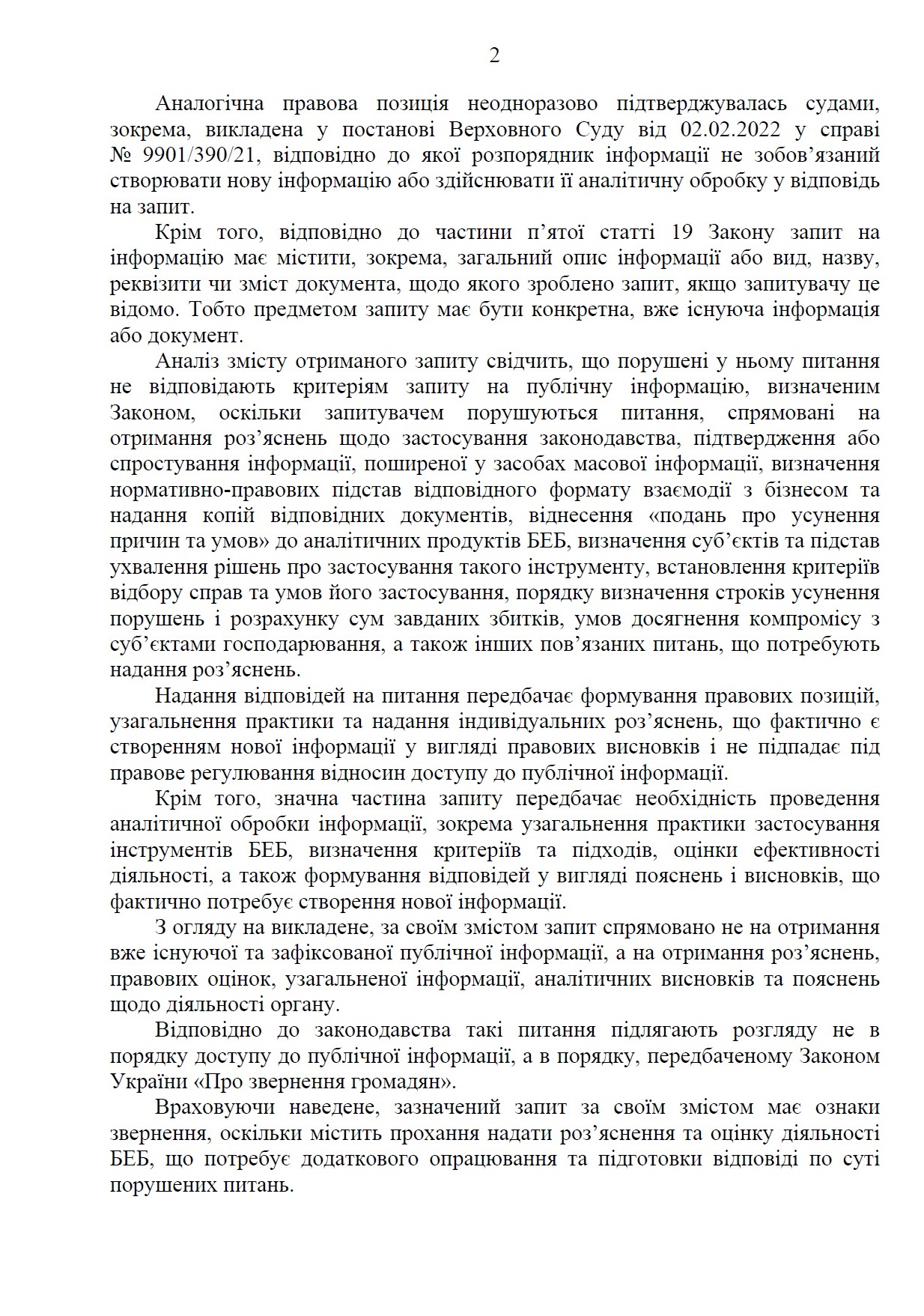
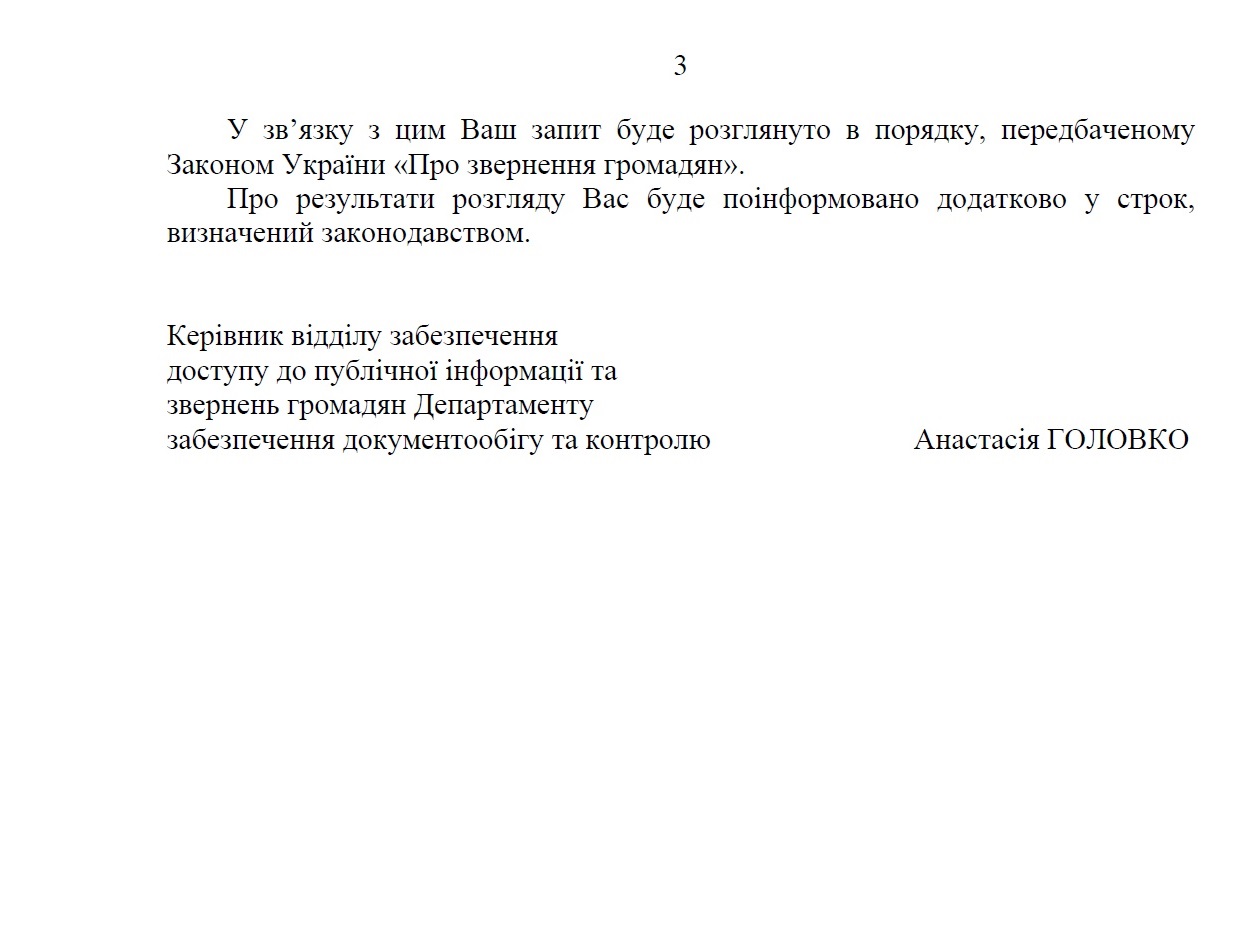
This is stated in the Bureau’s response to an enquiry from ThePublic.
“A significant part of the enquiry involves the need to carry out analytical processing of information, in particular summarising the practice of applying the ESBU’s tools, defining criteria and approaches, assessing the effectiveness of its activities, as well as formulating responses in the form of explanations and conclusions,” the Bureau noted in its letter regarding the mechanisms and legal grounds for applying the Bureau’s so-called ‘new approach’ to tax law offenders.
The Bureau’s Director, Oleksandr Tsyvinskyi, had previously spoken about this innovation on several occasions. He emphasised that the ESBU is focusing on communication and the voluntary rectification of breaches.
“We have comprehensively shifted our approach from addressing the consequences to tackling the root causes. In particular, this concerns the issue of fragmentation. We have introduced new working procedures and developed a framework for addressing this,” stated the head of the agency during a meeting of the Verkhovna Rada Committee on Finance, Tax and Customs Policy, noting that there are at least six successful cases in this area.
The State Fiscal Service subsequently added that, as a result of this work, some companies are switching to the general taxation system and abandoning tax minimisation schemes.
However, according to MPs, this approach carries risks of corruption.
“This sets a bad example. And it seems to me that agreements can only be reached within the framework of a plea bargain with the investigating authorities. In any other context, any such agreements border on corruption. And I would prefer it if there were no talk of agreements and everyone operated within the law,” said MP Maksym Buzhanskyi.
Nevertheless, despite MPs’ concerns and the lack of legally enshrined procedures for applying ‘compromises’ with the grey economy, the ESBU actively uses them in its public communications.
For example, the publication Ekonomichna Pravda recently reported that the ESBU had sent requests to company representatives to address the causes and conditions.
“This approach began to be used under the bureau’s new leadership. In the document, the ESBU’s analysts describe all the tax minimisation schemes used by businesses, not just those being investigated as part of criminal proceedings. After receiving the requests, the companies reached a compromise with the ESBU,” the journalists noted.
However, there is no mention of such requests in either the Law on the Economic Security Bureau or the Code of Criminal Procedure. The Economic Security Bureau itself was unable to provide copies of the document regulating their use, noting that the information controller is only required to provide existing data.
It is worth noting that the companies which, with the assistance of the Economic Security Bureau, have allegedly moved into the legal sphere include Yabko and MarketOpt. However, less than a month after their announcements regarding cooperation with the Bureau and a change in their business model, journalists exposed the latter for tax evasion. MP Danylo Getmantsev had warned of such risks, noting that public statements are clearly insufficient to tackle grey schemes.
As previously reported by ThePublic, following Oleksandr Tsyvinskyi’s announcement that the UVAPE scheme had been dismantled, the network continued to operate and evade tax payments.