A new pair of storks has settled in Odarka and Hrytsyk’s nest

This was reported by ornithologist Iryna Sarazhynska.
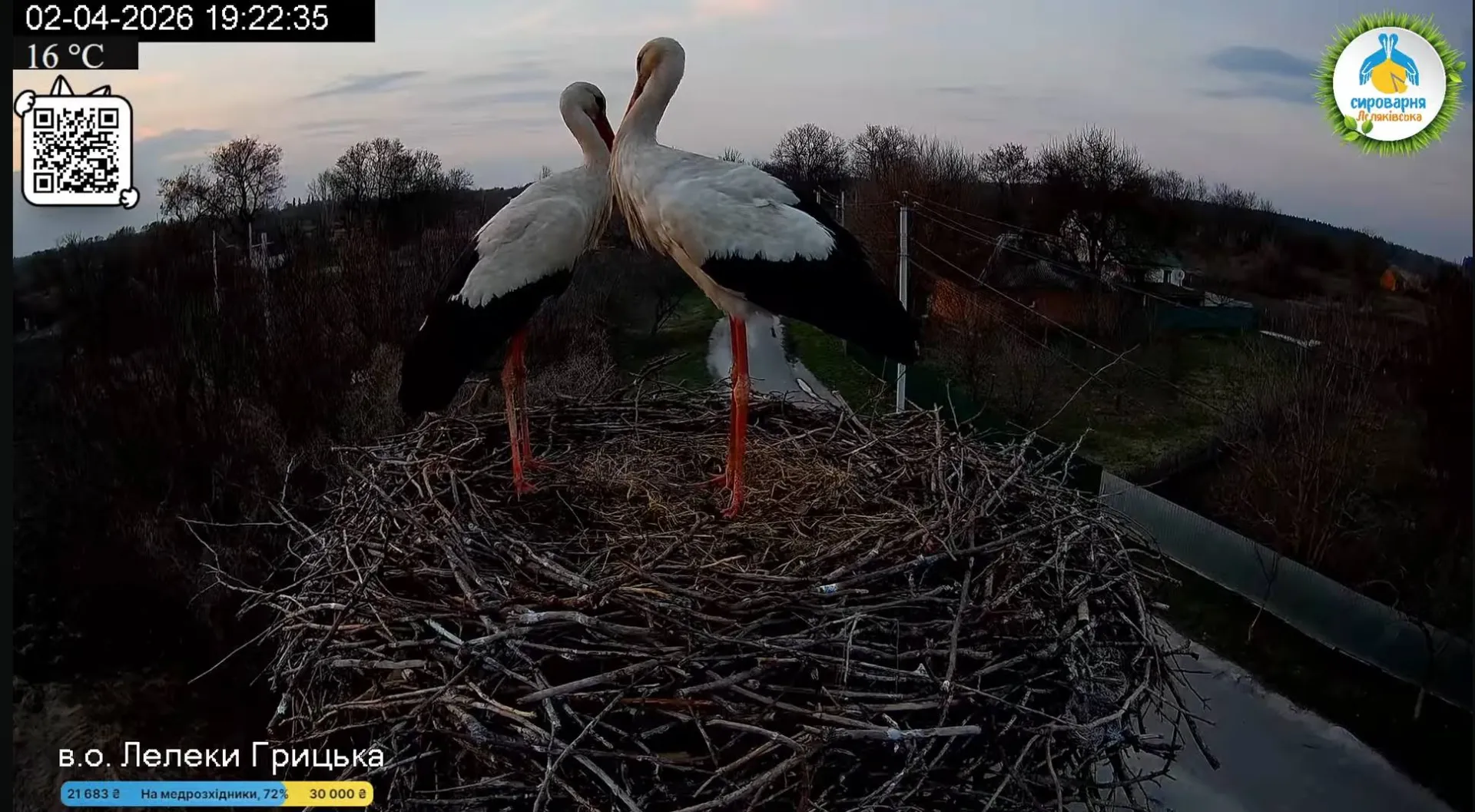
On 2 April, a new pair of storks formed in the nest of Odarka and Hrytsyk in the village of Lelyaky, Poltava region. According to Iryna Sarazhynska, the two birds met at 19:04:58.
The first bird appeared in the nest as early as 24 March. Over the course of ten days, it prepared the nest, bringing in hay, grass and twigs, but at that time it was still unknown whether it was a male or a female. It was only after the second bird arrived on 2 April that it became clear that it was the male who had been preparing the nest.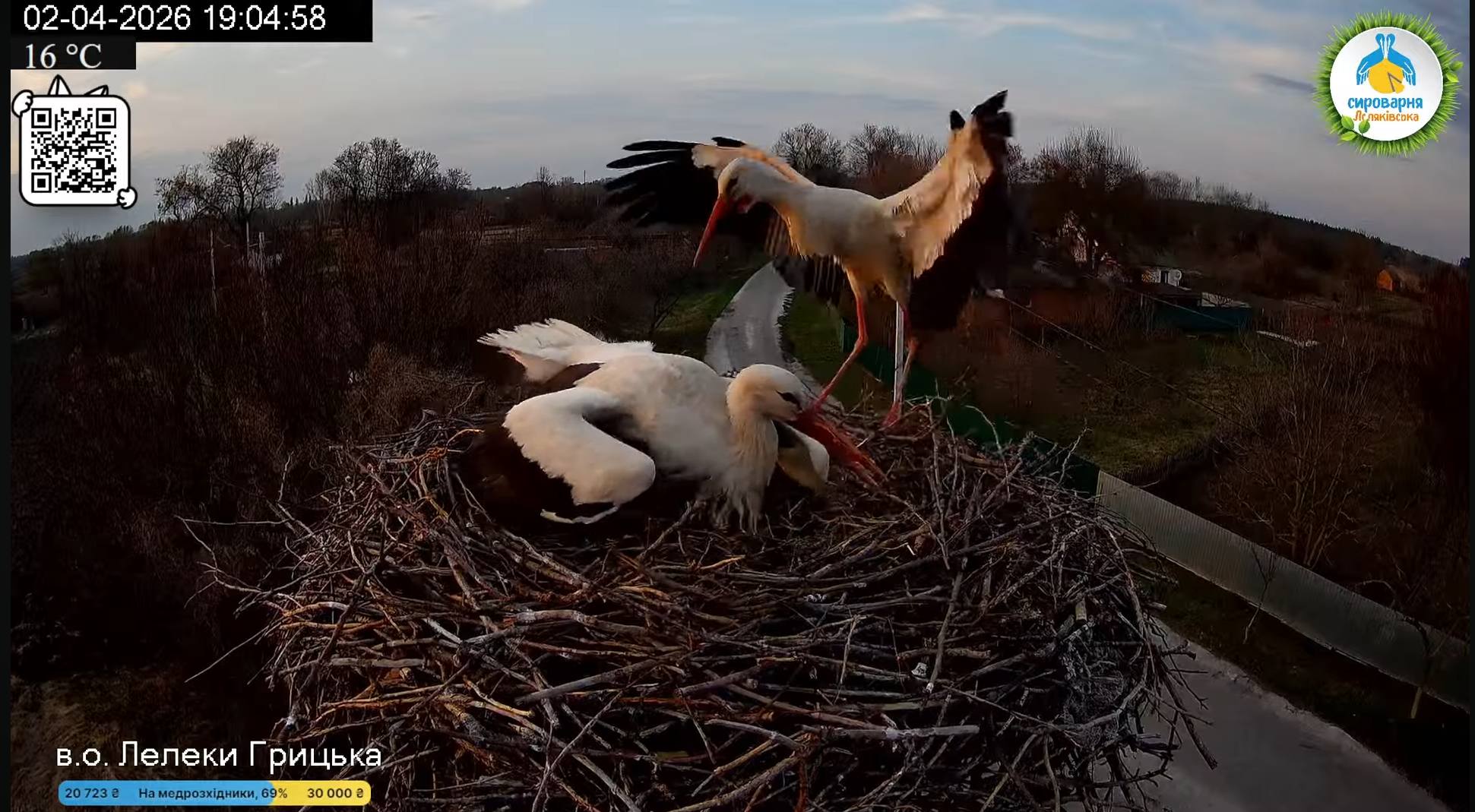
Iryna Sarazhynska noted that the storks’ behaviour after their meeting confirmed this. According to her, the male warmly welcomed the female to the nest, and provided nature does not intervene, the first egg could appear in about a week’s time.
Previously, the carers had expressed hope that the situation would turn out in favour of Lelya and Kvitka, yet at the same time they sympathised with Odarka, who had lost her nest to another pair. The return of the stork Hrytsyk could also add further tension to the battle for the birds’ home.
What is known about the nest in Lelyaky
Ukrainians have been watching the life of the nest in the village of Lelyaky in the Poltava region for over three years now. Previously, Odarka and Hrytsko incubated eggs and looked after the chicks there. In 2025, Odarka returned to the nest with another bird, whom they named Hrytsko.
Last year, five chicks hatched from this pair. Hrytsyk carried the youngest chick, whom users named Katrusya, out of the nest. After that, people looked after the chick until it grew strong enough to fly off to spend the winter with the flock. The other four chicks of Odarka and Hrytsyk successfully learnt to fly and left the nest at the end of July 2025.
As a reminder, on 22 March, the first stork of the season arrived at the nest in the Pyriatyn National Nature Park in Poltava Oblast. Its arrival was captured live, with over 200 viewers watching at the time; however, the bird turned out not to be from the pair whose return observers are awaiting.