A simulation has been carried out in Europe of a possible scenario in which Russia rapidly seizes the Baltic states

The Vilnius-based think tank Baltic Defense Initiative has produced a study modelling a scenario in which Russia could force Lithuania to surrender within 90 days without its troops crossing the border.
The document describes a possible sequence of events at the end of 2027. The scenario envisages that right-wing, anti-European forces come to power in Europe, whilst the US is exhausted by a protracted war with Iran.
The study notes that in December 2027, Marine Le Pen, as President of France, suspends the nuclear deterrent for NATO allies, which had previously been provided by France and the UK.
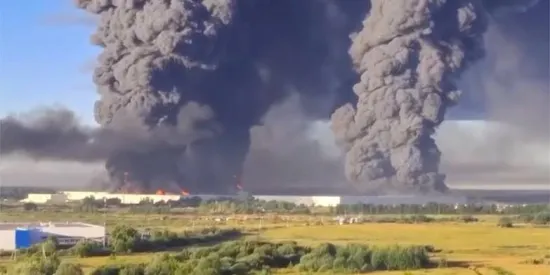
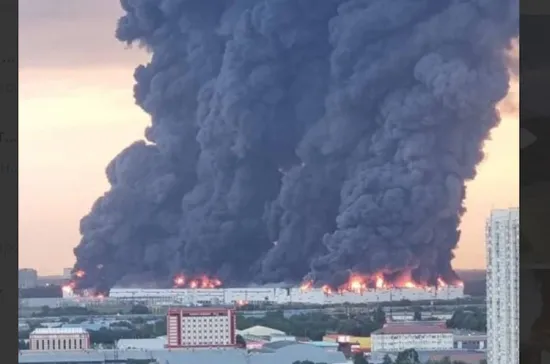
Next, according to the scenario, the United States is exhausted by the war with Iran over the course of 18 months. Russia then strikes the Lithuanian government with hypersonic missiles and, over the following 60 days, launches more than 170,000 Shahed-type drones. As a result, the document states, Vilnius’s infrastructure is destroyed, including bridges, power stations, hospitals and water supply facilities.
On the 90th day, Moscow issues an ultimatum demanding that the Baltic states agree to occupation, otherwise Riga and Tallinn will be threatened.
The authors of the study note that the scenario is based on confirmed capabilities of weaponry, observed rates of military equipment production and documented political trends.
Assessments among officials and analysts regarding the likelihood of a Russian attack on the Baltic states, which are NATO members, vary. At the same time, Eastern European countries have been increasing their defence spending in recent years.
Estonia’s Foreign Intelligence Service has previously stated that Russia does not plan to attack NATO countries over the next two years, a development linked to the strengthening of Europe’s defence capabilities.
The founder of the Baltic Defense Initiative, Thibault Devergranne, drew attention to a possible loophole in the Lithuanian constitution. According to him, the document does not specify a clear procedure for the transfer of power in the event of the incapacitation of the president and the speaker of the Seimas.
He noted that in such a scenario, uncertainty could arise as to who should assume the duties of supreme commander-in-chief.
The think tank has prepared over 200 defence proposals for Lithuania. According to the researchers, these are based on the deterrence model established in France after the Second World War.
Follow us on Telegram