An anthology of Shevchenko’s works in Danish is being prepared in Copenhagen
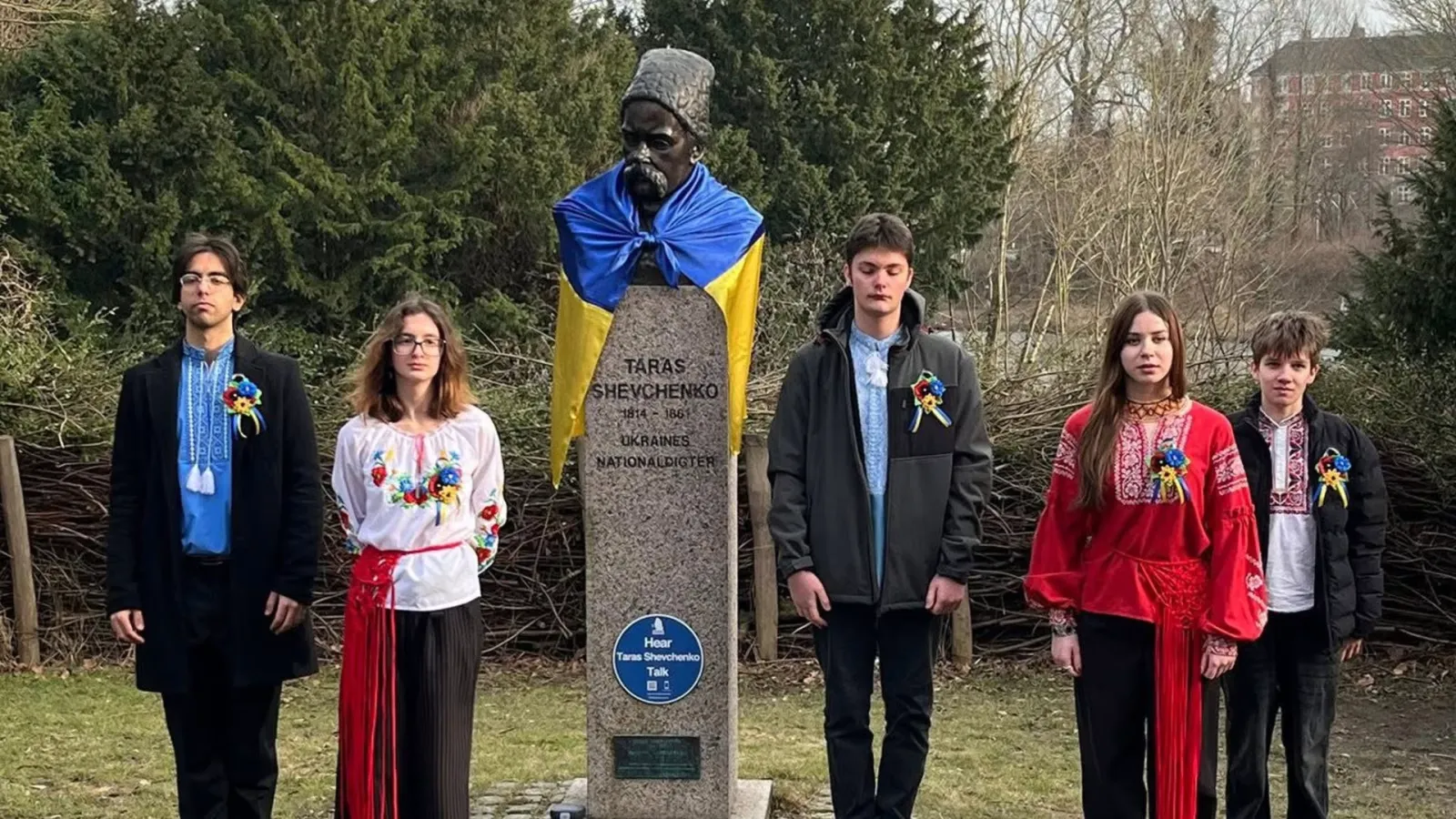
This was announced by the Pylyp Orlyk Foundation.
The anthology is being prepared by the Pylyp Orlyk Foundation, the Danish-Ukrainian Society and the Danish organisation “Help Ukrainian Children”. The collection will feature 13 selected works from “Kobzar”, arranged thematically – from lyrical poems about home, humanity and nature to texts on freedom, historical memory and human dignity.
The project team includes literary editor Carsten Hammer – a professor at University College Copenhagen and honorary professor at the V. G. Korolenko, translator Ksenia Frost-Fitisova, producer Lesya Ignatik-Eriksen, as well as Danish poet Marta Elias, who is working on the poetic adaptation. The main consultants on the Ukrainian side are writer Oksana Zabuzhko and art historian Rostislav Luzhetskyi.
The foundation emphasises that the translations are being made directly from the Ukrainian original. Ksenia Frost-Fitisova noted that this is not just about poetry, but also about the opportunity to let Danish readers hear a voice that has shaped the Ukrainian understanding of freedom and dignity for generations.
Why the project is being launched now
The initiative emerged against the backdrop of growing interest in Ukraine in Scandinavia following Russia’s full-scale invasion. The organisers aim to present Shevchenko to a Danish audience not merely as Ukraine’s national poet, but as a thinker of pan-European stature.
Literary editor Carsten Hammer explained that the anthology aims to present Shevchenko to Danish readers as a moral witness who, through his poetry, spoke out against empires, oppression and the loss of human dignity.
The organisers also draw a parallel between Shevchenko and the 19th-century Danish Enlightenment figure Nikolaj Grundtvig. The announcement notes that he played a key role in shaping Danish identity and public education, just as Shevchenko became a defining voice in the cultural awakening of Ukrainians.
The project is coordinated by the Pylyp Orlyk Foundation. The curator from the foundation is Yaryna Yasinevych, and from the Danish-Ukrainian Society – Bo Gullak Flindt. The foundation noted that the society, established in 1992, is dedicated to promoting knowledge about Ukraine in Denmark and that it was this very society which, in 2010, initiated the erection of a monument to Shevchenko in Copenhagen.
The organisers plan to present the first translated poems at public events in Denmark this spring, in particular to mark the anniversary of the first edition of *Kobzar*, which was published on 26 April 1840. The symbolic launch of the project took place on 8 March at the Shevchenko monument in Copenhagen, where Ksenia Frost-Fitisova read the Danish translation of “The Testament” in public for the first time.
Artem Mykolaychuk, Chairman of the Board of the Pylyp Orlyk Foundation, emphasised that in 2010 Shevchenko gained a physical presence in Denmark, and now his voice will be heard in Danish.
The foundation stresses that the publication of “Kobzar” in Danish is part of a broader process of Ukraine’s cultural diplomacy during the war. They believe that translations of classical literature into the languages of partner countries help to shape a lasting perception in Europe of Ukraine as an ancient, independent culture, separate from the Soviet or Russian context.
It is also noted that Denmark is one of Ukraine’s key allies in the fields of security and humanitarian support, and that cultural projects bringing together Ukrainian and Danish perspectives should strengthen this cooperation not only at the state level but also at the societal level.