The Rada wants to assign military cases exclusively to specialist judges

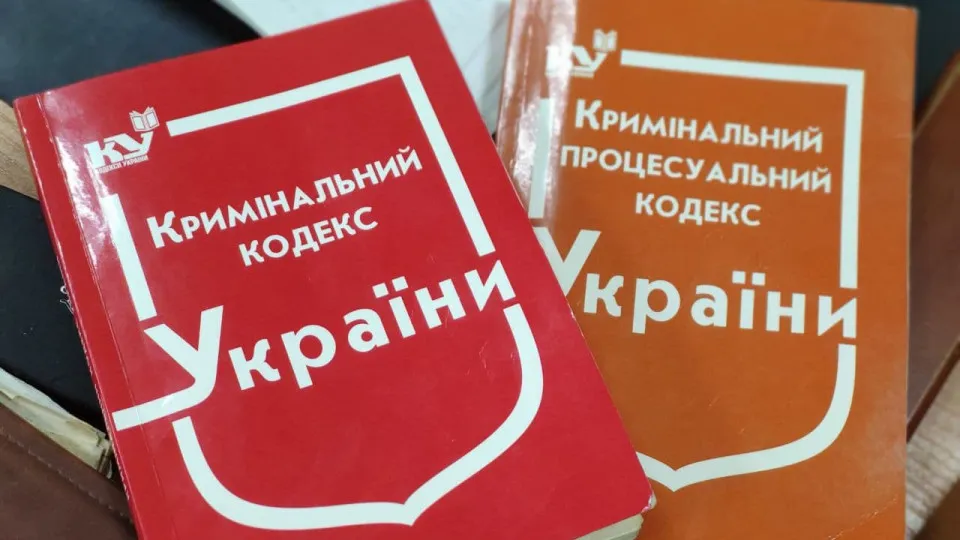
Bill No. 15084 has been tabled in parliament; it proposes changes to the rules governing the adjudication of cases involving military criminal offences, as well as crimes against peace, the security of humanity and the international legal order.
The essence of the initiative is that such proceedings should be heard only by judges with the relevant specialisation. If a case is heard by a panel, only a specialised judge may preside over such a panel.
The authors of the document explain the need for such changes by the significant strain on the justice system during the war and following its active phase. According to the Office of the Prosecutor General, as of 9 March 2026, over 220,000 criminal proceedings concerning crimes of aggression and war crimes had been registered in Ukraine.
The explanatory note to the draft law emphasises that hearing this category of cases requires additional specialised training for judges. At the same time, as the initiators point out, a significant portion of resources is currently spent on training judges who have no experience in military cases, whilst judges with the relevant specialisation may not receive a sufficient caseload in this very category of proceedings.
That is why, in the authors’ view, the approach to the allocation of such cases needs to be changed in order to make more effective use of human resources and ensure a more professional hearing.
To this end, it is proposed to amend the Criminal Procedure Code of Ukraine. In particular, they wish to add a new paragraph to Article 31 of the CPC, which would explicitly stipulate that cases concerning military criminal offences and crimes against peace, the security of humanity and the international legal order shall be heard only by a judge with the relevant specialisation.
Initiative No. 15084 is linked to another draft law – No. 10301 of 29 November 2023. It concerns amendments to the Law of Ukraine “On the Judicial System and the Status of Judges” and provides for the introduction of specialisation among judges for the adjudication of military criminal offences and crimes against peace and the international legal order.
At the time of the new bill’s registration, document No. 10301 had already been supported by the Verkhovna Rada in the first reading as a basis. The text explains that amendments to the Law “On the Judicial System and the Status of Judges” and to the Code of Criminal Procedure cannot be introduced in a single document, which is why they are being drafted as two separate bills.
The authors emphasise that the adoption of only one of these documents could lead to a legal conflict and would not allow the stated objective to be achieved – ensuring the competent and effective adjudication of cases involving war crimes and crimes against the international legal order.
Parliament had previously attempted to amend the CPC in this regard, but Bill No. 10302 of 29 November 2023 failed to gain support.
It is also noted that specialised judges in each specific court should be elected by the assembly of judges of that court. The initiator of such a decision may be the president of the court, and if their proposal does not receive the necessary support – any other judge of the same court.
It is proposed that the term of office for such a specialised judge be set at up to five years, with the possibility of re-election. The number of judges who will receive such specialisation will be determined by each court separately at its own assembly.
The explanatory note to the initiative also recalls that draft law No. 10301 was registered back in November 2023, but it was not until January 2025 that MPs supported it in principle.