У росії силовики супроводжують масовий забій худоби, який пояснюють «небезпечним захворюванням»

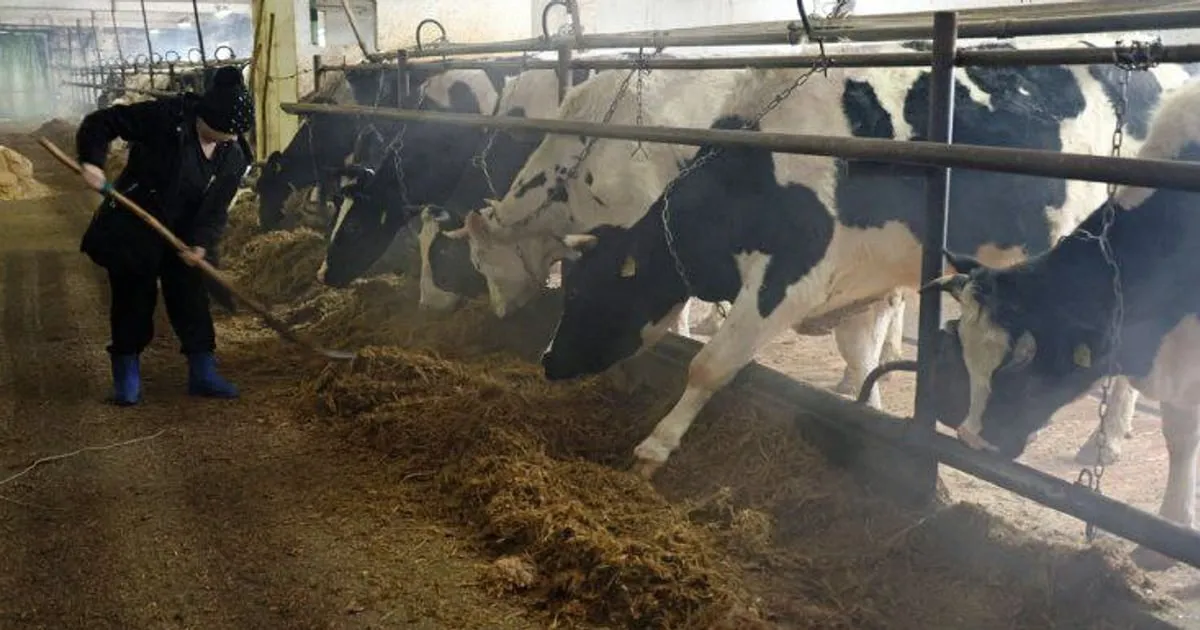
This is reported by the local newspaper *Sibirsky Express*.
As early as the beginning of February, veterinarians in Novosibirsk warned of an outbreak of disease among domestic animals, but assured the public that the situation was under control.
By early March, however, reports emerged that local farmers were having their livestock seized and incinerated on a massive scale. Some areas were placed under quarantine, and Kazakhstan banned the import of meat from Siberian regions.
Local residents complained about the foul smell from the burning of carcasses: ‘The stench was like burnt manure. In some places, the smell was even stronger than that from the landfill site.’
The Russian authorities attribute this to the spread of pasteurellosis among animals — an infectious disease that leads to the rapid death of livestock. However, pasteurellosis in animals is treatable if detected at an early stage. Consequently, harsh measures such as mass culling and the burning of livestock have led experts to believe that a more dangerous disease, foot-and-mouth disease, has in fact spread among the animals.
There is no specific treatment for foot-and-mouth disease in animals. Sick animals are isolated and treated for symptoms. But in the event of a mass outbreak, the only option is to cull the animals.
At the same time, an increase in cases of rabies in animals was reported in the region.
“They immediately started spreading [lies] that it was pasteurellosis. This is a well-known infection, but the main thing is that it is treatable. Next, they said it was mad cow disease. But that has very pronounced symptoms; no farmer would have failed to notice it. So, the most likely explanation is foot-and-mouth disease,” says epidemiologist Mykhailo Favorov.
Farmers in the Novosibirsk region have begun protesting against the mass culling of animals, insisting that their livestock are healthy. In particular, residents of the village of Kozyha took to the streets; according to media reports, there is no other work there apart from farming, and cows are ‘literally essential for survival’.
The villagers appealed to the prosecutor’s office and recorded a collective appeal to Russian President Vladimir Putin. Instead, however, police and other security forces arrived in the village, threatening the protesters with arrest.
According to the publication ‘Sibirsky Express’, journalist Ivan Frolov, who reported on the destruction of livestock belonging to Novosibirsk farmers, was detained in the region. He is accused of ‘publicly disseminating knowingly false information about circumstances posing a threat to the life and safety of citizens’. Another journalist, Dmitry Polushin, was summoned by the police following the receipt of materials alleging “abuse of freedom of the press”.
Despite this, the Investigative Committee of the Russian Federation announced that it would investigate the Ministry of Agriculture of the Novosibirsk Region for possible negligence. The Ministry of Agriculture of the Russian Federation assured that the affected farms in the Novosibirsk Region “will be provided with all necessary support”.