Strikes on Russian terminals in the Baltic Sea have caused massive damage: the figure has been revealed

This information was released by the Kyiv School of Economics, citing the FT.
Attacks on Primorsk and Ust-Luga: what is known
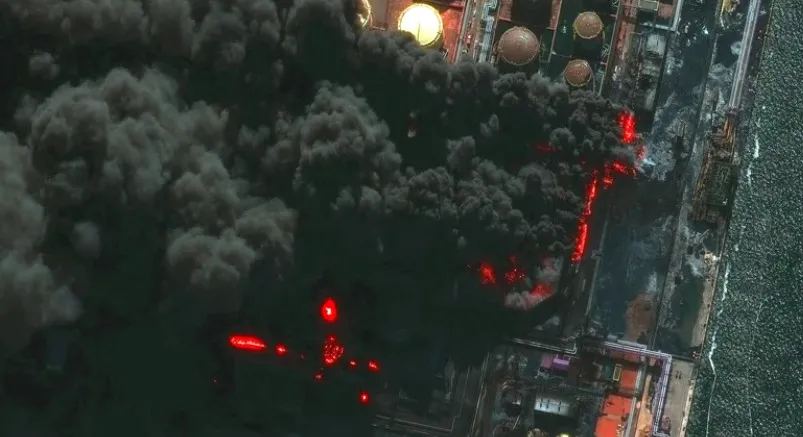
Five strikes on the ports of Primorsk and Ust-Luga damaged terminals through which over 40% of Russia’s seaborne oil exports pass.
In Primorsk alone, approximately $200 million worth of oil was destroyed.
The attacks also affected:
- Lukoil’s oil refinery in the Nizhny Novgorod region
- chemical and fertiliser plants, whose products can be used for military purposes.
When operations will resume
Partial oil shipments via the terminals could resume within a few days. But a full recovery will take longer:
- damaged tanks will take months to repair
- restoring production lines in Ust-Luga could take over a month.
Kremlin spokesman Dmitry Peskov stated that Russia cannot guarantee “100% protection” of energy facilities.
The state is passing on part of the costs of countering drones to businesses: companies are purchasing electronic warfare systems and organising physical security themselves. One entrepreneur told the FT that he had spent at least 1.5 billion roubles – around $19.1 million – on this.
But even these costs may prove fruitless: new Ukrainian drones fly to pre-programmed coordinates without radio communication, so some of Russia’s electronic warfare systems simply do not work against them.
Why Ukraine continues attacks on Russian oil infrastructure
Ukraine was already prepared to suspend attacks on Russian oil infrastructure – provided Russia ceased its massive strikes on the Ukrainian power grid.
But in early February, Russia violated this agreement: powerful missile and drone strikes on Ukrainian thermal power stations, thermal power plants and substations in the midst of freezing temperatures. In response, Ukraine sharply intensified its campaign of strikes against Russia’s oil and export infrastructure.
President Zelenskyy stated: Ukraine will cease its attacks only if Russia takes reciprocal action.