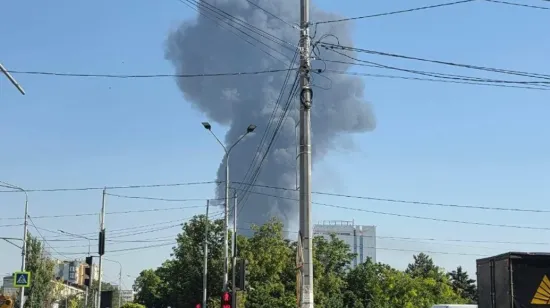
Ukraine has stepped up its strikes against Russia’s shadow fleet in the Mediterranean Sea

With the world’s attention focused on the war against Iran and the energy crisis, Ukraine has stepped up its naval operations against Russia’s shadow fleet, reports Haaretz.
Around ten days ago, the sanctioned tanker Altura, flying the Sierra Leone flag, was attacked in the Black Sea just before entering the Bosphorus Strait. The vessel was travelling from Novorossiysk to Istanbul with a cargo of 140,000 tonnes of oil. According to preliminary reports, it was struck by an unmanned surface vessel carrying explosives.
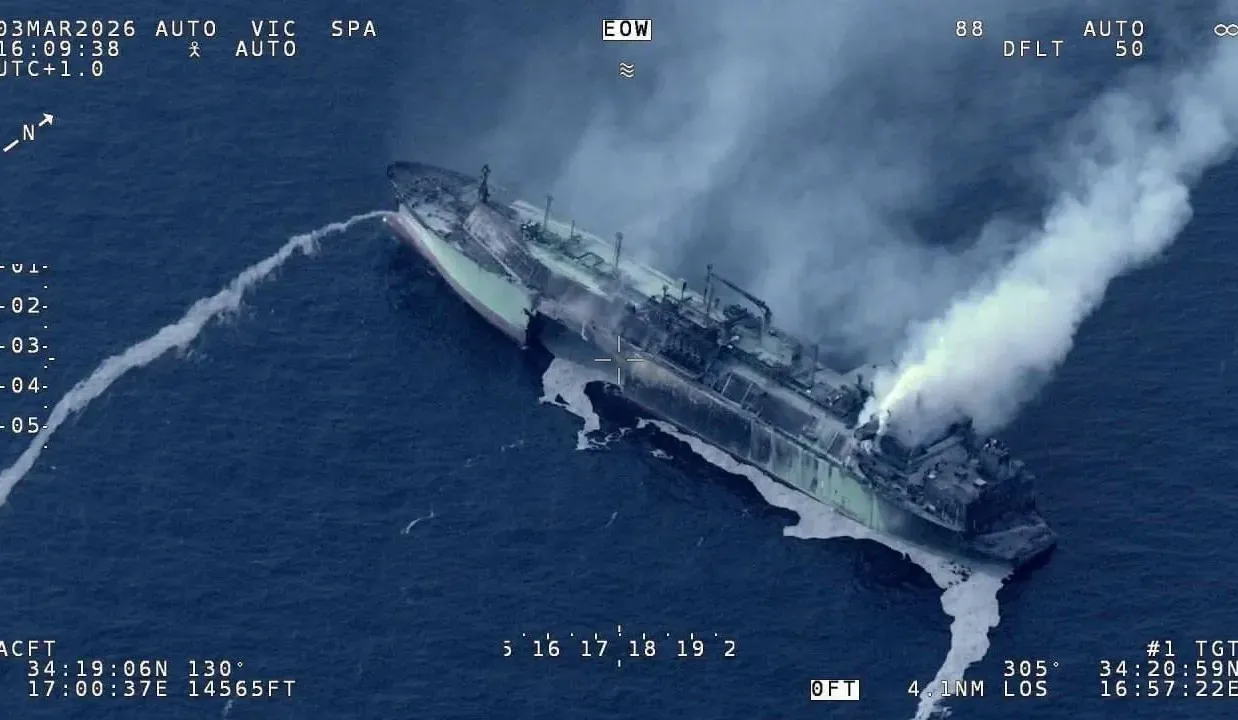
Two weeks earlier, a similar tanker, the Arctic Metagaz, was attacked east of Malta. The Kremlin claimed that the strike was carried out by a Ukrainian unmanned boat launched from the Libyan coast. Ukraine has not officially commented on this. The explosion caused a fire, but all 30 crew members were rescued. Countries in the region have expressed concern over the risk of an environmental disaster.
The attack in the Mediterranean took place more than 2,000 kilometres from the front line and was one of Ukraine’s most distant strikes. It demonstrates the use of unmanned systems in naval warfare.
After losing a significant portion of its fleet at the start of the full-scale war, Ukraine changed its approach, shifting to unmanned operations. In the Black Sea, part of the Russian fleet was hit, including key ships and a submarine.
Initially, Ukraine deployed Magura and Sea Baby unmanned boats near Crimea. These platforms were subsequently upgraded, equipped with missiles, drones and other systems.
Over time, operations expanded to the southern Black Sea near Turkey, as well as to the Mediterranean Sea. Russia’s shadow fleet consists of dozens of tankers with opaque ownership structures, allowing them to circumvent sanctions. Such vessels often switch off their transponders and transfer oil in the open sea.
In December, Ukraine attacked the tanker Qendil near Crete; that same month, the tanker Mersin was struck off the coast of Senegal. In January, an attack took place near Turkey, and in March, the Arctic Metagaz was destroyed.
According to experts, unmanned boats can be transported in containers on civilian vessels and launched on the high seas. They are difficult to detect due to their low radar signature. The use of Starlink satellite communications allows them to be controlled over long distances.
Such operations are cited as an example of asymmetric naval warfare, which is changing perceptions of front lines and the potential applications of unmanned systems.