The Ukrainian company Fire Point aims to develop a cheaper alternative to the Patriot system by 2027

This is reported in a Reuters article, citing Fire Point co-founder and chief designer Denis Stilman.
The Ukrainian company Fire Point is in talks with European manufacturers to launch a new air defence system as early as next year. Reuters presents this as an attempt to create a cheaper alternative to the American Patriot system, which remains in short supply due to heavy deployment in the Middle East. The company says its goal is to reduce the cost of intercepting a ballistic missile to less than $1 million.
Denis Stillerman told Reuters that the Patriot system often requires two or three interceptor missiles to destroy a single ballistic target, each costing several million dollars. That is why, he said, making interception cheaper could be a “game changer” for the air defence market. Fire Point plans to intercept its first ballistic missile by the end of 2027.
What exactly is Fire Point developing?
Stielerman did not name the European companies with which negotiations are ongoing, but said that Fire Point is interested in cooperation in the areas of radars, missile guidance systems and communications – that is, in those areas where the company itself lacks expertise. Among the manufacturers with strong radar solutions, the article mentions Weibel, Hensoldt, Saab and Thales.
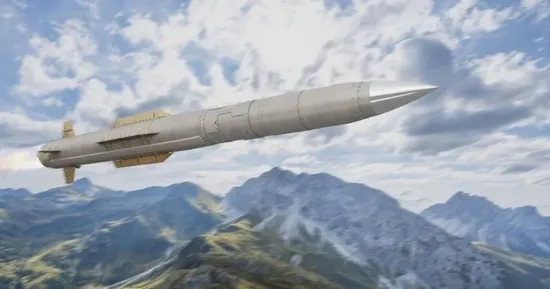
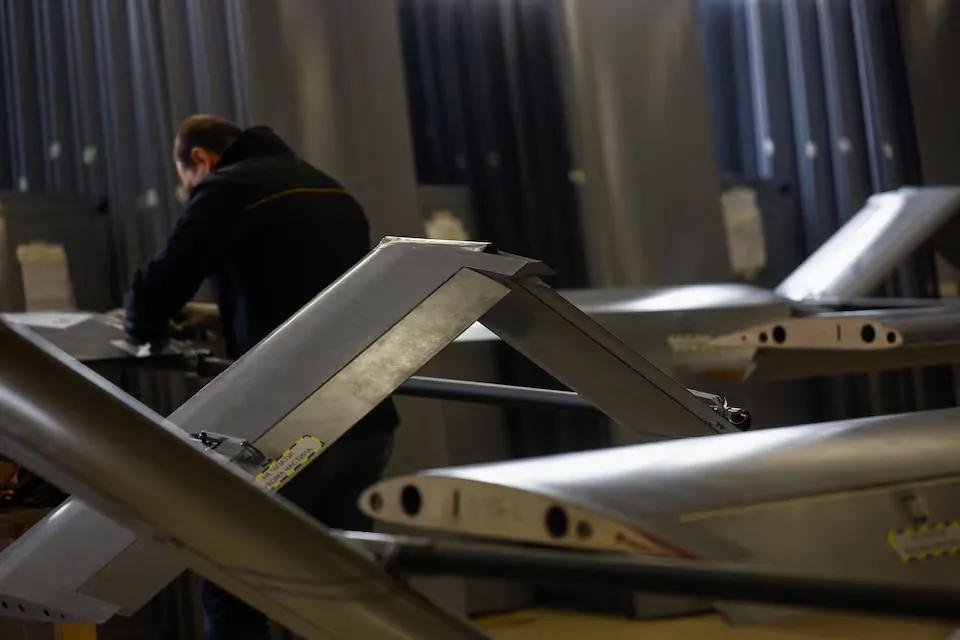
Reuters reports that Fire Point was established following Russia’s full-scale invasion in 2022 and is currently Ukraine’s largest manufacturer of long-range drones, which are used for most strikes deep into Russian territory. In recent months, its FP-5 cruise missile, better known as Flamingo, has also been used to strike Russian military facilities and arms factories, including a ballistic missile production plant nearly 1,400 km from the Ukrainian border.
The company is also finalising the development of two supersonic ballistic missiles. The smaller FP-7, with a range of around 300 km, is, according to Stielerman, set to see “its first military deployment in the near future” and is conceptually similar to the American ATACMS. The larger FP-9, capable of carrying an 800-kg warhead over a distance of up to 850 km, is being prepared for testing. If this system reaches production level, Moscow will find itself within range of Ukraine’s ballistic arsenal.
In comments to Reuters, Stillerman stated outright that strikes on Moscow, which is protected by one of the world’s most powerful air defence systems, could trigger “a massive shift in Russian consciousness and in the consciousness of Russia’s leadership”. Meanwhile, Fabian Hoffmann, a missile weapons expert and senior researcher at the Norwegian University College of Defence, noted that although Russia already has experience intercepting ATACMS, wider use of ballistic missiles could overstretch its air defence, which is already weakened by Ukrainian strikes.
Investment from the Middle East and a satellite project
Separately, Reuters reports on a potential major deal for Fire Point itself. According to Stielerman, Ukraine’s Antimonopoly Committee is expected to resolve the issue regarding the proposed investment from a Middle Eastern conglomerate by around October. This involves the acquisition of a 30% stake in the company for $760 million, valuing Fire Point at $2.5 billion. Ukrainian media had previously named the Emirati defence company Edge Group as a potential investor, but neither it nor the Ukrainian regulator has commented to Reuters.
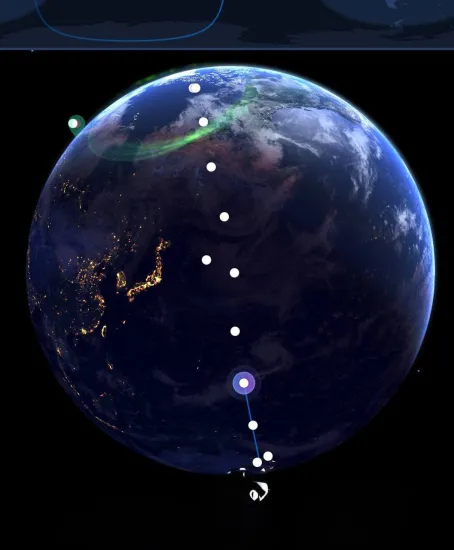
According to the company’s co-founder, these funds would be the first step towards establishing a space launch terminal in the UAE and, in the long term, help deploy a constellation of European low-Earth orbit satellites. Stielerman says that the country’s location near the Indian Ocean and its geographical conditions appear favourable for such launches. He also stated that Fire Point has already developed a carbon-fibre winding machine capable of producing a large solid-fuel booster for satellite launches, although the space project itself remains at the conceptual stage.
Exports and production
Reuters notes that Ukrainian defence companies are currently seeking to enter foreign markets, as they have excess production capacity and wish to capitalise on the global rise in military spending. Despite the easing of some military export restrictions, each deal still requires separate state scrutiny and approval. Stilman said that Fire Point has already received enquiries from Gulf countries regarding its drone products and is awaiting permission from the Ukrainian government to begin exports. According to him, the company has a monthly export capacity of up to 2,500 long-range drones. The situation is more complicated when it comes to missiles. According to Stillerman, exports of the Flamingo are being held back by regulatory barriers. The company states that it currently produces hundreds of long-range strike drones per day, each with a unit cost of around €50,000, as well as three Flamingo missiles per day, costing around €600,000 each. He acknowledged that there are “bottlenecks” in Flamingo production, particularly regarding engines. An increase in production rates is expected following the launch of mass production of its own engine in October, as well as after the launch of a rocket fuel plant in Denmark, which, according to the company, is still awaiting two final permits from the Danish authorities.
As a reminder, during President Volodymyr Zelenskyy’s visit to Spain, the country’s Prime Minister Pedro Sánchez promised to provide Ukraine with five missiles for the Patriot PAC-2 systems.