Ukrainian eggs - new leaders in the British market

This is reported by ThePublic.info citing the publication Guardian.
While in 2022 the lion's share of imports was supplied by Dutch farms, by 2025 Ukraine and Poland accounted for over 15 million kilograms. Exports also increased from Spain, Italy, and other countries of Southern and Eastern Europe.
In the first seven months of this year, Ukraine supplied 8 million kilograms of eggs, Poland nearly 7 million, and Spain about 5 million.
The number of imported egg shipments sharply increased — from approximately 3.5 thousand in 2023 to over 10 thousand in 2024.
Mark Williams, head of the British Egg Production Council, stated that local farmers are in an unequal position. "Our farmers are forced to invest in increasingly higher animal welfare standards, while the government leaves the 'back door' open for eggs produced in systems banned in Britain. This is wrong and unfair," he says. He emphasized that cages, banned in Britain since 2012, are still widely used in Ukraine.
According to him, eggs from Europe, which previously appeared in food safety scandals, continue to enter the British market. Currently, Britain supplies 88% of its egg consumption domestically, with the rest imported.
Supermarkets sell exclusively British Lion Eggs, considered safe even for raw consumption. Imported eggs usually go to restaurants and the food industry, where price is a key factor.
"I'm not worried that Ukrainian eggs will appear on supermarket shelves. But retail accounts for only 65% of the market. The rest — catering and processing — are very price-sensitive segments. And it is precisely there that it is now profitable to sell Ukrainian products," says Williams.
He also adds that British safety, animal protection, and environmental standards increase the cost of a dozen eggs by about 14%.
"In Ukraine, such expenses are not present, so competition becomes unfair," concludes the expert.
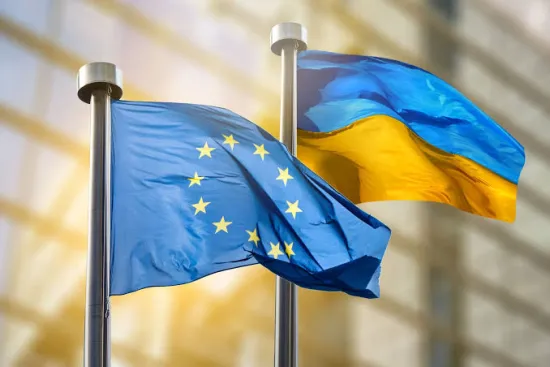
After the full-scale Russian invasion in 2022, many Ukrainian enterprises and logistics routes were destroyed. To help the Ukrainian economy survive, the UK and the EU temporarily lifted tariffs on Ukrainian goods — including eggs, reminds the Guardian.
Countries explain that this is a solidarity step with Ukraine during wartime. However, British farmers believe that humanitarian support should not come at the expense of their businesses.
"Helping Ukraine is right, but not at the cost of our farmers. Moreover, British retail chains have already promised to switch to cage-free eggs by 2025. This promise loses its meaning if the market is filled with cheap eggs from countries where standards are much lower," adds Williams.
A representative of the British government stated: "We support farmers with the largest 'green' budget in history and will always defend their interests in trade agreements. We are currently working on new rules to ensure fair competition in the market."