A tick bite: how to remove it and which symptoms you mustn’t ignore

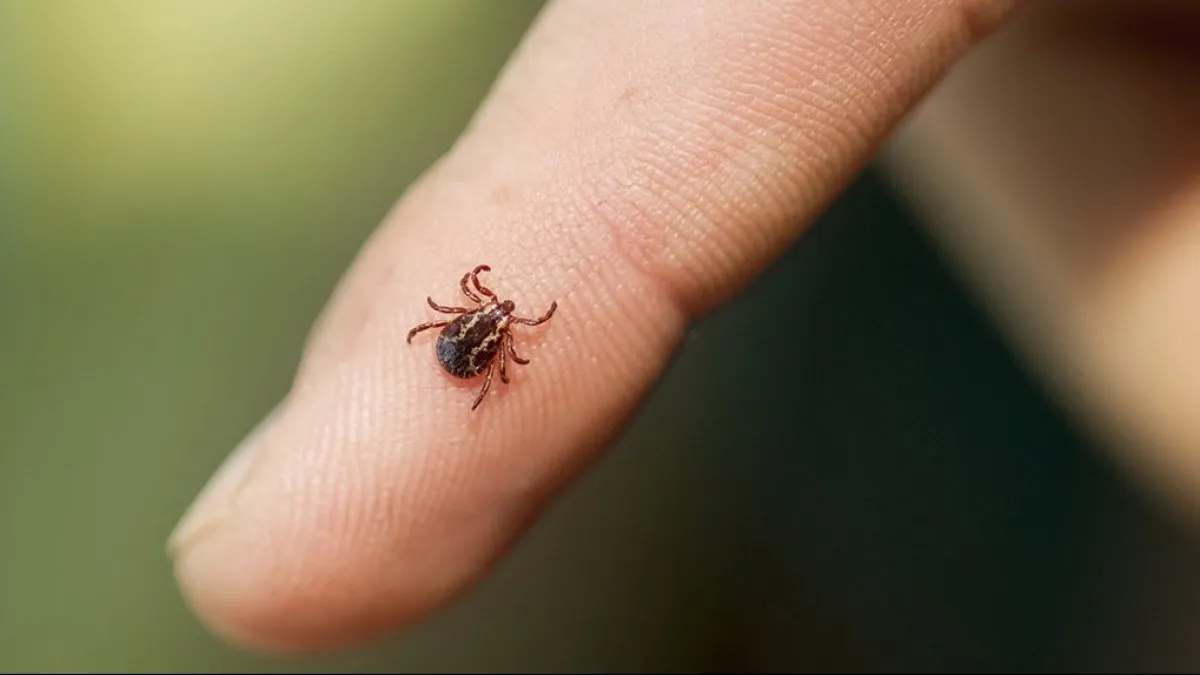
Where and when is there a risk of picking up a tick
Ticks can be found all year round, but they are most active in late spring and early autumn — specifically April to June and August to October.
These insects adapt well to warm and humid environments, so they do not live in trees and bushes, nor do they jump onto your head as is commonly believed, but rather reside in the grass and soil.
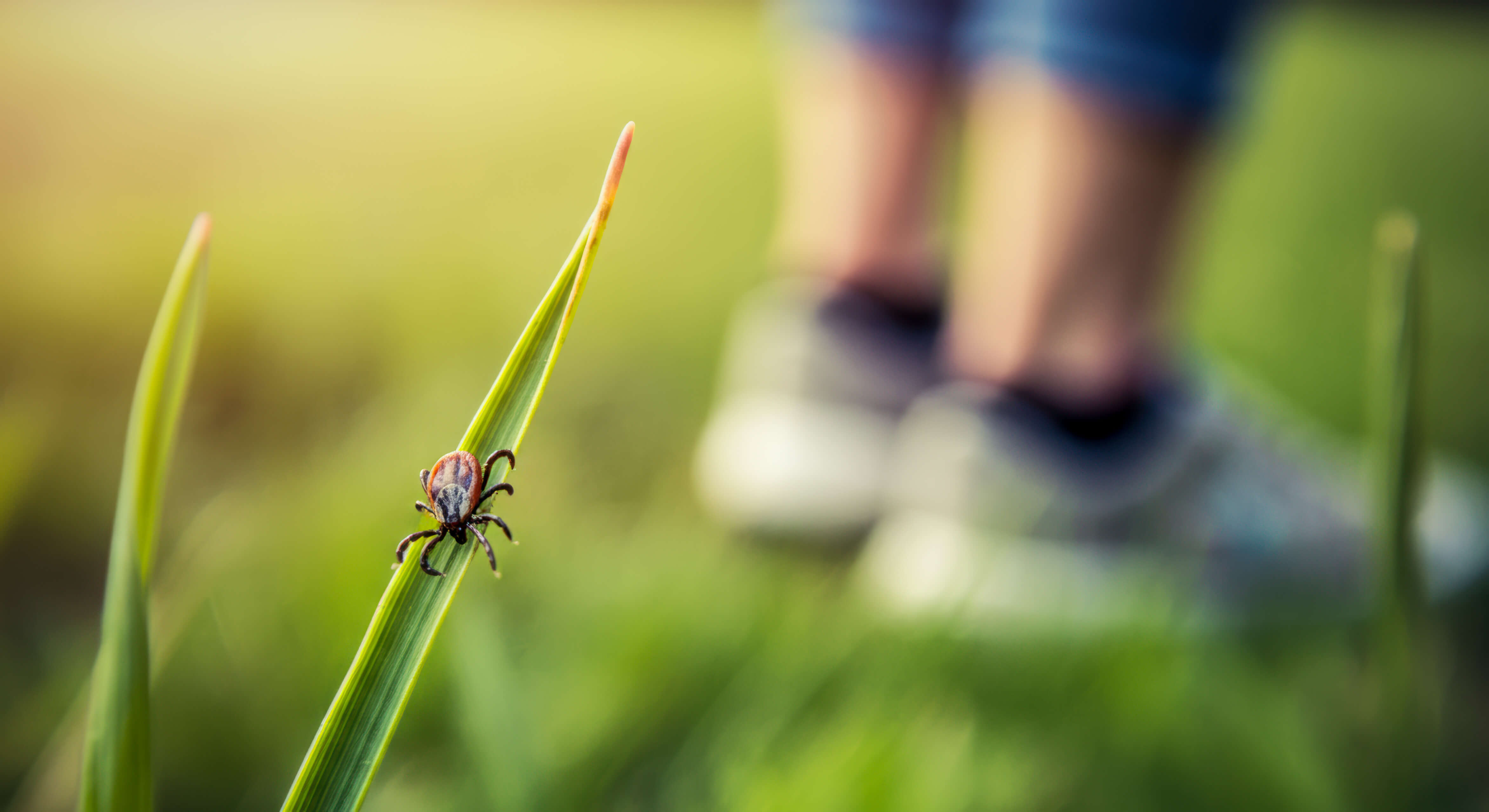
You can encounter ticks in the forest, a park, a public garden or on a lawn. They are most commonly found at a height of 20–60 metres.
From there, ticks crawl onto people — attaching themselves to exposed areas of the body, such as the neck or head, the hem of socks or underwear.
Ticks can also attach themselves to clothing and remain there for several hours or even days until they find a ‘suitable’ patch of human skin.
Tick bite: symptoms and the risks of encephalitis and Lyme disease
After biting through the skin, the tick sucks blood and simultaneously injects its saliva into the body, which may be infected.
The tick bite itself is painless, as the saliva contains anaesthetic substances, so the bite may go unnoticed.
However, if the tick’s saliva is infected, its entry into the human body can cause serious illnesses, including tick-borne encephalitis and Lyme disease.
Generally, all diseases carried by ticks have similar symptoms. Namely:
- fever and chills;
- pain, fatigue and muscle tension; in the case of Lyme disease, joint pain;
- tingling and numbness in the hands and feet, and, rarely, eye inflammation;
- rash.
Tick-borne encephalitis is an infectious viral disease that primarily affects the central nervous system. There is a vaccine available for this disease. Residents of the Volyn and Lviv regions, where outbreaks are common, should be the first to get vaccinated.
There is also a risk of contracting Lyme disease following a tick bite. Early symptoms include typical red rashes at the bite site, which spread across the body.
Without treatment, the infection can lead to Bell’s palsy, meningitis, heart rhythm problems, and pain and swelling in the joints.
How to remove a tick yourself
The tick must be removed as soon as possible. Therefore, once a bite has been detected, it is best to consult a dermatologist immediately, who will remove the tick under sterile conditions.
However, if it is not possible to see a specialist, you can remove the tick yourself.
Before removing the tick, you need to prepare:
- Soap or wet wipes — these should be used to clean your hands before and after the procedure;
- Rubber gloves to protect against infection and a plastic bag to place the insect in;
- Disinfectants (iodine, hydrogen peroxide, chlorhexidine, vodka or spirit, antiseptics) and cotton wool.
There are several ways to remove a tick yourself.
Remove the tick with tweezers. It is recommended to use tweezers with fine tips to avoid crushing the parasite. First, you need to carefully grip it with the tweezers close to the base of the skin and pull the tweezers upwards with smooth, slow movements. Do not try to twist or forcefully pull out the insect, so that no part of it remains in the body.
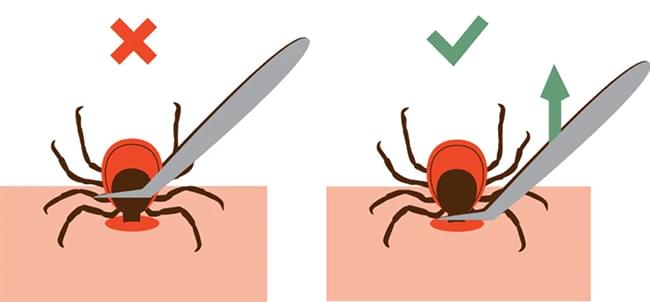
Remove the tick with a thread. Tie a knot in the thread and pull it as low as possible. Twist two threads together and, using gentle movements, pull the tick upwards, wiggling it from side to side. Do not twist the parasite, as its head may remain in your skin.
Remove the insect using a tick remover. You can buy this tool from a veterinary pharmacy. Press it against the skin and slide it under the tick. It is recommended to gently wiggle the tick from side to side (as its proboscis is firmly embedded in the wound), and then slowly twist it in the direction that is most comfortable for you.
After removing the tick, wash the bite site with warm soapy water, treat the wound and wash your hands.
Once removed, the tick itself can be placed in alcohol or a sealed bag. You can also wrap the tick in adhesive tape or flush it down the toilet.
Sometimes you need to see a dermatologist, even if you have removed the tick yourself. You should consult a specialist if the bite site has become red or inflamed, a rash has appeared at the affected site and/or you have flu-like symptoms.
How not to remove a tick that has bitten you
Ticks must not be removed with bare hands or set alight, as this can only make the problem worse.
You should not try to remove the insect using oil, petrol, alcohol or other liquids. This method is ineffective and harmful to your health. The liquid will kill the tick, but before it dies, it will release its venom and may introduce an additional infection into the victim’s body.
It is also important not to squeeze the tick, as it may burst and release venom.
How to protect yourself from tick bites
It is important to protect yourself before you go out for a walk — apply repellent to your skin and clothing.
Avoid bushes and areas with tall grass; when walking, stay closer to the centre of the path.
If you cannot avoid walking through tall grass, tuck your trousers into your socks and wear closed-toe shoes. You can also wear light-coloured clothing when out in nature — insects are easier to spot on it.
Check yourself and each other regularly.
When you get home, take a shower and check your body carefully. Wash and iron your clothes.
Follow us on Telegram